 St. Petersburg
 Roof Repair in Shore Acres: Built for a Waterfront Climate
Shore Acres sits close to the water on St. Petersburg's northeast side, and that location shapes what a roof in this neighborhood has to survive. Between salt-laden air blowing off the bay, wind-driven rain during summer storms, and the kind of sustained UV exposure that only a Florida roof really understands, the shingles, flashing, and underlayment here take a beating that inland roofs simply don't face in the same way. Roof repair in this part of Pinellas County isn't just about patching a leak — it's about understanding why that leak started and fixing the actual cause before it spreads.
We work on roofs throughout St. Petersburg, and Shore Acres has its own repair patterns we've come to recognize: valley leaks after wind-driven rain events, flashing that's corroded faster than the shingles around it, and soft decking near roof penetrations where water has been finding its way in slowly for longer than the homeowner realized. This page covers what a proper repair looks like here, what our process involves, and why hiring a crew that already knows this area's roofs makes a real difference.
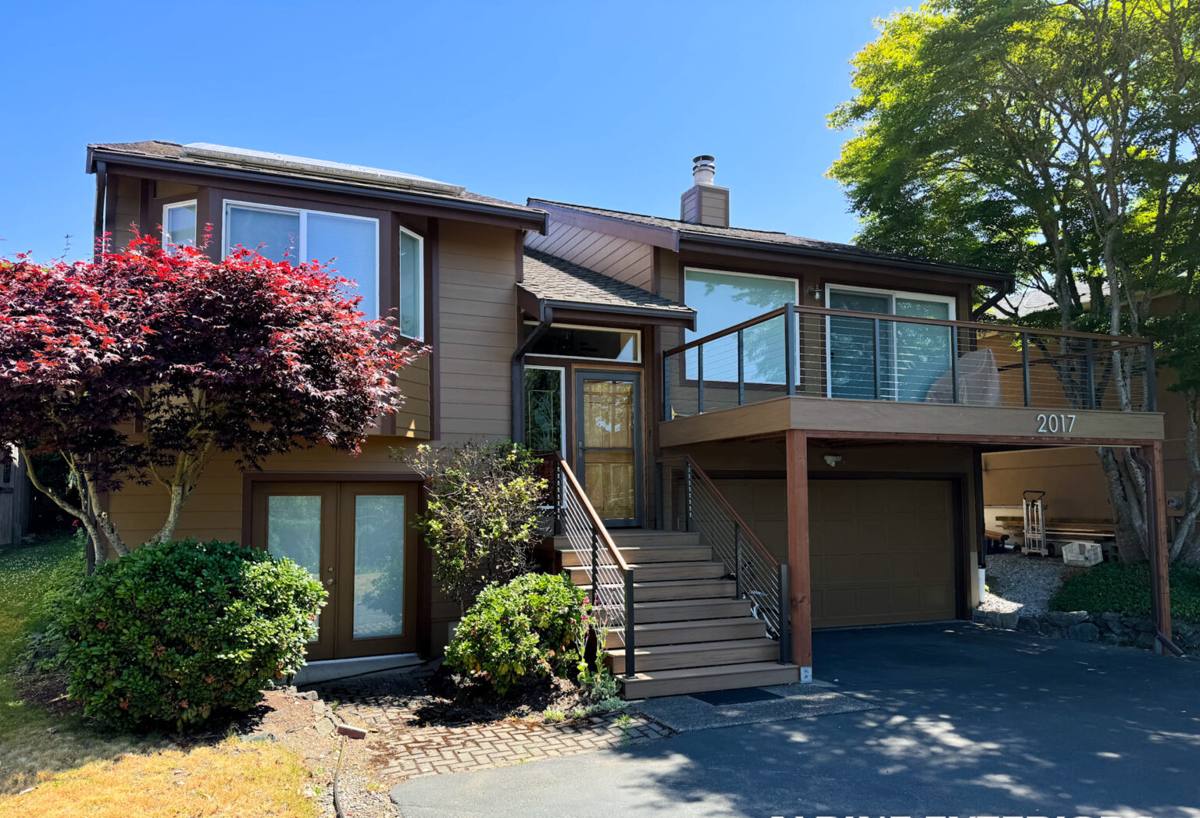
What Shore Acres Roofs Are Up Against
Salt Air and Metal Corrosion
Proximity to open water means airborne salt settles on every exterior surface, including the roof. Metal flashing, drip edge, nail heads, and vent boots corrode faster here than they would a few miles inland. Corroded flashing is one of the most common repair calls we get in this neighborhood — the surrounding shingles can look fine while the metal underneath has already failed, letting water track in around chimneys, skylights, and roof-wall intersections.
Wind-Driven Rain
Florida rain rarely falls straight down during a real storm. When wind pushes rain sideways, it can drive moisture up under shingle tabs, through poorly sealed valleys, and past flashing that would hold up fine in calm weather. A roof that's never leaked in a light shower can still leak badly in a wind-driven event, which is why we inspect for wind exposure and water pathways, not just visible damage.
Year-Round UV Exposure
Intense sun breaks down the oils and asphalt compounds that keep shingles flexible. Over time this shows up as granule loss, brittle shingle edges, and cracking — especially on south- and west-facing slopes that take the harshest sun through the day. Brittle shingles are more likely to crack or lift during wind events, which turns UV damage into a wind-vulnerability problem down the line.
Hurricane-Force Wind
Even homes that never take a direct hurricane hit still see tropical-storm-force wind gusts most seasons. Repeated wind loading works shingle tabs and fasteners loose gradually, so damage often accumulates over several storm seasons rather than showing up all at once after one event.
Common Roof Repair Issues We See in Shore Acres
Every roof is different, but certain problems show up again and again on the roofs we service in this neighborhood:
- Valley leaks — valleys carry the most water volume on a roof and are the first place wind-driven rain finds a weak seal.
- Flashing failure at chimneys, skylights, and roof-to-wall transitions, often from salt-air corrosion rather than age alone.
- Lifted or missing shingle tabs after wind events, sometimes with the shingle itself still intact but no longer sealed down.
- Soft or spongy decking near penetrations, a sign that a small leak has been active for longer than it appeared.
- Nail pops and cracked pipe boots, both of which are small individually but create direct water entry points.
- Granule loss on sun-exposed slopes, which signals the shingle's protective layer is thinning and repair timing matters.
What a Correct Roof Repair Actually Involves
Not all "roof repairs" are equal. A lot of leak complaints we hear about started as a quick patch that addressed the symptom but not the cause. Here's the difference between a surface patch and a repair done correctly:
| Quick Patch | Correct Repair |
|---|---|
| Seals the visible leak point only | Traces the water path back to its actual entry point, which is often several feet from where the stain appears inside |
| Reuses old flashing if it looks intact | Checks flashing condition directly, since salt-air corrosion isn't always visible from a distance |
| Caulk or sealant over the problem area | Proper flashing, underlayment, or shingle replacement matched to the failure type |
| No check of surrounding decking | Confirms decking underneath is solid before finishing the repair, not just after the fact |
| Short-term fix, often recurring | Addresses the underlying cause so the same spot doesn't fail again next storm season |
A caulk-and-hope patch might buy a homeowner a season, but in a coastal Pinellas County climate that same weak point tends to reopen with the next hard rain or wind event — and by then the deck underneath may be worse off than it was the first time.
Our Roof Repair Process
- Inspection first. We look at the whole roof, not just the reported leak spot — flashing, valleys, penetrations, and the general condition of the shingle field, since related problems often cluster together.
- Find the actual source. Water can travel along the deck or underlayment before showing up as an interior stain, so we trace the path rather than assuming the leak is directly above the damage.
- Explain what we find. Before any repair work starts, we walk the homeowner through what's actually wrong, what caused it, and what the repair will and won't address.
- Repair with matched materials. Flashing, underlayment, and shingles are replaced with materials suited to the existing roof system, not generic substitutes.
- Check surrounding areas. We look at adjacent flashing and shingle sections while we're already up there, since coastal corrosion and wind wear rarely affect just one isolated spot.
- Document the work. The homeowner gets a clear record of what was repaired and why, useful for insurance purposes and for tracking the roof's condition over time.
Repair or Replace? What Actually Drives That Decision
Homeowners often ask whether a leak means the whole roof needs replacing. Usually it doesn't — but the honest answer depends on a few factors, not just the homeowner's preference or the size of the visible leak:
| Factor | Leans Toward Repair | Leans Toward Replacement |
|---|---|---|
| Roof age | Well within expected service life | Nearing or past the shingle's rated lifespan |
| Extent of damage | Isolated to one section or penetration | Widespread granule loss or cracking across multiple slopes |
| Decking condition | Solid, no soft spots found | Soft or delaminated decking in multiple areas |
| Repair history | First or infrequent repair needed | Recurring leaks in different spots over recent seasons |
| Storm exposure going forward | Roof has held up through recent storm seasons | Repeated wind or flashing failures each season |
We'll always give a straight answer on which side of that table a given roof falls on. A roof with isolated, well-contained damage almost always gets repaired rather than replaced — replacement only makes sense when the underlying material or decking is genuinely failing, not because one section needs attention.
Signs Your Shore Acres Roof Needs Repair Now
Some warning signs are obvious; others are easy to miss until they've caused real damage. Worth checking for:
- Water stains on ceilings or interior walls, even faint or small ones
- Missing, cracked, or curling shingles visible from the ground
- Granules collecting in gutters or at the base of downspouts
- Visible rust or corrosion on flashing around chimneys or vents
- Daylight visible through the attic roof deck
- A musty smell in the attic or top-floor rooms
- Shingle tabs that look lifted or no longer lying flat after a windy day
- Any repair patch that's more than a couple years old and hasn't been rechecked
Catching these early is almost always cheaper and less disruptive than waiting for a leak to become obvious indoors.
Why Local Experience in Shore Acres Matters
A crew that regularly works this neighborhood already knows what to check first — corroded flashing before assuming shingle failure, valley wear before assuming a simple missing shingle, decking condition before signing off on any repair as complete. That familiarity comes from repeated exposure to how St. Petersburg's coastal conditions actually age a roof, not from a generic checklist. It means fewer surprises, a repair that's diagnosed correctly the first time, and materials chosen with this specific climate in mind rather than a one-size-fits-all approach.
Roofs near the water also tend to need a slightly closer eye over time — not because they're poorly built, but because salt air and storm exposure work faster here than in most inland neighborhoods. A contractor who understands that pace can help a homeowner stay ahead of problems instead of reacting to them.
If you're dealing with a leak, storm damage, or just want a straight assessment of where your roof stands, we're happy to take a look. Reach out for a free, no-pressure estimate using the form below — we'll tell you honestly what we find and what it would take to fix it right.