 St. Petersburg
 Exterior Work in Snell Isle: What Waterfront Living Does to a Home
Snell Isle sits right up against Tampa Bay, laced with canals and open water views that make it one of the most desirable addresses in St. Petersburg. That same waterfront position is also what makes the exterior of a Snell Isle home work harder than almost anywhere else in Pinellas County. Salt-laden air moves off the bay and settles on siding, trim, roofing, and railings every single day, whether or not a storm is anywhere in the forecast. Add in the sun exposure of an open, low-canopy peninsula and the wind funneling across the water during a squall, and you have a set of conditions that will find every weak point in a building envelope over time.
We work exteriors across St. Petersburg and Pinellas County, and Snell Isle is one of the areas where we see the clearest gap between homes that were built or renovated with coastal exposure in mind and homes where standard inland materials and details were used because that's what was available or cheapest at the time. The difference shows up first in the siding and trim, then in fastener corrosion, then in soft spots around window and door openings. None of it is dramatic on its own — it's cumulative, and it's exactly the kind of wear a local crew that works this specific stretch of shoreline learns to spot early.
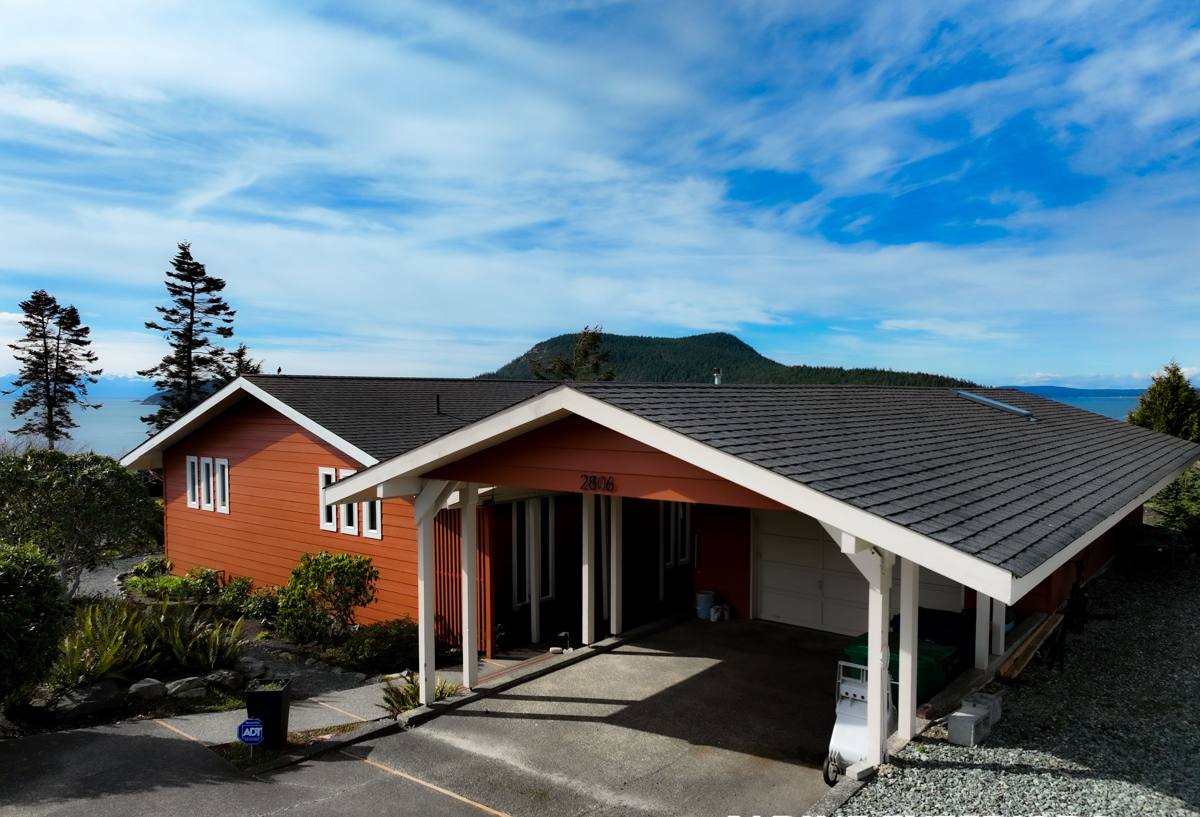
Why Snell Isle's Exposure Is Different From Inland St. Petersburg
Salt Air and Corrosion
Proximity to open water means airborne salt reaches siding, fasteners, hinges, and metal flashing at a higher concentration than a few miles inland. Salt is hygroscopic — it pulls moisture out of the air and holds it against whatever surface it lands on. On wood or wood-composite siding, that means more frequent paint failure and edge swelling. On fasteners and hardware that aren't rated for coastal use, it means premature rust, which then stains the surface around it and weakens the hold.
Wind-Driven Rain
Snell Isle's open exposure to the bay means wind-driven rain during storms and even routine summer squalls hits siding and window assemblies at an angle, not straight down. That matters because a lot of exterior failures aren't about water falling on a surface — they're about water being pushed sideways and upward into laps, seams, and trim joints that were only ever designed to shed water moving in one direction. Flashing detail and installation sequence matter more here than on a sheltered inland lot.
UV Load
Florida sun is intense everywhere in the county, but waterfront lots with fewer mature trees and reflected light off open water take a heavier UV dose than a shaded inland yard. Paint films chalk and fade faster, caulk joints dry out and crack sooner, and any material with a factory finish that isn't formulated for sustained UV exposure will show it years before an inland equivalent does.
Storm Wind
When a tropical system or a strong frontal boundary moves through, Snell Isle's waterfront position puts it in the direct path of higher sustained wind and gusts than more sheltered parts of the city. Roofing, siding attachment, and window performance all get tested hardest in exactly this kind of exposure, which is why installation to spec — not just material selection — is the difference between an exterior that holds and one that doesn't.
Siding: Why We Only Install James Hardie Here
We install James Hardie fiber cement siding exclusively — we don't offer vinyl, LP SmartSide, Cemplank, Allura, or primed wood species like spruce or cedar, and on a peninsula like Snell Isle that decision matters more than it would on a sheltered inland street.
Fiber cement doesn't rot, doesn't feed insects, and doesn't swell or delaminate the way wood-based and wood-composite products can when they take on repeated moisture at seams and cut edges. Hardie's ColorPlus finish is a factory-applied, baked-on coating engineered specifically to hold color and resist fading under sustained UV — which is exactly the load Snell Isle's open exposure delivers. Hardie also produces HZ5 product engineered for higher-moisture, higher-humidity climates, which is what we specify along this part of the Gulf Coast.
We won't be the contractor that puts vinyl on a canal-front home and lets the homeowner find out during the first real heat wave that it's warped against the wall, or installs a wood-composite product and has to explain a moisture claim two years later. That's not a knock on every use case for those products — it's a standard we hold for this climate specifically.
| Material | Salt air behavior | UV/fade resistance | Moisture risk |
|---|---|---|---|
| James Hardie fiber cement | Non-combustible, dimensionally stable, doesn't corrode | ColorPlus factory finish engineered for fade resistance | Doesn't rot; HZ5 formulated for humid coastal climates |
| Vinyl siding | Doesn't corrode but can warp/discolor under heat and reflected sun | Fades and chalks over time; color is through-body, not a separate finish | Low absorption but seams and J-channels trap moisture if installed loosely |
| Wood-composite (LP SmartSide, etc.) | Engineered strand product; edges are moisture-sensitive | Depends on field-applied or factory finish; needs maintenance | Higher moisture sensitivity at cut edges and seams than fiber cement |
| Primed wood (cedar, spruce) | Salt accelerates paint and finish breakdown | Requires regular repainting to hold appearance | Natural wood movement and rot risk in humid, salt-air conditions |
Roofing for a Waterfront Property
Roofs on Snell Isle take the same salt exposure and UV load as siding, plus the direct brunt of wind uplift during storms. We look at underlayment quality, fastening pattern, flashing at every penetration and valley, and how the roof edge and drip edge are detailed — because on a waterfront lot, wind-driven rain finds any gap in those details, not just gaps in the shingle or tile field itself. Metal components (vents, flashing, fasteners) need to be corrosion-rated; standard-grade hardware on a canal-front roof will show rust streaks well before an equivalent inland installation does.
Windows: Where Wind and Water Meet
Window performance in Snell Isle is about two things working together: the window unit itself, and how it's flashed and sealed into the wall opening. A high-spec impact or code-compliant window installed with a poor flashing detail will still leak under wind-driven rain, and a mediocre window installed with excellent flashing will still underperform in a real storm. We treat the installation detail — not just the window brand — as the thing that determines whether a Snell Isle home stays dry during a squall coming off the bay.
What We Check Around Existing Windows
- Caulk and sealant condition at the frame perimeter — cracked or missing sealant is the most common entry point for wind-driven rain
- Signs of staining or soft trim below sills, which usually means water has already been getting in
- Whether flashing was integrated with the wall's water-resistive barrier or just caulked over the surface
- Corrosion on hardware, tracks, and fasteners from salt air exposure
- Condensation or fogging between panes on insulated units, which signals a failed seal
Decks in a Salt-Air, High-UV Environment
Waterfront properties in Snell Isle often have decks, docks, or outdoor living spaces that sit directly in the path of salt spray and full sun for most of the day. Fastener corrosion is the number one issue we see on older decks here — standard hardware rusts, stains the decking around it, and eventually loses holding strength. UV exposure also dries out and cracks lower-grade decking materials faster than in a shaded inland yard. Whether we're building new or replacing an aging deck, we spec corrosion-resistant fasteners and connectors and materials suited to sustained sun and salt exposure, not just what's cheapest to source.
Why a Local Crew Matters on Snell Isle Specifically
Snell Isle isn't a typical subdivision — it's a mix of older established homes and newer construction, many on canal or open-water lots, often with mature landscaping, seawalls, and site access considerations that a crew unfamiliar with the neighborhood won't anticipate. A local crew that works St. Petersburg and Pinellas County regularly knows what this specific exposure does to a building over five, ten, twenty years — not from a manual, but from having pulled off old siding and old roofing on homes just like it and seen exactly where the moisture got in. That's the kind of judgment that shows up in flashing details, fastener selection, and sequencing decisions that don't appear on a spec sheet but make the difference in a storm.
A Practical Checklist for Snell Isle Homeowners
- Walk the exterior after any named storm or sustained high-wind event and check for lifted siding, missing fasteners, or displaced flashing
- Inspect caulk lines around windows and doors twice a year — salt air and UV break down sealant faster here than inland
- Look for rust streaks below any exposed metal hardware, hinges, or fasteners on siding, railings, or decks
- Check attic or interior ceiling areas below the roof after heavy wind-driven rain for early signs of a leak
- Rinse salt residue off siding and hardware periodically, especially on homes closest to open water
- Have decks and their fasteners inspected annually if they're exposed to direct sun and salt spray most of the day
How We Approach a Snell Isle Project
We start with an honest look at the current exterior — siding, roof, windows, decking, whichever combination applies — and identify where the building envelope is already showing wear from salt, sun, and wind versus where it's still sound. From there we recommend what actually needs attention now versus what can be monitored, using materials and installation details matched to a waterfront exposure rather than a generic inland spec. For siding, that means James Hardie fiber cement with ColorPlus finish and the HZ5 formulation suited to Gulf Coast humidity. For roofing, windows, and decks, it means corrosion-rated hardware, proper flashing sequencing, and fastening details built for real storm wind, not just code minimums.
If you own a home in Snell Isle and want an honest read on where your siding, roof, windows, or deck stand, we're glad to take a look. Reach out for a free, no-pressure estimate using the form below.