 St. Petersburg
 What LP SmartSide Actually Is
LP SmartSide is an engineered wood siding product. At its core is strand-based wood — similar in concept to oriented strand board (OSB) — that's saturated with resin, pressed under heat, treated with a zinc borate additive for fungal and insect resistance, and finished with a proprietary coating called SmartGuard. It comes in lap siding, panels, and trim, and it's manufactured to look like traditional wood clapboard or board-and-batten at a lower installed weight than fiber cement or real cedar.
It's a legitimate, widely used product. Plenty of licensed contractors install it well, and plenty of homeowners are happy with it. Our reasons for not installing it in St. Petersburg aren't about the product being defective — they're about the specific demands of Pinellas County's climate and the standard we've chosen to hold ourselves to on every home we touch.
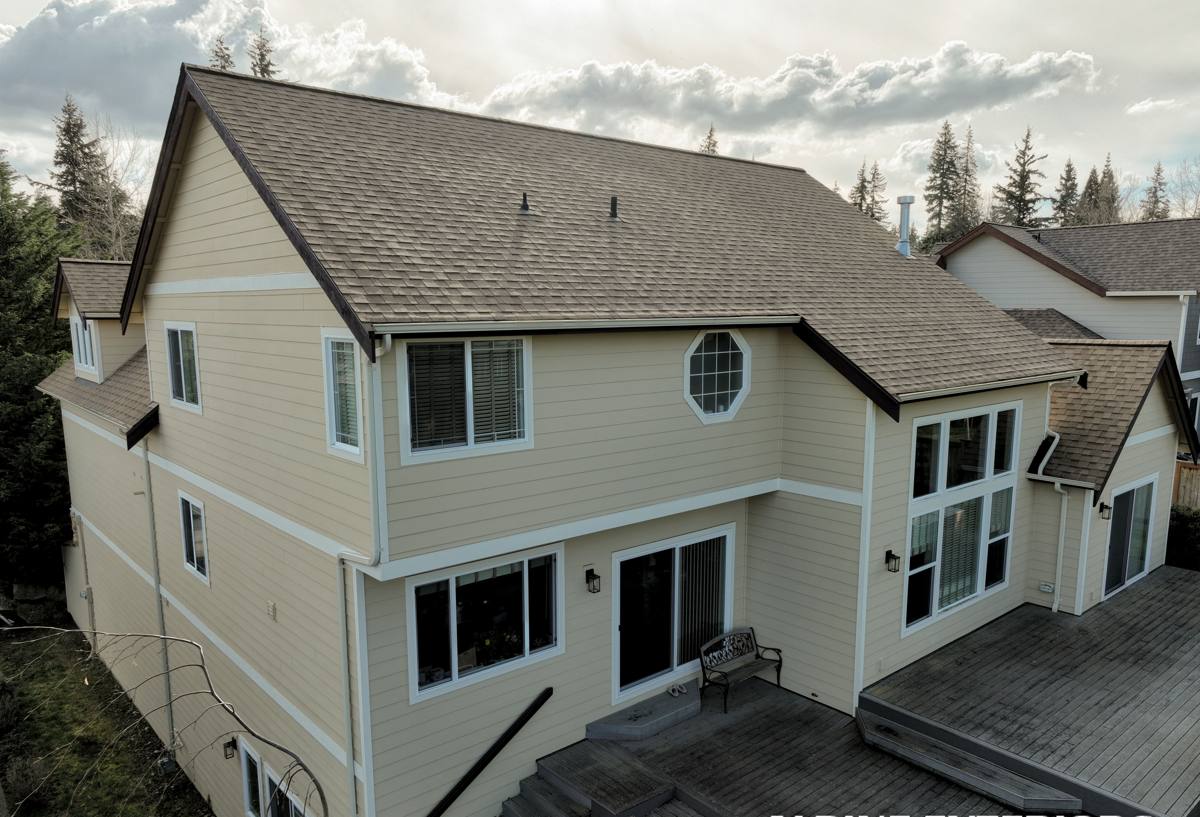
What LP SmartSide Gets Right
Fair is fair, so before we explain our reasoning, here's what the product does well:
- It's noticeably lighter than fiber cement, which can shave labor time and make installation easier on certain wall assemblies.
- The zinc borate treatment gives it real resistance to termites and fungal decay compared to untreated wood.
- It holds paint well when properly primed and coated, and the factory treatment reduces (though doesn't eliminate) the prep work compared to raw lumber.
- Impact resistance is generally better than vinyl, and it doesn't dent or crack the way some vinyl products do in hail or debris impacts.
- Upfront material cost is often lower than fiber cement, which matters on tighter budgets.
Those are genuine strengths. They just don't outweigh the trade-offs once you factor in what our climate does to a wood-based product over a 20-30 year ownership window.
The Trade-Off That Matters Most Here: It's Still Wood at the Core
Fiber cement is sand, cement, and cellulose fiber — inorganic once cured, and it doesn't absorb and release moisture the way wood does. LP SmartSide's core is strand wood. Manufacturers engineer around that with resin saturation and surface coatings, but the core material is still wood, and wood expands, contracts, and can swell at cut edges and seams if water finds its way in.
In most of the country, that's a manageable risk. In St. Petersburg, sitting on a peninsula between Tampa Bay and the Gulf, it's a bigger one. We get sustained high humidity for most of the year, heavy wind-driven rain during the summer storm season, and — during an active hurricane season — the kind of horizontal, high-volume rainfall that tests every seam, joint, and cut edge on an exterior wall. Any engineered wood product depends on every edge staying sealed and every joint staying caulked for its entire service life. Miss one spot, or let caulking degrade without recaulking on schedule, and that's exactly where a wood-core product is most vulnerable.
Edge and Seam Sensitivity
Field-cut edges — around windows, doors, corners, and penetrations — expose the raw strand core unless they're primed and sealed correctly on-site, every time, by every crew member, on every job. That's a lot of places for a single missed step to matter later. Fiber cement isn't immune to bad installation either, but it doesn't swell or delaminate at an unsealed cut edge the way a wood-composite product can.
The Maintenance Burden Homeowners Don't Always Hear About
LP SmartSide is a paint-grade product. That means ongoing maintenance isn't optional — it's part of owning it:
- Caulked joints need periodic inspection and recaulking, typically every few years depending on sun exposure.
- The paint film needs to stay intact; once it starts chalking, cracking, or peeling, the wood-composite substrate underneath is exposed to moisture and UV.
- Cut edges, especially at trim and corner boards, need re-sealing if the factory or field-applied coating wears through.
- Repainting on a coastal, high-UV schedule often comes sooner than a homeowner expects from marketing materials pitched at cooler, less humid climates.
None of that is unreasonable for a homeowner who wants that maintenance rhythm and budgets for it. But most people buying siding want to reduce their maintenance list, not add a recurring caulk-and-paint cycle to it — especially in a market where intense UV runs essentially year-round and accelerates coating breakdown faster than it would in a northern climate.
Warranty Structure: What's Really Covered
Engineered wood siding warranties are frequently conditioned on maintenance being kept current — documented repainting schedules, prompt caulking repairs, and proper installation per the manufacturer's specifications. That's not unique to LP; most manufacturer warranties in this category work the same way. The practical effect is that the warranty's real-world value depends heavily on the homeowner (or a future homeowner, since houses change hands) keeping up with upkeep the warranty requires but doesn't perform for them. If maintenance lapses — which happens constantly with resale, rental properties, and busy households — coverage for moisture-related damage can be reduced or denied.
We'd rather put a product on a home whose warranty isn't contingent on a homeowner maintaining a paint schedule to the letter for decades.
Salt Air, UV, and Wind-Driven Rain: St. Petersburg's Specific Stress Test
Every siding decision in Pinellas County gets stress-tested by the same three things, regardless of what the label says:
- Salt air: Properties near Tampa Bay, the Gulf beaches, or the bayous carry airborne salt that accelerates coating and hardware degradation. Any coated product needs a coating rated and maintained for that exposure.
- Year-round UV intensity: Florida's sun breaks down paint films and coatings faster than most of the country. A coating system that's "fine" in a milder climate can chalk out years ahead of schedule here.
- Hurricane-force wind and wind-driven rain: During storm season, rain doesn't just fall — it's driven sideways into every seam, lap, and penetration on the wall. This is where installation quality and material moisture-tolerance both get tested at once, sometimes in a single storm.
A wood-composite product asks a homeowner to win that stress test every single year, indefinitely, through consistent maintenance. A fiber cement product with a factory-cured finish is simply built to tolerate more of that stress on its own.
How LP SmartSide and James Hardie Fiber Cement Compare
| Factor | LP SmartSide (Engineered Wood) | James Hardie (Fiber Cement) |
|---|---|---|
| Core material | Resin-saturated strand wood | Cement, sand, cellulose fiber (non-organic core) |
| Moisture response | Can swell/delaminate at unsealed edges | Engineered for wet climates; HZ5 line built for Gulf Coast humidity |
| Fire behavior | Combustible (wood-based) | Non-combustible |
| Finish | Factory-primed; field paint required, repainting on a maintenance schedule | ColorPlus factory finish baked on, backed by its own finish warranty |
| Ongoing maintenance | Recaulking and repainting on a recurring schedule | Occasional washing; no routine recaulking/repainting cycle for the finish |
| Warranty structure | Often conditioned on documented maintenance | Long transferable warranty, less dependent on a strict maintenance log |
| Typical installed cost | Generally lower | Generally higher, reflecting material and finish system |
Why We Standardized on James Hardie Instead
We made a decision to install one siding system, do it correctly every time, and stand behind it — rather than offering several products with different maintenance obligations and different failure modes. James Hardie fiber cement is what we chose because it fits what a St. Petersburg home actually needs:
- It's non-combustible, which matters both for safety and for how some insurers evaluate a home's exterior.
- Hardie's HZ5 product line is specifically engineered for hot, humid climates like ours, not adapted from a product built for a different region.
- The ColorPlus factory finish is baked on under controlled conditions, holds color longer under intense Florida UV than field-applied paint, and comes with its own finish warranty.
- It doesn't have a wood core, so it isn't subject to the swelling and edge-delamination risk that comes with resin-saturated strand products.
- The transferable warranty gives homeowners real protection through a sale, without hinging on a documented maintenance history.
This isn't a claim that engineered wood siding is broken or that every installation fails. It's a statement about where we decided to draw our own line: we only put our name on a siding system whose performance in Pinellas County's humidity, salt air, and storm exposure doesn't depend on a homeowner executing a maintenance schedule perfectly for the next three decades.
Before You Choose a Siding Product: A Practical Checklist
Whatever siding you're considering, and whichever contractor you hire, these are worth asking about directly:
- What is the core material, and how does it behave when it gets wet at a cut edge or seam?
- What ongoing maintenance does the manufacturer require to keep the warranty valid?
- Is the finish factory-applied and warrantied, or field-applied and dependent on repainting?
- Is the product rated combustible or non-combustible?
- How is the warranty affected if the home changes ownership?
- What does this specific product require in a coastal, high-humidity, high-UV climate versus a cooler, drier one?
If a contractor can't answer those clearly and specifically, that's worth noticing before you sign anything.
If you're weighing siding options for a home in St. Petersburg or elsewhere in Pinellas County, we're happy to walk your property, look at your current siding condition, and give you a straight, no-pressure estimate — including an honest answer about what we'd recommend and why. Request your free estimate using the form below.