 St. Petersburg
 St. Petersburg Siding Has to Earn Its Keep
Siding in Pinellas County does more work than siding almost anywhere else in the country. It gets baked by direct, high-UV sun for most of the year, soaked by wind-driven rain during summer storms, occasionally pushed to its limits by hurricane-force wind loads, and constantly exposed to salt-laden air off Tampa Bay and the Gulf. Any one of those conditions will shorten the life of the wrong siding material. Put all four together, year after year, and the difference between a product that's rated for this climate and one that merely tolerates it becomes very visible on a house within five to ten years.
We stopped installing anything other than James Hardie fiber cement siding because of what we kept seeing on service calls and inspections around St. Petersburg: siding failures that traced back to the material itself, not the workmanship. This page explains what fiber cement actually is, what makes James Hardie's engineering different, and why we decided one manufacturer, installed correctly, beats offering homeowners a menu of options we don't fully stand behind.
What Fiber Cement Siding Actually Is
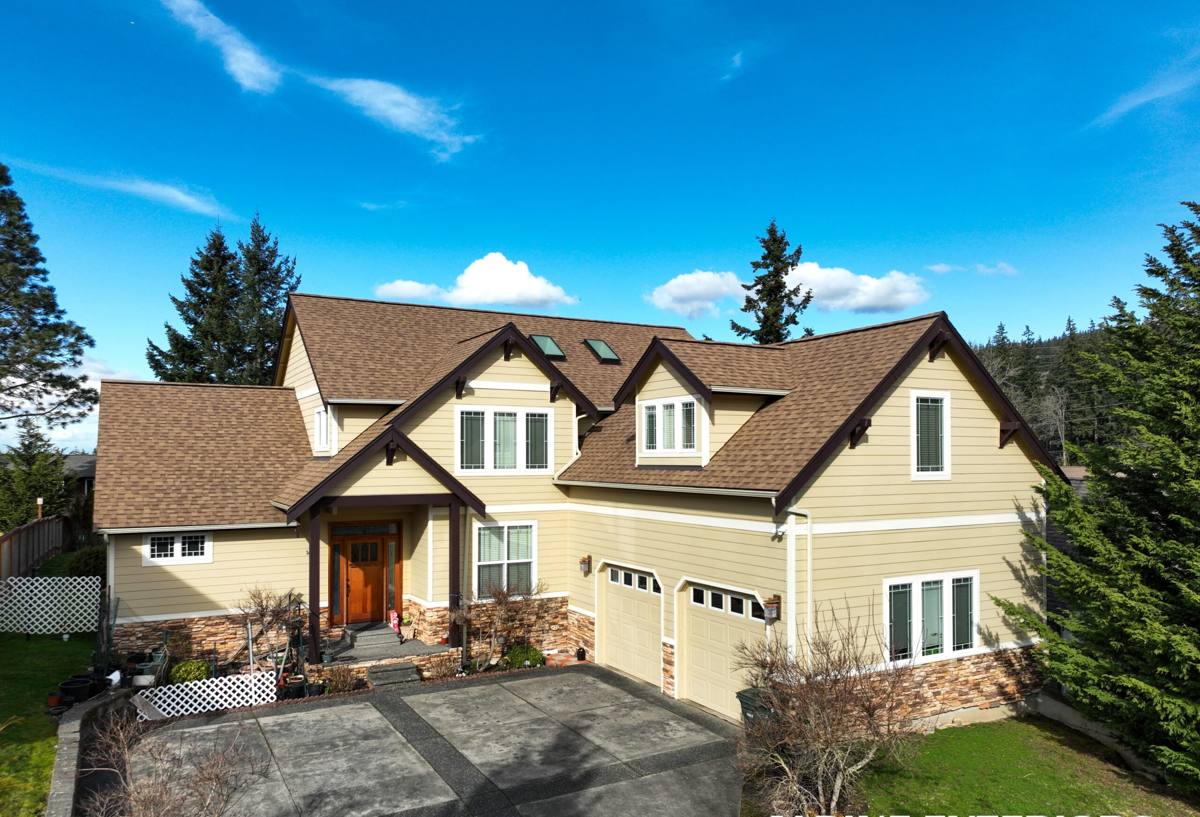
Fiber cement is a mix of Portland cement, sand, and cellulose fiber, cured under pressure into dense, rigid boards or panels. It's not plastic (vinyl), it's not wood, and it's not a wood-composite product like LP SmartSide. That distinction matters in a coastal climate because cement doesn't rot, doesn't feed termites, doesn't warp from humidity swings, and doesn't soften when it stays wet for days after a tropical system parks over the bay.
James Hardie didn't invent fiber cement, but they've spent decades refining the formulation and, more importantly, engineering it specifically for regional climate stresses. That regional engineering is the part most homeowners have never heard of, and it's the main reason we standardized on this one manufacturer.
HZ5: Climate-Engineered for the Gulf Coast
James Hardie makes different formulations of the same core product for different parts of the country. The HZ5 line is engineered for hot, humid, storm-exposed climates — which describes Pinellas County about as precisely as a spec sheet can. HZ5 boards are formulated to resist moisture-related expansion, cracking, and cupping better than the versions of fiber cement sold in drier, milder climates. When we quote a James Hardie job in St. Petersburg, HZ5 is the product going on the wall.
Why We Refuse to Install Alternatives
We get asked fairly often why we don't offer vinyl, LP SmartSide, Cemplank, Allura, or primed wood siding as options. Each of those products has legitimate uses somewhere, and none of them is "bad" in a blanket sense — but each comes with a trade-off that shows up faster and worse on the Gulf Coast than it would inland.
- Vinyl softens, warps, or cracks under sustained high heat and direct sun exposure, and it has real wind-load limits that matter during named storms.
- Wood-composite products like LP SmartSide depend entirely on an intact factory coating and perfect field sealing at every cut edge; salt air and humidity are unforgiving of any gap in that protection.
- Other fiber cement brands (Cemplank, Allura) are chemically similar to Hardie's product but aren't sold with a climate-specific formulation like HZ5, and don't carry the same factory-finish warranty structure.
- Primed spruce or cedar is beautiful and historically appropriate in some neighborhoods, but it requires a maintenance commitment — repainting, caulking, moisture monitoring — that most homeowners underestimate until the first signs of rot show up at the butt joints.
We're not saying any of these products will definitely fail on your house. We're saying that as a company installing siding professionally in this specific climate, we decided we'd rather stand fully behind one system than sell several and hope the maintenance-sensitive ones get maintained.
How Local Conditions Test a Siding Material
| Climate stress | What it does to siding | How HZ5 fiber cement responds |
|---|---|---|
| Sustained UV exposure | Fades color, breaks down plastics and coatings, dries out organic materials | ColorPlus factory finish is baked on and UV-resistant; the substrate itself doesn't degrade in sunlight |
| Wind-driven rain | Forces water behind siding at laps and joints, saturates absorbent substrates | Cement doesn't absorb and swell the way wood or wood-composite does; correct flashing keeps water out of the wall assembly |
| Hurricane-force wind | Uplift and impact loads can crack, tear loose, or shatter brittle materials | Installed per Hardie's fastening spec, HZ5 boards carry wind-load ratings suited to coastal exposure |
| Salt air | Corrodes exposed metal fasteners and accelerates coating breakdown | Non-combustible, non-corroding substrate; we pair it with coastal-rated fasteners and trim |
| Humidity/moisture cycling | Causes swelling, cupping, and eventual rot in wood-based products | Cement is dimensionally stable across humidity swings |
ColorPlus Technology: The Finish Matters as Much as the Board
Raw fiber cement still needs a finish, and this is where a lot of the long-term performance difference actually lives. James Hardie's ColorPlus finish is applied and baked on in a factory-controlled process — multiple coats, cured under controlled conditions — rather than field-painted on site after installation. That matters in St. Petersburg for two practical reasons: factory finishes hold color better under intense year-round UV than most field-applied paint, and a factory finish isn't subject to the humidity, temperature, and dust conditions of a job site on the day it's applied.
ColorPlus siding comes with its own finish warranty separate from the substrate warranty, and touch-up products are formulated to match. It's not maintenance-free forever, but it's a meaningfully longer repaint cycle than field-painted siding typically gets in this climate.
What Correct James Hardie Installation Actually Involves
A lot of the fiber cement failures we get called out to inspect aren't material failures — they're installation failures. Fiber cement is unforgiving of shortcuts in a way that's easy to hide at first and expensive to ignore later.
- Correct nail penetration and fastener spacing per Hardie's published installation guide (not generic siding practice)
- Proper starter strip and butt-joint flashing so wind-driven rain can't get behind the plane
- Manufacturer-specified gaps at trim, corners, and penetrations to allow for expansion
- Weather-resistive barrier detailing that's actually lapped and sealed correctly behind the siding, not just present
- Blind-nailing and joint treatment consistent with ColorPlus finish requirements so the factory warranty stays valid
- Field cuts sealed with the manufacturer-approved sealant, not whatever caulk was on the truck
Hardie certifies installers on these specifics for a reason: the product's real-world performance and its warranty both depend on the installation matching the spec, not just approximating it.
The Warranty: What It Covers and Why That Structure Matters
James Hardie backs its fiber cement substrate with a long, transferable limited warranty, and ColorPlus finishes carry their own separate finish warranty. Transferability matters more than most homeowners initially think — if you sell the home within the warranty period, that coverage can follow the house rather than end at closing, which is a real selling point in a market where buyers are increasingly asking about siding age and condition.
We only install James Hardie as a Hardie-focused contractor because a warranty is only as good as the installation behind it. When we install to spec, our workmanship and the manufacturer's product warranty are both intact and working in the homeowner's favor if something ever needs to be addressed.
What This Actually Costs
James Hardie siding costs more upfront than vinyl and is generally in a similar range to other quality fiber cement brands or wood-composite systems, with the difference showing up over the ownership period rather than at installation. It costs less over 15-20 years than a material that needs repainting every 5-7 years or replacement after storm damage.
| Factor | Effect on cost |
|---|---|
| Product line (HZ5 vs. standard) | Climate-engineered lines cost modestly more than non-coastal formulations |
| Profile (lap, shingle, panel) | Detailed profiles and accent shingle work add labor time |
| Substrate condition | Sheathing or moisture repair found during tear-off adds cost but should never be skipped |
| Trim package | Full trim board replacement vs. reusing sound existing trim changes the scope |
| Home complexity | Corners, dormers, and penetrations increase cutting, flashing, and labor time |
Get a Straight Answer for Your Home
Every home in St. Petersburg carries its own combination of sun exposure, storm exposure, and existing wall condition, and that's what actually drives a real number — not a generic per-square-foot estimate. If you're weighing siding options or your current siding is showing its age, we're glad to walk your home, explain what we're seeing, and put together a free, no-pressure estimate for a James Hardie system built for this climate.