 St. Petersburg
 Why This Comparison Actually Matters Here
Pinellas County homes take a beating that most siding products were never designed for. Between hurricane-season wind gusts, UV exposure that runs nearly year-round instead of three summer months, wind-driven rain that finds every gap in a wall system, and salt air rolling in off Tampa Bay and the Gulf, St. Petersburg is one of the tougher proving grounds for exterior cladding in the country. A siding choice that works fine in a mild inland climate can fail here in a fraction of the time. That's the lens this comparison is written through — not which product looks better in a showroom, but which one holds up on an actual St. Pete roofline through actual St. Pete weather.
We're going to lay out vinyl and fiber cement honestly, including where vinyl earns its popularity. Then we'll explain why, after years of installing both product categories, we made the call to only install James Hardie fiber cement siding on our jobs.
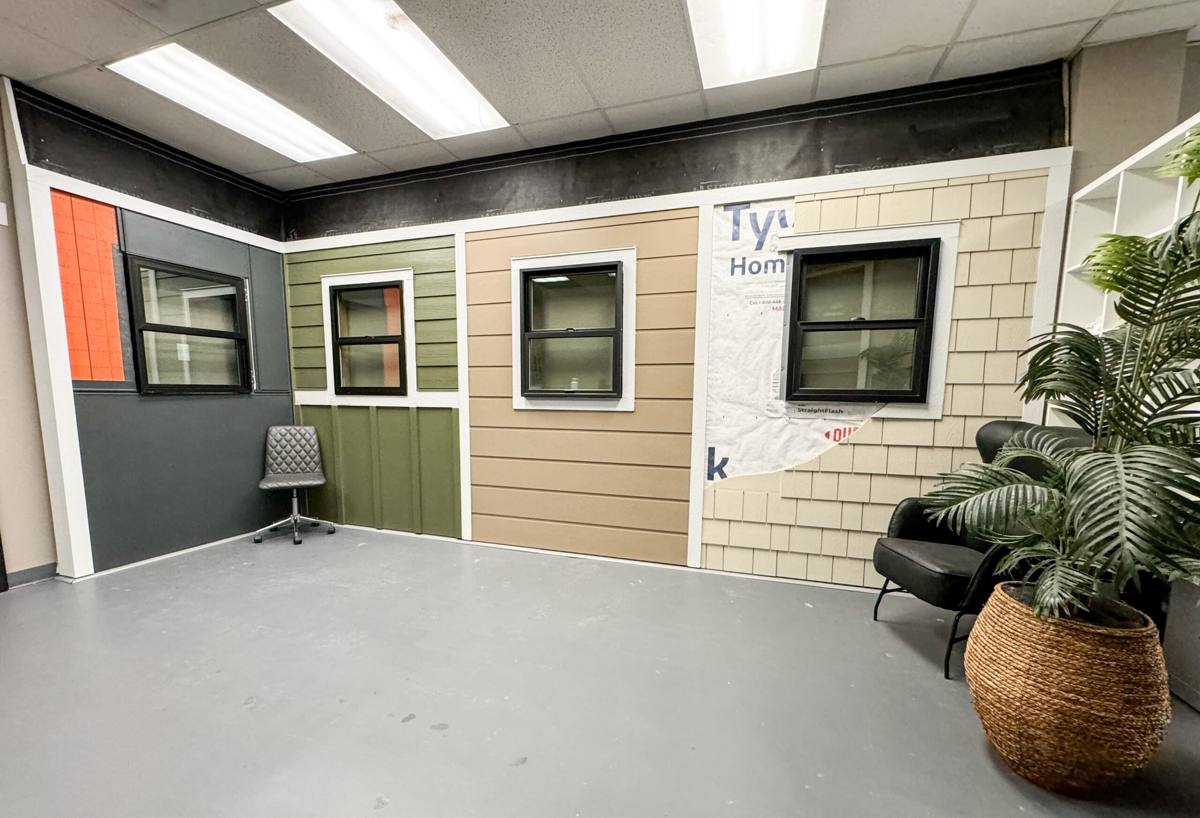
What Vinyl Siding Gets Right
Vinyl didn't become the most common siding material in America by accident. It has real strengths, and pretending otherwise wouldn't be honest.
- Lower upfront cost. Vinyl is typically the cheapest siding option per square foot, which matters on tight renovation budgets.
- No painting required. Color is mixed into the material, so there's no paint film to maintain — at least not right away.
- Lightweight and fast to install. Crews can cover a house quickly, which keeps labor costs down.
- Moisture-indifferent material. The vinyl panel itself won't rot, since it's a plastic product, not wood or wood-based.
For a mild climate, a starter home, or an investment property where the owner wants the lowest possible install cost and isn't planning to hold the property for decades, vinyl is a legitimate, defensible choice. We're not going to tell you it's a bad product everywhere. We're going to tell you why it's a bad fit for this climate and for the kind of long-term ownership most of our clients are planning for.
Where Vinyl Struggles in a Gulf Coast Climate
Heat and UV
Vinyl is a petroleum-based plastic, and plastic responds to heat and UV by expanding, contracting, and slowly breaking down at the molecular level. In a climate with intense sun exposure nearly twelve months a year, that process — called photodegradation — moves faster than the manufacturer's lab testing (usually done in more moderate climates) assumes. The visible result is fading, chalking, and a surface that becomes brittle over time, especially on south- and west-facing walls that take direct afternoon sun.
Wind Resistance
Vinyl siding is hung, not fastened rigidly — it's designed to expand and contract with temperature, so panels lock into each other rather than screwing down tight. That works fine in calm weather. In sustained hurricane-force wind, panels can flex, pop out of their track, or peel off the wall entirely, especially at corners and edges where wind uplift concentrates. Impact-rated and higher-wind-zone vinyl products exist, but they cost more and narrow the price advantage that made vinyl attractive in the first place.
Wind-Driven Rain and the Wall Behind It
Vinyl siding is not a sealed water barrier — it's designed to shed most water while letting some pass through to a water-resistive barrier behind it. That's an acceptable system in light rain. In wind-driven rain, which Pinellas County gets regularly during tropical systems and summer storms, water can get pushed sideways under and behind panels far more aggressively than the system was designed to handle, putting more burden on the house wrap and sheathing behind it.
Salt Air and Coastal Exposure
Vinyl itself doesn't corrode, but homes near the bay or Gulf still see salt residue accumulate on the surface, which accelerates the chalking and dulling process and requires more frequent washing to keep the material from looking prematurely worn.
Impact Resistance
Vinyl is a relatively thin, flexible plastic. Wind-driven debris — branches, palm fronds, gravel from a roof, anything airborne during a storm — can crack or puncture it in a way that's far more likely than with a rigid fiber cement panel.
What Fiber Cement Gets Right
Fiber cement siding is a blend of cement, sand, and cellulose fiber, pressed and cured into a rigid plank. It's a fundamentally different material category from vinyl, and its strengths line up almost point-for-point with vinyl's weak spots in this climate.
- Non-combustible. It won't ignite or contribute fuel to a fire — a meaningful difference in wildfire-adjacent areas and simply a safer material category overall.
- Dimensionally stable. It doesn't expand and contract with heat the way plastic does, so it holds its shape and fastening through temperature swings.
- Factory-baked finish. James Hardie's ColorPlus finish is baked on in a controlled factory environment, producing a more UV- and fade-resistant surface than field-applied paint.
- Engineered for wind. Hardie's HZ10 product line is specifically engineered for high-wind, high-moisture climates like ours, with installation specs built around hurricane-zone wind ratings.
- Rigid and impact-resistant. The material resists denting and puncture from wind-borne debris far better than thin plastic panels.
Head-to-Head Comparison
| Factor | Vinyl Siding | James Hardie Fiber Cement |
|---|---|---|
| Upfront cost | Lowest of common siding options | Moderate to higher, reflects material and labor |
| Hurricane wind performance | Standard-grade can fail; impact-rated costs more | HZ10 line engineered for high-wind zones |
| UV / fade resistance | Fades and chalks over time, faster in intense sun | Factory-baked ColorPlus finish resists fading |
| Combustibility | Combustible plastic material | Non-combustible |
| Impact resistance | Can crack or puncture from debris | Rigid, more resistant to impact damage |
| Typical lifespan when installed correctly | 20-30 years, often less in intense sun/coastal exposure | 30-50+ years with proper install and maintenance |
| Maintenance | Periodic washing; no repainting, but fading is permanent | Periodic washing; repainting eventually optional, not required |
| Warranty structure | Varies widely by manufacturer and grade | Strong transferable limited warranty from Hardie |
Installation Sensitivity Matters as Much as the Product
Here's a point that gets skipped in most siding comparisons: the material is only half the equation. Both vinyl and fiber cement fail prematurely when installed wrong, and fiber cement is actually the less forgiving of the two if installation shortcuts are taken.
James Hardie publishes detailed, climate-specific installation requirements — fastener spacing and type, minimum clearances from grade and roof lines, caulking and flashing details at every penetration, proper starter strip and joint treatment. Skip those details and even the best material in the world will let water in behind it or fail in high wind. This is exactly why we only install Hardie products: it lets our crews build deep expertise in one system's installation requirements rather than spreading that expertise thin across several product lines with different specs, different fastening rules, and different failure points.
Total Cost of Ownership, Not Just Sticker Price
Vinyl wins on day-one price, every time. The comparison changes once you look at a 20-30 year ownership window, which is how most Pinellas County homeowners actually think about their roof and siding decisions.
- Vinyl that fades and chalks in intense Florida sun has no fix short of replacement — you can't repaint most vinyl and get a lasting result.
- Storm-damaged vinyl panels are often discontinued or color-mismatched by the time a repair is needed years later, leading to patchwork repairs or a full re-side.
- Fiber cement's baked-on finish and repaint-if-you-want-to flexibility mean the material can be refreshed rather than replaced.
- A stronger, transferable warranty on fiber cement adds real resale value that a homeowner can point to when listing the house.
Why We Standardized on James Hardie
We used to install a range of siding products. Over enough hurricane seasons and enough service calls, a pattern became obvious: the callbacks, the storm damage claims, and the "it's fading and we're not even five years in" conversations clustered heavily around vinyl and other non-fiber-cement products, especially on homes with real sun and wind exposure. Fiber cement jobs, installed to spec, simply held up better and generated far fewer of those calls.
Standardizing on one manufacturer's fiber cement system — James Hardie, specifically their HZ10 climate-engineered line, ColorPlus factory finish, and full range of lap, shingle, and panel styles — let us build real depth in one installation standard instead of average competence across several. That's the whole reason behind our product policy: it's not a sales preference, it's what held up when we tracked our own results against this specific climate.
Questions to Ask Before You Decide
- What wind rating is the product actually engineered and tested for, and does that match Pinellas County's wind zone?
- Is the finish factory-applied or field-painted, and what's the manufacturer's fade warranty language?
- What does the manufacturer's installation manual require for fastening, clearances, and flashing in a high-wind, high-moisture climate?
- Is the warranty transferable to a future buyer if you sell the home?
- Has the contractor actually installed this specific product to spec repeatedly, or is it one of many product lines they touch occasionally?
- What's the realistic maintenance schedule — washing frequency, caulk inspection, repainting timeline if any?
The Honest Bottom Line
Vinyl siding is a reasonable, budget-conscious product in the right setting. It is not the product we'd choose to put our name behind on a St. Petersburg home that has to survive hurricane season after hurricane season, full sun exposure, and salt air off the bay. James Hardie fiber cement costs more upfront and asks more of the installer, but it's built and engineered for exactly the conditions this area throws at a house, and that's why it's the only siding system we install.
If you're weighing a siding replacement and want a straight answer about what will actually hold up on your specific home, we're happy to take a look and talk through it. Reach out for a free, no-pressure estimate — no hard sell, just an honest read on your house.