 St. Petersburg
 Two Wood-Look Sidings, Two Very Different Bets
When homeowners in St. Petersburg start comparing siding options, they usually end up looking at two materials that both promise a wood look without the upkeep of real wood: fiber cement and engineered wood (commonly sold under the LP SmartSide brand). They look similar on a sample board. They install in similar ways. But the materials themselves are fundamentally different, and that difference matters more here than almost anywhere else in the country.
We install James Hardie fiber cement siding exclusively. We don't install engineered wood products. This page explains the actual trade-offs behind that decision — not marketing claims, not scare tactics, just the honest mechanical differences between the two materials and why we think one of them is the wrong bet for Pinellas County homes.
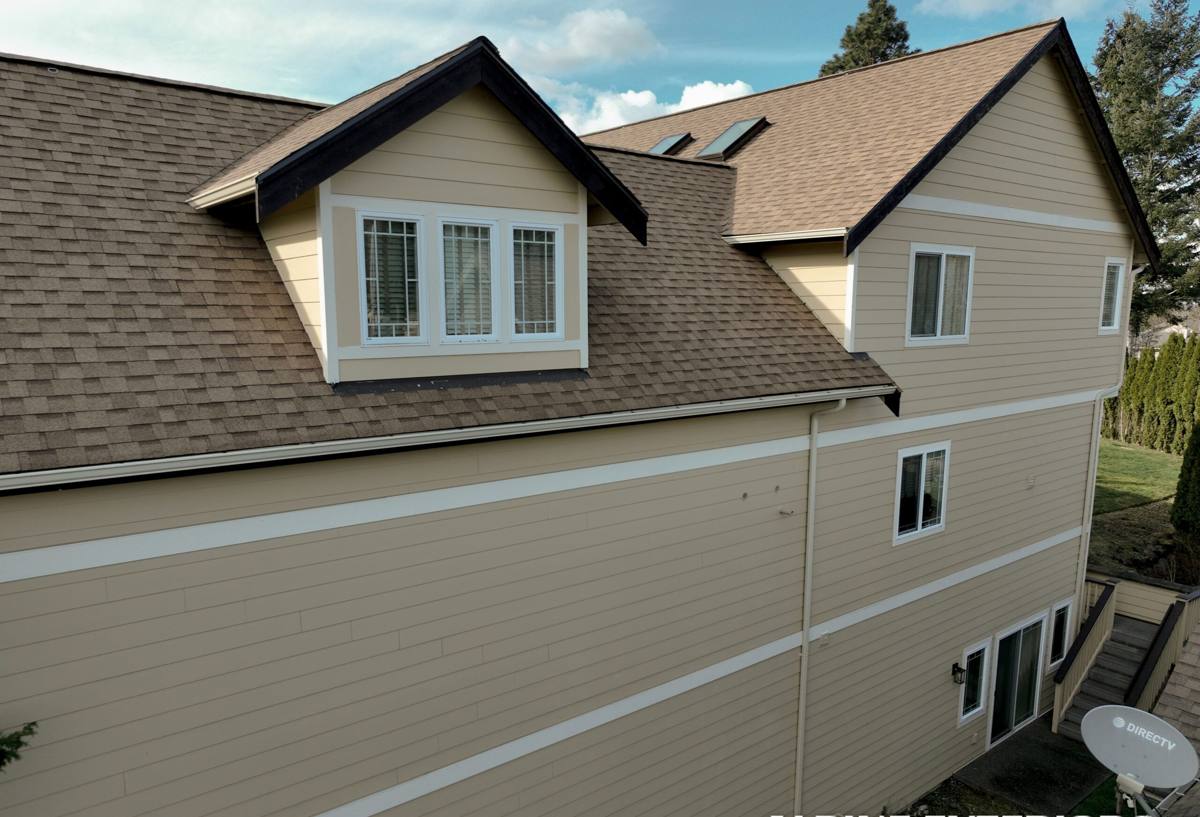
What Engineered Wood Siding Gets Right
Engineered wood siding is real wood strand product — wood fiber bonded with resins under heat and pressure, then coated with a resin-saturated overlay. It has genuine strengths worth acknowledging:
- It's lighter than fiber cement, which can make it faster and less physically demanding to install.
- It holds a screw or nail well and machines cleanly on site with standard woodworking tools.
- Modern versions have real engineering behind their moisture-resistant resin treatments, and manufacturers back them with reasonable warranties when installed correctly.
- It performs well in many parts of the country, particularly drier inland climates with cold winters, where it has a long track record.
None of that is a knock on the material as an engineering achievement. The problem, for our purposes, is what happens to that resin-treated wood fiber over a couple of decades in a coastal Florida climate.
The Core Vulnerability: It's Still Wood
Strip away the resin coating and the marketing, and engineered wood siding is a cellulose-based product. Wood fiber, no matter how it's treated, wants to absorb moisture, swell, and eventually break down if water gets past the surface treatment and stays there. The entire performance of the product depends on that outer resin barrier staying intact — at every cut edge, every fastener penetration, every seam, every corner — for the life of the siding.
That's a demanding standard to hold for 20-30 years, especially in a climate that never really lets a house dry out.
Why Our Climate Raises the Stakes
St. Petersburg sits on a peninsula in Pinellas County, surrounded by Tampa Bay and the Gulf. That geography creates a specific combination of stresses that most of the country doesn't deal with:
- Wind-driven rain. Our storms don't just drop rain — they push it sideways, into laps, seams, and butt joints under pressure most siding systems were never tested against outside hurricane zones.
- Hurricane-force wind loading. Every seasonal storm cycle flexes and stresses the siding envelope, working at any weak point in the installation.
- Intense, near-constant UV. Florida sun degrades surface coatings and sealants faster than almost anywhere in the continental U.S., year-round, not just in summer.
- Salt air. Even homes a few miles from the water deal with airborne salt that accelerates the breakdown of caulks, sealants, and exposed fastener heads.
Every one of those factors attacks the same weak point in engineered wood siding: the integrity of its protective surface treatment. Inland, in a drier, milder climate, a small gap in edge sealing might sit fine for years. Here, that same gap is an invitation for wind-driven moisture to find the raw wood fiber underneath — and once wood fiber starts absorbing water on a humid Gulf Coast lot, it doesn't get much of a chance to fully dry back out between storms.
What Fiber Cement Is Made Of, and Why It Behaves Differently
James Hardie fiber cement siding is made from Portland cement, sand, and cellulose fiber, cured into a rigid, dense board. It contains no wood fiber in the sense that matters here — there's no cellulose structure that swells, rots, or delaminates when it takes on moisture. It doesn't support fungal growth. It's non-combustible. It expands and contracts with temperature far less than wood-based products, which matters over years of Florida heat cycling.
That doesn't mean fiber cement is immune to water — nothing installed on the outside of a house is. But when it gets wet, it dries out without breaking down. The material itself isn't the failure point the way wood fiber can be. Fiber cement's real vulnerabilities are workmanship-related (caulk joints, flashing, fastener placement), not baked into the base material.
ColorPlus Finish vs. Field-Applied or Overlay Coatings
Hardie's ColorPlus finish is baked on in a factory, cured, and backed by its own finish warranty — it's not relying on a field-applied topcoat or paint job to hold up against UV and salt air. That factory-controlled finish is one of the bigger practical differences homeowners notice ten years in: less chalking, less fading, and less repainting than most site-finished or field-coated siding systems need in this climate.
Side-by-Side: What Actually Differs
| Factor | James Hardie Fiber Cement | Engineered Wood (LP SmartSide-type) |
|---|---|---|
| Base material | Cement, sand, cellulose fiber | Wood strand fiber with resin treatment |
| Combustibility | Non-combustible | Combustible (wood-based) |
| Moisture failure mode | Dries out; no fiber swelling/rot | Can swell, delaminate, or rot if edges/seals fail |
| Edge/cut-end sealing | Recommended for best performance | Mandatory — unsealed cut ends are a primary failure point |
| Factory finish | ColorPlus baked-on finish, separate finish warranty | Typically field-painted or factory primed, repaint cycle needed |
| Coastal/high-UV track record | Long-standing use in Florida and Gulf Coast markets | Stronger track record in drier, milder inland climates |
| Weight/handling | Heavier, requires proper fastening and scoring tools | Lighter, easier to handle and cut on site |
| Manufacturer warranty structure | Long-term, transferable, product + finish coverage | Varies by product line; often shorter or more conditional in coastal/high-moisture use |
Installation Sensitivity: Both Materials Punish Shortcuts
It's worth being fair here: neither product forgives sloppy installation. Fiber cement installed with the wrong fasteners, missing flashing, or butted seams with no gap will have problems. Engineered wood installed the same way will too. Manufacturer installation guides for both materials are long for a reason.
The difference is what a mistake costs you over time. A caulking failure on fiber cement lets water in, the board gets wet, and once it dries it's largely fine — repair the seal and move on. The same failure on engineered wood siding lets water into wood fiber that can swell, soften, and start breaking down before anyone notices from the ground. That's the asymmetry that matters most to us: fiber cement gives a poorly maintained seal more room for error before it becomes a real problem.
Warranty Structure: Read What's Actually Covered
Warranty length on a spec sheet doesn't tell the whole story. What matters is what's excluded, and coastal/high-moisture exposure clauses are where engineered wood warranties tend to get more conditional. James Hardie's warranty structure for its fiber cement products is built around long-term, transferable coverage without the same coastal exposure carve-outs, which is one of the concrete reasons — not just a preference — that we standardized on it.
We'd rather stand behind a product whose own manufacturer warranty holds up cleanly in a Gulf Coast install than sell a product where we'd have to caveat the coverage for our own market.
Why We Made Fiber Cement Our Standard
We're not installing James Hardie because it's the only decent siding on the market — engineered wood has legitimate applications and a real customer base, largely in climates that don't put it through what Pinellas County does year after year. We're installing it because, after weighing moisture behavior, fire rating, finish durability under constant UV, and warranty terms specific to coastal exposure, fiber cement is the product we're willing to put our name behind for the long haul on a St. Petersburg home.
That's a business decision as much as a technical one. We'd rather narrow our offering to one system we can install and warranty with full confidence than carry a second product line we'd have to qualify every time a customer asked about hurricane season or salt air.
Questions Worth Asking Before You Choose a Siding Material
- Does the manufacturer warranty have any exclusions or reduced terms for coastal or high-moisture climates?
- What is the required cut-edge and fastener-penetration sealing procedure, and is it mandatory or "recommended"?
- Is the color finish factory-applied and warrantied, or will it need field painting and a repaint cycle?
- What's the material's combustibility rating, and does that affect your homeowner's insurance?
- Is the installer certified or specifically trained on this exact product, not just "familiar" with siding in general?
- Is the warranty transferable if you sell the home?
If you're weighing siding options for a home in St. Petersburg or elsewhere in Pinellas County, we're glad to walk through what we see holding up and what doesn't in this climate. Reach out for a free, no-pressure estimate — there's a form right below this page.