 St. Petersburg
 Childs Park is one of St. Petersburg's established residential neighborhoods, and like most older sections of Pinellas County, the homes there carry a real mix of exterior histories — original wood lap siding on some houses, a vinyl re-side from a few decades back on others, aging fiber cement on a growing number. Whatever's currently on the walls, it's been absorbing the same punishment every exterior surface in this part of Florida deals with: hurricane-force wind events, intense year-round UV, wind-driven rain that drives water sideways into wall assemblies, and salt air carried inland off Tampa Bay and the Gulf. This page covers what a full siding replacement actually involves for a Childs Park home, what separates a correct installation from a shortcut one in this climate, and why the crew doing the work matters as much as the material going on the wall.
What Pinellas County Weather Does to Siding in Childs Park
Florida siding fails for reasons that are mostly invisible day to day. Sun does steady, cumulative damage — Pinellas County sees far more direct UV exposure over a year than most of the country, and that breaks down paint film, weatherstripping, and lower-grade siding materials from the outside in, well before a homeowner sees an obvious problem. Wind-driven rain during summer storms and hurricane season pushes water sideways and upward into seams, laps, and trim joints that were never designed to be tested that hard, finding any gap a rushed install left behind. Salt air moving inland off Tampa Bay and the Gulf accelerates corrosion on fasteners, hardware, and any exposed metal, and speeds up the breakdown of finishes that weren't built for a coastal environment. None of these show up overnight. They accumulate for years, quietly, until a wall that looked fine starts showing cracking, staining, or soft spots all at once.
Why Home Age Matters in This Neighborhood
Childs Park has a genuine spread of home ages, and that matters for siding more than it does for most other exterior components. Older homes may still be carrying original wood siding that's been painted over repeatedly for decades, or a vinyl re-side installed when vinyl was the default recommendation rather than a considered choice. Either way, the sheathing and framing underneath have usually been sealed up behind that siding for a long time, which means a full replacement is often the first real opportunity in years to see what condition the wall assembly is actually in — and to fix anything that's been quietly deteriorating out of sight.
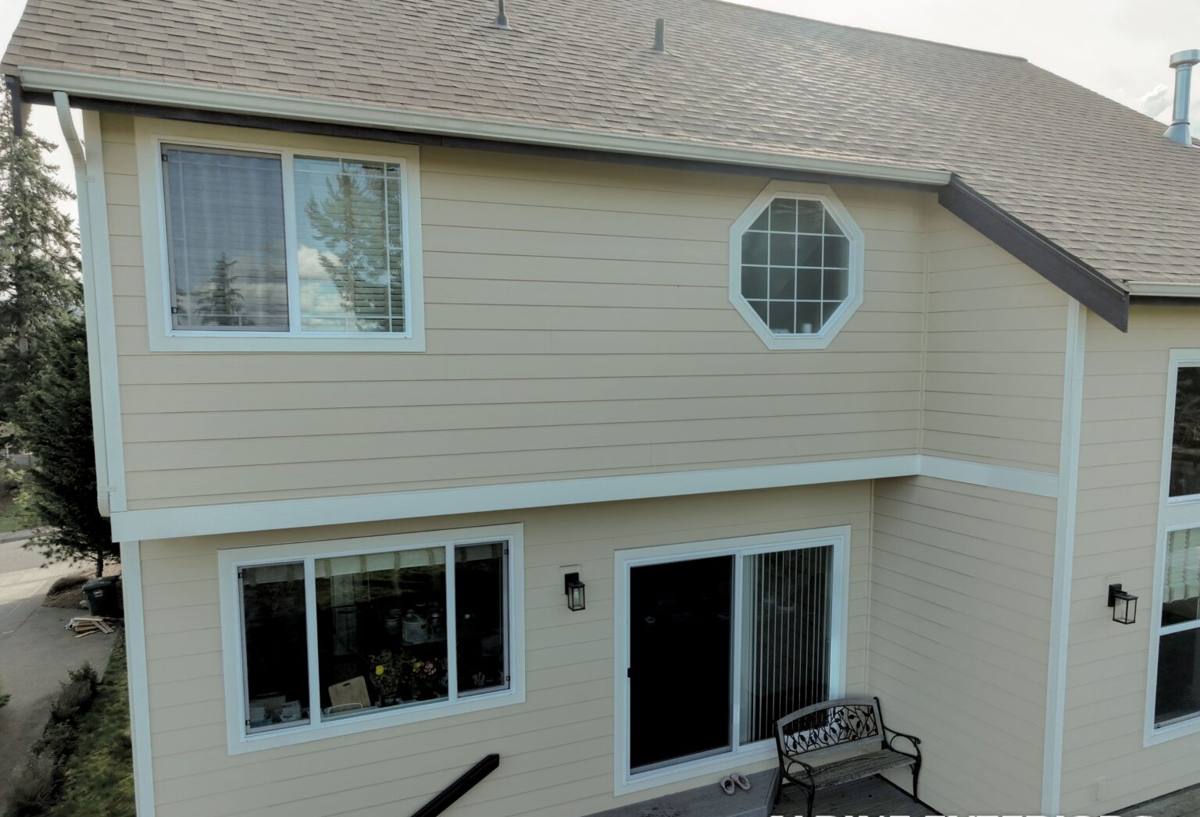
Signs Your Siding Has Reached the End of Its Service Life
Some siding problems are cosmetic and fixable with a repair. Others mean the material or the wall behind it has been compromised, and patching it just delays a bigger job. A few signs point toward replacement rather than repair:
- Soft, spongy, or crumbling siding when pressed — usually a sign of moisture that's already reached the substrate
- Persistent staining or dark streaking that returns shortly after cleaning
- Cracking, warping, or buckling across multiple boards or panels rather than one isolated spot
- Paint that won't hold, blistering or peeling within a year or two of a fresh coat
- Visible gaps at seams, corners, or trim that have opened up as the material has aged or shifted
- A musty smell, interior wall staining, or unexplained humidity that suggests moisture is getting past the siding
- Rising energy bills that track with worsening exterior condition, suggesting the wall assembly is no longer sealing the way it should
Why We Install Only James Hardie Fiber Cement
We install one siding product, full stop: James Hardie fiber cement. We don't offer vinyl, LP SmartSide, Cemplank, Allura, primed spruce, or cedar, and that's a professional standard we hold, not a limited catalog. Each of those alternatives has real strengths — vinyl is inexpensive and low-maintenance in milder climates, engineered wood products go up quickly and take paint well, cedar has genuine character — but each also carries a trade-off we've decided isn't worth putting our name behind in a climate that tests siding this hard.
Vinyl softens, warps, and grows brittle under sustained heat and UV, and its seams and J-channels are exactly the kind of gap that wind-driven rain works into over years of exposure. Wood-based products, however well treated at the factory, still depend on an organic core staying dry, which means every field-cut edge has to be primed and sealed correctly, every time, for the life of the siding — a hard standard to hold across an entire job in a climate this wet and this sunny. Cedar looks great going up, but it's organic too, and it asks for real ongoing upkeep — refinishing, sealing, moisture monitoring — to keep performing through Florida's long, humid stretches between dry spells.
Fiber cement sidesteps that core problem because it isn't organic to begin with. There's no wood substrate for sustained moisture to work into, and it doesn't feed mold or mildew growth the way wood-based siding can in a humid coastal climate. James Hardie also builds climate-engineered HZ product lines specifically for high-moisture, high-wind, coastal-exposure regions like ours, rather than selling one generic formulation nationwide. Combined with a factory-applied ColorPlus finish — baked on under controlled conditions instead of brushed on at the jobsite — it holds color and resists cracking longer than most field-applied paint manages under Pinellas County sun, and it carries a strong transferable warranty that reflects the manufacturer's confidence in how the product performs.
What a Correct Siding Replacement Job Involves
The product only performs as well as the installation behind it, and in a climate that punishes shortcuts, that gap matters more than most homeowners expect going in.
Tear-Off and What We Find Underneath
A full replacement starts by removing the old siding entirely, not covering over it. That step matters in Childs Park specifically, because a lot of homes here have had siding on the wall for a long time without anyone getting a real look at the sheathing, framing, and house wrap underneath. We treat tear-off as an inspection point — checking for rot, water staining, insect damage, or compromised sheathing before anything new goes on — and we'll tell you plainly if we find something that needs to be addressed before the new siding can go up correctly.
Flashing and Weatherproofing
This is where most premature siding failures actually start, and it's the step a rushed crew is most likely to shortcut because it takes real time and doesn't show in a finished photo. Correct installation means properly lapped and sealed flashing at every window, door, and penetration; a weather-resistant barrier installed without gaps; and joint treatment that accounts for how much direct sun and wind-driven rain each wall face actually gets.
Fastening and Clearance
James Hardie specifies fastener type, spacing, and pattern by product line and wind exposure, and those specs exist for a reason in a hurricane-exposed county — under-fastened siding is siding that can work loose or fail in a wind event it should have survived. Proper clearance from grade, decks, and roof lines keeps the bottom edge of the siding out of standing moisture and splash-back, which matters through Florida's rainy season as much as it does during a named storm.
Our Siding Replacement Process, Start to Finish
- On-site assessment — we walk the exterior, check for soft spots and moisture signs, and give you an honest read on repair versus full replacement
- Product and color selection — choosing the right James Hardie line and ColorPlus finish for your home's exposure and style
- Permitting — pulling the required permits for the job, since siding replacement in St. Petersburg falls under Florida Building Code requirements
- Tear-off and substrate inspection — removing the old siding and addressing any rot, moisture damage, or compromised sheathing we find underneath
- Weather barrier and flashing installation — sequencing the water-resistant barrier and flashing at every window, door, and penetration before siding goes up
- Siding installation — fastening to manufacturer spec, with joint and clearance detailing matched to each wall's actual exposure
- Trim, caulking, and final walkthrough — finishing details and a walkthrough so you know exactly what was done and what to expect going forward
Comparing Siding Materials for a Childs Park Home
| Factor | Vinyl / Engineered Wood / Cedar | James Hardie Fiber Cement |
|---|---|---|
| Moisture behavior | Organic core or heat-sensitive material vulnerable to Florida humidity and sun | Non-organic, engineered for sustained moisture and coastal exposure |
| Finish durability | Field-applied or factory finishes that fade or fail faster under intense UV | Factory-baked ColorPlus finish, built to hold color longer under Florida sun |
| Wind performance | Seams and lighter materials more vulnerable in hurricane-force gusts | Engineered for high-wind coastal regions when installed to spec |
| Maintenance | Regular refinishing, sealing, or seam maintenance in a humid climate | Minimal upkeep beyond periodic cleaning and inspection |
| Warranty | Varies widely by product and manufacturer | Strong transferable manufacturer warranty backing the product |
Cost Factors for Siding Replacement in Childs Park
We don't publish blanket pricing because it wouldn't be honest — every home's condition and scope is different. The factors that actually move the number are consistent enough to lay out plainly.
| Factor | How It Affects Cost |
|---|---|
| Existing wall condition | Hidden rot or moisture damage found at tear-off adds repair scope before new siding goes up |
| Home size and complexity | More corners, gables, and window openings mean more flashing and labor time |
| Siding profile and trim | Board-and-batten or heavier trim packages run higher than standard lap siding |
| Access and site conditions | Tight lot lines, fencing, or landscaping can affect staging and labor time |
| Permitting requirements | St. Petersburg permit and inspection requirements are part of a compliant project, not an optional add-on |
Why a Crew That Already Works Childs Park Matters
A contractor who works Childs Park and the surrounding St. Petersburg neighborhoods regularly gets a feel for how this particular mix of home ages and siding histories tends to age — which wall assemblies are more likely to be hiding moisture damage behind decades-old siding, which corners of a lot see the harshest sun and wind exposure, what the permitting process actually looks like for this jurisdiction. That's the kind of judgment that comes from doing the work here repeatedly, not from a generic spec sheet written for the national average climate. It also means someone local is reachable years down the road if a warranty question comes up, instead of chasing down a crew that's moved on to another market.
Get a Free, No-Pressure Estimate
If you're weighing a siding replacement on a Childs Park home — whether it's original wood siding that's finally reached the end of its life, an older vinyl re-side that's failing at the seams, or you just want an honest read on what your walls actually need — we're glad to take a look. We offer free, no-pressure estimates and will walk the property with you and explain exactly what we see, no generic sales pitch attached.