 St. Petersburg
 Siding in Childs Park: What the Neighborhood's Homes Are Up Against
Childs Park is one of St. Petersburg's established residential neighborhoods, with a housing stock that includes a good number of mid-century single-family homes alongside newer construction and renovations. Whatever the age of a given house, the siding on it is doing the same job every other exterior surface in Pinellas County has to do: standing between the framing and a climate that doesn't let up. Hurricane-force wind events, intense year-round UV exposure, wind-driven rain, and salt air moving in off the Gulf and Tampa Bay all work on siding continuously, not just during storm season.
That combination is why siding decisions in this part of St. Petersburg deserve more thought than picking a color and a material off a brochure. The right installation has to manage water, resist wind uplift, and hold its finish through years of Florida sun — and it has to do all three at once, because these homes don't get a break between hurricane season and the next heat wave.
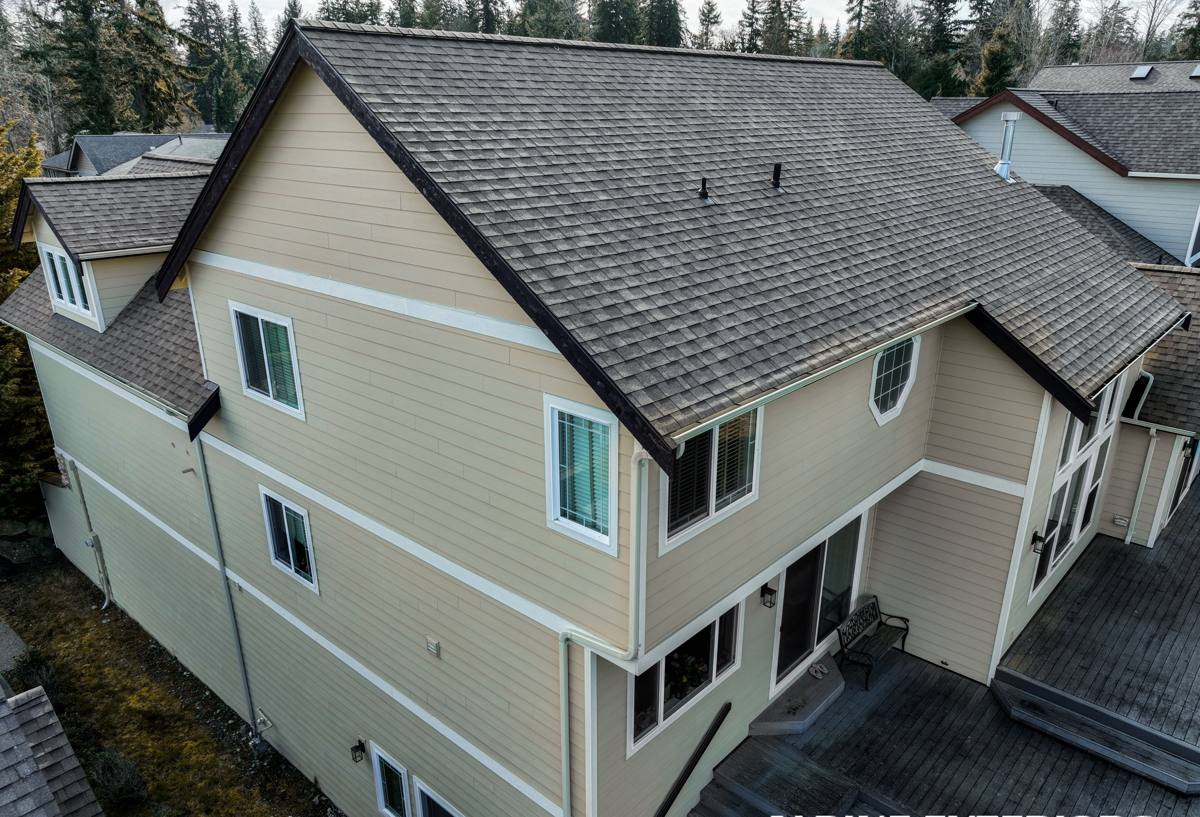
Why Siding Fails Faster in This Part of Pinellas County
Most premature siding failure we see isn't really about the siding material itself — it's about what's happening behind it. Florida's humidity means any gap in the weather barrier gives moisture a place to sit against the wall sheathing. Add wind-driven rain, which pushes water sideways and upward under laps and around trim in a way that dry-climate installation standards were never designed for, and small installation shortcuts turn into rot, mold, and soft sheathing within a handful of years instead of decades.
Salt air compounds the problem for anything metal — fasteners, flashing, trim accessories — by accelerating corrosion, especially on homes closer to the water. UV exposure is the third factor: constant sun bleaches and breaks down paint film and lower-grade siding substrates faster in Florida than almost anywhere else in the country. A siding system that isn't engineered and installed with all three of these forces in mind is working against the clock from day one.
What Correct Siding Installation Actually Involves
"Correct" siding installation is not just nailing boards to a wall in a straight line. It's a system, and every layer of that system has a job.
Moisture Management Comes First
Before a single piece of siding goes up, the wall needs a continuous weather-resistant barrier, properly lapped so water sheds downward and outward instead of behind it. Flashing at windows, doors, and any penetration has to integrate with that barrier, not just sit on top of it. This is the part of the job that's invisible once the siding is on — and it's also the part that determines whether the wall stays dry for the next 30 years or starts rotting from the inside in five.
Wind Resistance and Fastening
Florida's building code sets minimum fastening schedules based on wind zone, and Pinellas County enforces them at permitting and inspection. Fastener type, spacing, and embedment all affect how well siding holds on in a wind event — and they're exactly the details that get rushed on a job priced to move fast rather than done to spec. Proper clearances at the ground, roofline, and any trim also matter here, both for wind performance and for keeping water from wicking up into the bottom edge of the siding.
Finish and Detailing
Caulking, trim work, and paint or factory finish are the last line of defense against UV and moisture at every seam and joint. Skipping or rushing this step is one of the most common ways a siding job looks fine at handoff and starts failing within a couple of years.
Why We Only Install James Hardie Fiber Cement
We install James Hardie fiber cement siding exclusively — we don't install vinyl, LP SmartSide, or other engineered wood products, and we won't quote them. That's a deliberate standard, not a limitation. Hardie's HZ5 product line is engineered specifically for high-humidity, high-moisture climates like ours, the ColorPlus factory finish is baked on and warranted against fading and cracking in a way field-applied paint isn't, and fiber cement is non-combustible, which matters in a state with real wildfire and lightning-strike risk on top of everything else. It also carries a strong, transferable manufacturer warranty when installed to spec — which is exactly why correct installation, not just correct material, is the point of this page.
We'd rather turn down a job than install a product we don't think holds up long-term on a Pinellas County home. Hardie, installed correctly, is what we're willing to put our name on.
Our Childs Park Installation Process
- On-site assessment. We look at the existing siding, the condition of the sheathing underneath where accessible, and any trouble spots — soft areas, past water intrusion, trim damage.
- Tear-off and sheathing check. Old siding comes off and we inspect what's underneath. Any rotted or compromised sheathing gets flagged and addressed before anything new goes up — covering a bad substrate is how good siding fails early.
- Weather barrier and flashing. A continuous, properly lapped weather-resistant barrier goes on, with flashing detailed at every window, door, and penetration.
- Hardie installation to spec. Fastening schedule, clearances, and joint treatment follow James Hardie's installation requirements and the wind zone requirements that apply in Pinellas County.
- Trim, caulk, and finish. All seams and transitions get sealed and finished so water and UV can't find a way in at the details.
- Final walk-through and cleanup. We review the completed work with the homeowner and clear the site.
Common Siding We Remove From Childs Park Homes
Because of the age range of homes in this neighborhood, we run into a mix of original and previously replaced siding materials. Here's what we typically find, and what we install instead.
| Existing Siding Found | Typical Issue in This Climate | What We Install Instead |
|---|---|---|
| Original wood lap siding | Paint failure, moisture absorption, rot at laps and bottom edges | James Hardie HZ5 lap siding, factory-finished |
| Aluminum siding | Dents, chalking finish, oxidation, poor insulation value | James Hardie lap or panel siding |
| Older vinyl siding | Warping and cracking under UV and heat, wind damage at loose panels | James Hardie lap siding with proper fastening |
| Stucco with cracking/staining | Hairline cracks letting in wind-driven rain, staining from trapped moisture | James Hardie panel or lap siding over corrected substrate |
What Moves the Cost of a Childs Park Siding Project
We don't publish flat pricing because every home is different, but the factors that actually move the number are consistent. Knowing them ahead of time makes for a more useful conversation when we come out to look at your house.
| Factor | Why It Matters |
|---|---|
| Sheathing condition | Rot or water damage found during tear-off has to be repaired before new siding goes on — this is common on older homes and can't be predicted with full accuracy until the old siding is off |
| Home size and story count | More surface area and two-story access both add labor time |
| Trim and architectural detail | Homes with more corners, gables, and window/door openings need more flashing and finish work per square foot |
| Siding profile chosen | Lap, shingle, and panel Hardie products differ in material and installation labor |
| Color and finish selection | ColorPlus factory-finished options versus field painting affect both cost and long-term maintenance |
Why a Crew That Already Works Childs Park Matters
Siding installation isn't just about the product — it's about who's putting it on and whether they understand the conditions specific to this part of St. Petersburg. A crew that already works in Childs Park and the surrounding Pinellas County neighborhoods knows the wind zone requirements that apply here, has already worked through the local permitting process, and has seen firsthand how the housing stock in this area ages under sun, salt, and storm exposure. That's the difference between a contractor guessing at what your home needs and one applying what they already know works.
There's also a practical side to hiring local: faster response for a walk-through, easier follow-up if a question comes up after the job, and a crew that isn't driving in from across the region and disappearing once the invoice is paid.
Signs Your Childs Park Home May Need New Siding
- Visible cracking, warping, or bubbling on the current siding surface
- Soft spots or give when you press on the siding, especially near the bottom edge or at corners
- Paint that's peeling or failing faster than it should, even after a fresh coat
- Staining, streaking, or a musty smell near exterior walls, which can point to trapped moisture
- Siding that's visibly loose, missing, or shifted after a wind event
- Rising energy bills that could point to a compromised wall envelope behind the siding
If you're seeing any of these, it's worth having someone look at what's happening behind the siding, not just the surface.
If you're in Childs Park and thinking about new siding, we're happy to come take a look and give you a straightforward, no-pressure estimate — no obligation, just an honest read on what your home actually needs.