 St. Petersburg
 Building a Custom Deck That Actually Holds Up in Childs Park
Childs Park is a well-established, tree-lined neighborhood, and that character is part of what makes it a good place for a deck — mature canopy for shade, established lots, and homes with the kind of layout that benefits from added outdoor living space. But a deck built here has to deal with the same conditions every structure in St. Petersburg deals with: long stretches of intense UV, sudden wind-driven rain, hurricane-force wind loads during the season, and a steady dose of salt-laden air blowing in off Tampa Bay and the Gulf. A deck that would hold up fine in a drier, milder climate can fail here in a fraction of the time if it wasn't designed and fastened with Pinellas County conditions in mind.
This page is about one thing: custom deck construction for Childs Park homes specifically, not a generic national overview. The right approach here is shaped by our climate, our building code, and the practical realities of an established neighborhood with a mix of home ages and lot conditions.
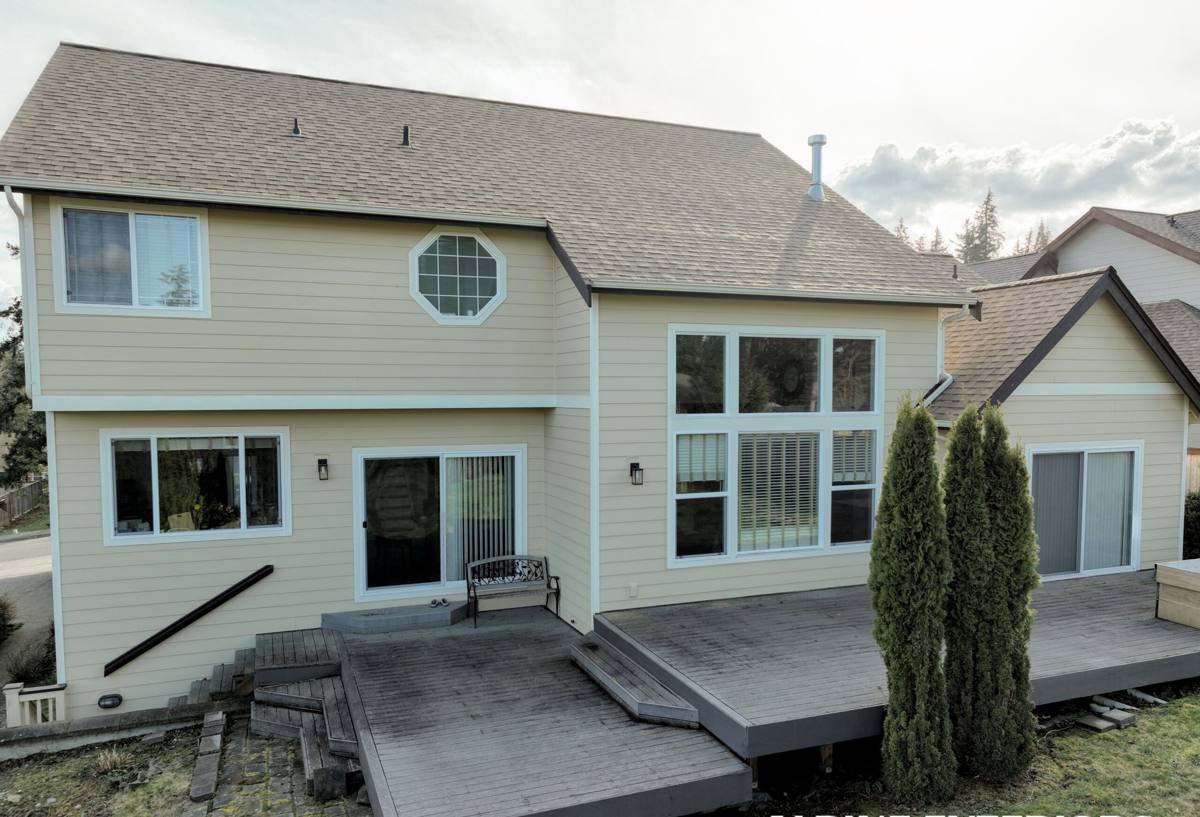
What Childs Park Homes Need From a Custom Deck
Before any design decisions get made, a few local realities shape the job:
- Tree canopy and shade patterns — mature trees are great for comfort but mean more organic debris on deck surfaces and less UV-driven drying after rain, which changes how a deck sheds moisture.
- Older home grading — many lots in established St. Petersburg neighborhoods were graded decades ago; drainage away from the house and away from deck footings needs to be checked, not assumed.
- Proximity to the bay and Gulf — salt air accelerates corrosion on fasteners, connectors, and any exposed metal hardware, even well inland from the immediate coastline.
- Wind exposure — Pinellas County sits squarely in a high wind zone, and deck attachment to the house (the ledger connection) is one of the most common failure points inspectors see after storms.
A correct deck build treats all four of these as design inputs, not afterthoughts.
Choosing Decking Material for Coastal Florida Conditions
The decking surface is the most visible decision, but it's not the only one that matters — and it's not always the one that fails first. Here's how the common options actually perform under Pinellas County sun, rain, and salt air:
| Material | UV / Fade Behavior | Moisture Behavior | Maintenance Burden |
|---|---|---|---|
| Pressure-treated wood | Grays and can splinter without regular sealing | Absorbs water; prone to cupping/checking if not sealed | Annual cleaning and re-sealing recommended |
| Basic composite | Some fading over years, varies by brand and color | Low absorption, but uncapped boards can hold surface moisture | Periodic cleaning; no staining/sealing needed |
| Capped composite | Strong fade resistance from the cap layer | Cap layer resists moisture intrusion at the surface | Low; occasional washing |
| PVC / cellular vinyl | Excellent fade and color stability | Fully moisture-resistant, doesn't absorb water | Lowest; soap and water |
Wood is the lower-cost option and still a reasonable choice for homeowners who don't mind the upkeep and like the traditional look. Our standard is to seal it properly at install and set expectations clearly about the re-sealing schedule — skipping that step is the single biggest reason wood decks in this climate age poorly. Capped composite and PVC cost more up front but hold up better against the UV load and humidity cycling that's typical here, which is why we lean toward recommending them for full sun exposures and for homeowners who want to minimize ongoing maintenance.
What We Won't Do, and Why
We don't install uncapped composite boards in full-sun, low-airflow spots without discussing the trade-offs first. Early-generation composite products in humid, high-UV climates have a track record of surface wear and moisture absorption at cut ends if end caps aren't sealed correctly during install. That's not a knock on any manufacturer — it's a maintenance and installation-sensitivity issue, and it's on us to install it right or steer a homeowner toward a better fit for their specific spot on the property.
Framing, Fasteners, and Hardware: Where Hurricane-Grade Decks Are Actually Won or Lost
Homeowners often focus on the decking surface, but the structure underneath is what determines whether a deck survives storm season. In a high-wind coastal county like Pinellas, three things matter more than anything on the surface:
The Ledger Connection
Where the deck attaches to the house is the single most common point of catastrophic failure in wind and storm events nationally, and it's an even bigger deal in a hurricane-exposed county. Proper ledger attachment means correct lag or through-bolt spacing, flashing that actually sheds water away from the house rim joist, and — critically — never fastening into stucco or siding without reaching structural framing behind it.
Fasteners and Connectors
Salt air corrodes ordinary galvanized hardware faster here than it would inland. We use stainless steel or high-grade coated fasteners and structural connectors rated for coastal exposure, particularly on joist hangers, post bases, and any hardware that can't easily be inspected or replaced later without tearing into the structure.
Post Footings
Footing depth and bearing need to account for local soil conditions, and footings need to be sized for actual uplift and wind load calculations, not guessed at. This is also where older, informally-built decks in established neighborhoods tend to fall short — undersized footings that were fine for decades of calm weather but were never engineered for a real wind event.
Railings, Stairs, and Code Requirements
Florida Building Code and local Pinellas County permitting set specific requirements for deck height, guardrail height, baluster spacing, and stair geometry. These aren't optional style choices — they're safety minimums, and they get checked at inspection. A few of the most common requirements homeowners should know going in:
- Guardrails are generally required once a deck surface is a certain height above grade, with a minimum rail height set by code.
- Baluster spacing has a maximum gap requirement, driven by child-safety standards.
- Stair rise and run have to fall within a consistent, code-compliant range — inconsistent stair steps are a common inspection flag and a real trip hazard.
- Any electrical work added to a deck (outlets, lighting) needs to meet code separately and typically requires its own permit trade.
Permits are required for new deck construction and most substantial deck rebuilds in St. Petersburg and unincorporated Pinellas County. Skipping the permit doesn't just risk a fine — it can create real problems at resale, when an uninspected structure shows up during a buyer's inspection or the county's permit records.
Our Custom Deck Process, Start to Finish
A custom deck project runs smoother when the process is clear up front. Here's how we typically move through a job in Childs Park and the surrounding St. Petersburg area:
- On-site assessment — we look at grade, drainage, existing structure (for rebuilds), sun exposure, and how the space will actually be used.
- Design and material selection — layout, decking material, railing style, and any built-in features are worked out with the homeowner, with honest trade-offs explained for each material option.
- Permitting — we handle the permit submission and coordinate required inspections with the county or city, so the homeowner isn't left navigating that process alone.
- Site prep and footings — footings are dug and sized to code and to actual soil and load conditions, not just a standard template.
- Framing — ledger, posts, beams, and joists go in with corrosion-resistant hardware throughout.
- Decking, railing, and stairs — surface material is installed per manufacturer spec (this matters for warranty coverage), followed by code-compliant railings and stairs.
- Final inspection and walkthrough — we walk the finished deck with the homeowner, cover basic maintenance expectations, and make sure everything passes final county inspection.
Maintenance Realities for Salt Air and UV Exposure
Every deck in this climate needs some level of ongoing care — the differences are in how much and how often. A simple seasonal checklist we walk homeowners through:
- Rinse off salt residue, pollen, and debris every few weeks, more often under heavy tree canopy.
- Inspect fasteners and visible hardware annually for corrosion, especially near ground contact and at the ledger.
- Check railings and stair connections for looseness at least once a year.
- Reseal wood decking on the schedule recommended for the specific product — skipping this is the fastest way to shorten a wood deck's lifespan here.
- Clear debris from between boards and around footings so water isn't trapped against the structure after storms.
- After any major storm, do a visual check of the ledger connection and post bases before heavy use resumes.
Cost Factors for a Custom Deck in Childs Park
Every deck project is different, but the same handful of factors drive most of the cost variation we see on jobs in this area:
| Factor | Why It Moves the Price |
|---|---|
| Decking material | Pressure-treated wood costs less upfront; capped composite and PVC cost more but reduce long-term maintenance |
| Deck size and shape | Multi-level decks, curves, and built-in features add labor and material beyond a simple rectangle |
| Height above grade | Taller decks need more substantial framing, footings, and code-required guardrails |
| Site access and grading | Difficult access or poor existing drainage can add site prep work |
| Railing and stair complexity | Custom railing styles and multiple stair runs add both material and labor |
| Permit and inspection scope | Larger or higher decks may trigger additional engineering or inspection requirements |
We give straightforward, itemized estimates so homeowners can see exactly where their money is going and where the trade-offs are, rather than a single lump number with no explanation behind it.
Why Hiring a Crew That Already Works in Childs Park Matters
A deck built to a generic national standard isn't necessarily built for Pinellas County. A crew that regularly works in Childs Park and the surrounding St. Petersburg neighborhoods already knows the local permitting process, has a working relationship with the inspectors who will sign off on the job, and has seen firsthand how decks in this specific climate age over five, ten, and twenty years — not just how they look on installation day. That local track record shows up in the small decisions: which hardware actually holds up near the bay, how footings need to be sized for local soil, and where older homes in this neighborhood tend to have drainage quirks worth checking before the first post goes in.
If you're considering a custom deck for your Childs Park home, we're glad to walk the property, talk through material options honestly, and put together a clear, no-pressure estimate using the form below.