 St. Petersburg
 Building a Deck That Actually Holds Up in Gulfport
Gulfport sits right on Boca Ciega Bay, and that waterfront location is exactly why decks here take more abuse than decks almost anywhere inland. Between the salt-laden air coming off the bay, the intense year-round Florida sun, wind-driven rain, and the real possibility of hurricane-force winds during storm season, a deck built to generic specs simply won't last as long as one built with this specific environment in mind. We build decks for homes in Gulfport and throughout St. Petersburg and Pinellas County, and the difference between a deck that looks good for two years and one that holds up for decades almost always comes down to material choice, fastener selection, and structural details that aren't visible once the job is finished.
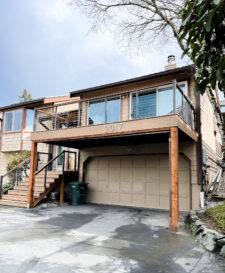
What Makes a Gulfport Deck Different
Gulfport is a mix of older bungalow-style homes and newer construction, many sitting close to the water on lots where drainage, elevation, and moisture management all matter more than they would a few miles inland. A deck project here isn't just carpentry — it's a structure that has to survive constant humidity, salt exposure, and occasional high wind events without loosening, cupping, or corroding.
Salt Air and Corrosion
Salt air accelerates corrosion in any metal fastener, hanger, or bracket that isn't rated for coastal exposure. Standard electro-galvanized screws and nails can start rusting within a season this close to the bay. We use stainless steel or hot-dip galvanized hardware rated for coastal or marine-grade exposure on every connection point — ledger bolts, joist hangers, post bases, and decking fasteners alike. Cutting corners on hardware is one of the most common causes of premature deck failure we see in this area, and it's almost always hidden until something starts to sag or a board pulls loose.
Sun Exposure and Material Heat
Florida sun is relentless on exposed decking. UV exposure breaks down wood fibers and fades or chalks lower-quality composite boards over time, and dark-colored composite decking can get uncomfortably hot underfoot on a summer afternoon. Material choice and even board color should be matched to how much direct sun a particular deck will actually get.
Wind and Storm Loads
Pinellas County is squarely within hurricane risk territory, and the Florida Building Code's wind provisions apply to deck construction just as they do to roofing or siding. Footings, post connections, and railing systems all need to be sized and fastened to resist uplift and lateral loads, not just support the deck's own weight.
Choosing the Right Decking Material
There's no single "best" decking material — the right choice depends on budget, how much maintenance the homeowner wants to do, and how exposed the deck is to sun and salt air. Here's how the common options compare for a Gulfport property:
| Material | Upfront Cost | Maintenance | Coastal Durability | Heat in Direct Sun |
|---|---|---|---|---|
| Pressure-treated pine | Lowest | Needs re-sealing every 1-2 years | Good if hardware and sealing are kept up | Moderate |
| Tropical hardwood (e.g. ipe) | Highest | Periodic oiling to maintain color; low rot risk regardless | Excellent — naturally dense and rot-resistant | Moderate |
| Composite/PVC decking | Mid to high | Low — no sealing or staining required | Very good; won't rot or splinter | Can run hot in dark colors |
For homeowners who want the lowest long-term maintenance, composite or PVC decking in a lighter color tends to make sense in this climate. For those who prefer a natural wood look and don't mind periodic upkeep, pressure-treated pine remains a solid, budget-friendly choice as long as the fasteners and sealing schedule are handled correctly.
The Structural Details That Actually Matter
A deck's surface material gets all the attention, but the framing underneath is what determines whether it's still solid in ten years. A few details we treat as non-negotiable on every job:
Ledger Board Attachment
The ledger board — where the deck attaches to the house — is the single most common source of hidden rot and structural failure in residential decks nationwide, and the risk is higher here given the humidity and rain exposure. Proper flashing between the ledger and the house wall keeps water from working its way behind the siding, which is a much bigger problem to fix than the deck itself.
Footings and Post Connections
Footing depth and post-to-beam connections need to account for wind uplift, not just vertical load. We use engineered hurricane-rated connectors at post bases and beam ties rather than relying on toe-nailing or undersized brackets.
Joist Spacing and Fastener Pattern
Tighter joist spacing and a correct fastener pattern reduce board deflection and bounce, which matters both for comfort underfoot and for long-term board performance in humid, temperature-swinging conditions.
Permits, Codes, and Waterfront Considerations
Deck construction in Gulfport falls under the Florida Building Code and is permitted through the appropriate local building department, with inspections at the footing, framing, and final stages. A few things come up more often on Gulfport properties than elsewhere:
- Wind load requirements for railing posts and guardrail systems, which are stricter than in non-coastal jurisdictions
- Setback requirements from property lines and, for waterfront lots, from the water itself
- Flood zone designations that can affect allowable construction methods near the shoreline
- Guardrail height (typically 36-42 inches depending on deck height) and baluster spacing (no gaps wider than 4 inches) required by code
- Stair rise, run, and handrail requirements for any deck with steps
Skipping the permit process on a deck project is a common shortcut, but it creates real problems at resale — unpermitted structures routinely surface during home inspections and can hold up a sale or trigger a required retrofit. We pull permits and schedule inspections as a standard part of every project.
Our Process
Every deck project starts with an in-person site visit, not a phone estimate. We look at sun exposure, drainage, soil or existing footing conditions, and how the deck will tie into the house before recommending materials or layout.
- Site visit and consultation — assess the space, discuss how the deck will be used, and identify any site-specific challenges
- Design and material selection — size, layout, decking and railing material matched to budget and exposure
- Permitting — we handle the application, drawings, and inspection scheduling
- Demolition of any existing structure, if applicable
- Footings, framing, and structural inspection
- Decking, railing, and stair installation
- Final walkthrough and any sealing or finishing work
What a Correctly Built Deck Should Include
- Flashed and properly fastened ledger board connection to the house
- Stainless steel or hot-dip galvanized fasteners and hardware throughout
- Hurricane-rated post-to-beam and post-to-footing connectors
- Footings sized for both vertical load and wind uplift
- Code-compliant railing height and baluster spacing
- Proper slope and gapping between boards for drainage and material movement
- Decking material matched to the deck's actual sun exposure
- A pulled permit and passed final inspection
Cost Factors
Deck pricing varies widely based on size, material, and site conditions. Rather than quote a number that won't reflect your actual project, here's what drives cost up or down:
| Factor | Impact on Cost |
|---|---|
| Decking material (treated pine vs. hardwood vs. composite) | Largest single variable — composite and hardwood cost more upfront than treated pine |
| Deck height and number of levels | Taller or multi-level decks need more framing, footings, and stair work |
| Railing style | Cable, glass, or custom railing costs more than standard baluster railing |
| Site access and existing structure removal | Tight side yards or demolition of an old deck add labor time |
| Permitting and engineering | Larger or elevated decks may require engineered drawings, adding to the permit cost |
Keeping It in Good Shape
A well-built deck in this climate still needs some ongoing attention. Wood decking should be inspected and re-sealed on a regular schedule, and even composite decking benefits from an occasional wash-down to remove salt residue and organic buildup. Checking fastener heads and railing connections once or twice a year for early signs of corrosion or loosening is the easiest way to catch a small problem before it becomes a structural one.
Why Local Experience Matters
A deck built by a crew that hasn't worked waterfront properties before often looks fine on day one and starts showing problems within a couple of storm seasons — usually corroded hardware, a rotting ledger board, or a railing that wasn't sized for actual wind load. Working regularly in Gulfport and across St. Petersburg and Pinellas County means we already know what the local permitting process expects, what hardware actually holds up this close to the bay, and how the area's older homes are typically framed, so there are fewer surprises once a project is underway.
If you're planning a new deck or replacing one that's showing its age, we're happy to take a look and put together a straightforward, no-pressure estimate — just fill out the form below.