 St. Petersburg
 Board & Batten Siding for Euclid-St. Paul Homes
Board and batten is one of the most requested siding profiles we install in St. Petersburg, and Euclid-St. Paul is a neighborhood where it shows up often — on bungalows, cottages, and mid-century homes where a clean vertical line adds character without looking busy. It's also a profile that punishes a bad installation faster than almost any other siding style. The wide flat boards and narrow battens create more seams, more fastening points, and more surface area exposed to sun and wind than a standard lap profile. Done right, board and batten is durable and low-maintenance for decades. Done wrong, it's one of the first things to show cracking, staining, and water intrusion on a Pinellas County home.
This page covers what board and batten siding actually needs to hold up in this specific climate and neighborhood, what a correct installation involves, and why we only install it in James Hardie fiber cement rather than the wood or vinyl versions still common on older homes in the area.
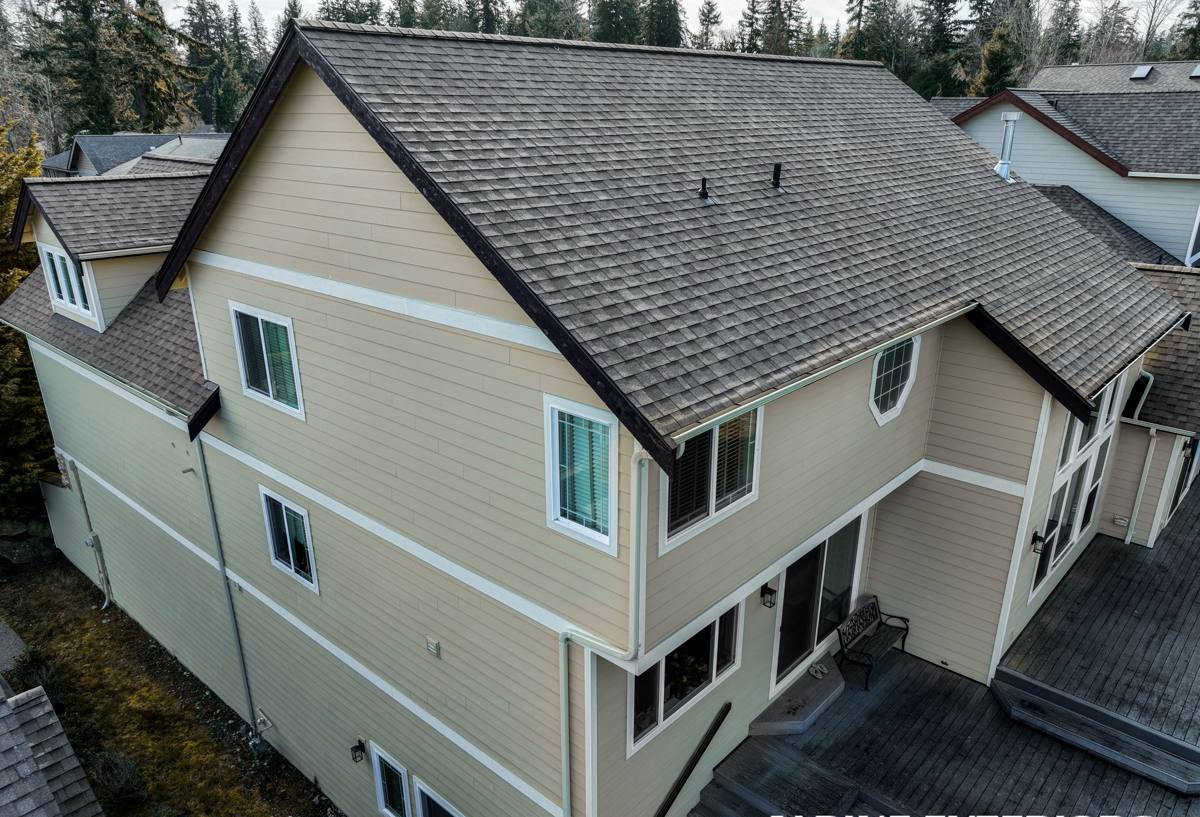
What St. Petersburg's Climate Does to Board & Batten Siding
Every siding profile has to survive the same regional conditions, but board and batten's vertical seams and exposed batten strips make it more sensitive to a few specific stresses that are constant in this part of Pinellas County.
Wind-Driven Rain and Vertical Seams
Board and batten relies on the batten strip to shed water off the seam between boards. In a normal rain, gravity does most of the work. In the wind-driven rain that comes with a summer storm line or a tropical system, water gets pushed sideways and upward into those seams instead of running straight down. If the boards underneath aren't properly lapped, taped, and flashed, that water finds its way behind the siding rather than off of it.
Intense, Year-Round UV
St. Petersburg gets strong, direct sun essentially every month of the year, not just in summer. On board and batten, the narrow battens and the edges of each board take the brunt of it, since they sit slightly proud of the flat panel behind them. Cheaper or unfinished materials chalk, fade, and start to crack along those exposed edges well before the rest of the wall shows wear.
Salt Air and Coastal Humidity
Even set back from the water, homes in this part of Pinellas County live in a salt-laden, humid air mass most of the year. Salt accelerates corrosion on fasteners and metal flashing, and humidity keeps organic materials like untreated wood damp longer than they'd stay in a drier climate. Anything fastened into board and batten siding — nails, screws, flashing — needs to be rated for that environment, not just whatever is cheapest at the yard.
Why Board & Batten Suits This Neighborhood
Euclid-St. Paul has the kind of housing stock where board and batten reads as original architecture rather than a trend — older Florida bungalows, cottage-style homes, and additions built to match a home's existing character all lend themselves to the vertical board look, whether it's used on the whole house or as an accent on a gable, porch, or addition. It also pairs well with the mix of home styles in this part of St. Petersburg because it can be scaled: full-house vertical siding on a cottage, or a board and batten accent wall against horizontal lap siding elsewhere on the same home. Either way, the material and installation standard need to be the same, because the climate doesn't treat an accent panel any more gently than a full elevation.
What a Correct Board & Batten Installation Requires
The visual result of board and batten is simple — vertical boards with a narrow strip covering each seam — but what's behind that surface determines whether it lasts 30 years or needs repair in five. A correct installation in this climate involves several layers working together, not just boards nailed to the wall.
Water-Resistive Barrier and Substrate Prep
Before any siding goes up, the wall needs a continuous water-resistive barrier, properly lapped and sealed at every penetration. Any rot, soft sheathing, or old fastener damage from the previous siding gets addressed at this stage — covering over a compromised substrate with new siding just hides the problem for a while.
Flashing and Water Management
Every horizontal joint, window, door, and roof-to-wall transition needs proper flashing so water is directed out and away from the wall assembly, not just relying on caulk. Caulk is a maintenance item, not a water barrier — it fails over time, especially under constant UV exposure, and a well-flashed wall keeps working even after the sealant ages.
Fastening for Wind Resistance
Pinellas County's wind requirements aren't a formality here — they reflect real storm exposure. Fastener type, spacing, and embedment depth all affect how the siding performs in sustained wind and gusts, and board and batten's narrow battens mean less margin for a fastener that's placed wrong or spaced too far apart. This is engineered to a specification, not eyeballed.
Batten Spacing and Board Layout
Boards and battens need consistent spacing and a layout planned around the wall's actual dimensions — window and door openings, corners, and transitions — so the pattern reads cleanly and every seam is properly backed and covered. A rushed layout leads to inconsistent reveals and battens that don't fully cover the seam underneath, which is exactly where wind-driven rain gets in.
Comparing Board & Batten Materials
Homeowners in Euclid-St. Paul considering board and batten siding usually run into three material options. Here's an honest look at how they compare in this climate, which is why we've standardized on one of them.
| Material | Coastal Climate Performance | Maintenance Burden | Long-Term Cost Factor |
|---|---|---|---|
| James Hardie fiber cement | Engineered for high heat, humidity, and wind exposure; non-combustible; factory ColorPlus finish resists fading | Low — occasional wash, no repainting on ColorPlus finishes | Higher upfront, strong long-term value with transferable warranty |
| Vinyl board & batten | Can warp or become brittle under sustained UV and heat; seams can loosen in high wind | Low day-to-day, but replacement (not repair) is often the only fix for damage | Lower upfront, shorter realistic service life in this climate |
| Wood (cedar, primed spruce) | Attractive but absorbs moisture at seams and battens; prone to rot, insect damage, and cracking under UV | High — regular repainting, caulking, and spot repairs | Lower upfront, ongoing maintenance cost adds up over time |
We only install the first option. James Hardie's fiber cement board and batten products are manufactured specifically for hot, humid, coastal climates like this one, with a factory-applied ColorPlus finish that's baked on rather than field-painted, and a fastening and flashing system that's been engineered and tested for wind performance. We stopped installing vinyl and wood board and batten years ago because we were seeing the same climate-related failures repeat on homes in this area, and we'd rather stand behind one material we trust than offer options we know will need more attention down the road.
Our Installation Process
When we quote a board and batten project in Euclid-St. Paul, the process generally follows the same steps, whether it's a full re-side or an accent section:
- On-site assessment — we inspect the existing wall, substrate condition, and any problem areas (moisture staining, soft spots, prior repair patches) before quoting anything.
- Layout planning — board and reveal spacing is planned around the actual wall dimensions, openings, and corners so the finished pattern is even and every seam is fully backed.
- Tear-off and substrate repair — old siding comes off, and any compromised sheathing or framing is repaired before new material goes up.
- Water-resistive barrier and flashing — a continuous barrier and properly lapped flashing go in at every joint, window, door, and transition.
- Board and batten installation — installed to the manufacturer's fastening specification for this wind zone, not a generalized pattern.
- Sealing and finish inspection — sealant applied only where the system calls for it, then a final walk-through before we call the job done.
Permitting and inspection requirements are handled as part of the job — St. Petersburg and Pinellas County have specific wind-load and building code requirements for exterior wall coverings, and those get addressed at the permit stage, not worked around.
Maintenance & What to Watch For
James Hardie board and batten is low-maintenance, but "low-maintenance" doesn't mean "no attention ever." A short annual check keeps small issues from becoming siding replacements.
- Rinse the siding periodically to remove salt residue and airborne grit, especially on sun-facing and street-facing elevations.
- Check caulking around windows, doors, and trim once a year — sealant is a maintenance item that ages faster under constant UV.
- Look at the base of the battens after storm season for any sign of water staining or soft spots at the bottom edge.
- Keep sprinklers and irrigation heads from spraying directly on the siding day after day — constant wetting shortens the life of any exterior finish.
- Have any impact damage (branches, debris in high wind) inspected promptly rather than left through another storm season.
Why Hire a Crew That Already Works Euclid-St. Paul
Board and batten siding is not the profile to learn on. The extra seams, the batten fastening pattern, and the flashing detail at every joint all require a crew that installs this system regularly, not occasionally. A crew that already works in Euclid-St. Paul and the surrounding St. Petersburg area also understands the specific wind and moisture conditions this neighborhood deals with, has already worked through the local permitting process, and can spot the kind of substrate issues that show up on the area's housing stock before they become a problem hidden behind new siding. That local familiarity is the difference between a board and batten installation that looks right on day one and one that's still performing correctly after the next several storm seasons.
If you're considering board and batten siding for a home in Euclid-St. Paul, we're happy to take a look and give you a straightforward, no-pressure estimate — including an honest read on your current siding's condition before we talk about replacement. Use the form below to get started.