 St. Petersburg
 Coquina Key Is a Different Kind of Siding Job
Coquina Key sits on filled land wrapped by canals on the south side of St. Petersburg, and that waterfront position changes what a house needs from its exterior. Homes here face near-constant humidity, direct sun off open water, and salt-laden air moving in off the canals and Tampa Bay. A siding product that performs fine three miles inland can fail early on a canal lot. When we quote a fiber cement job on Coquina Key, we're not just measuring walls — we're accounting for how close the home sits to water, how much afternoon sun the exposed sides take, and how the existing siding has actually held up.
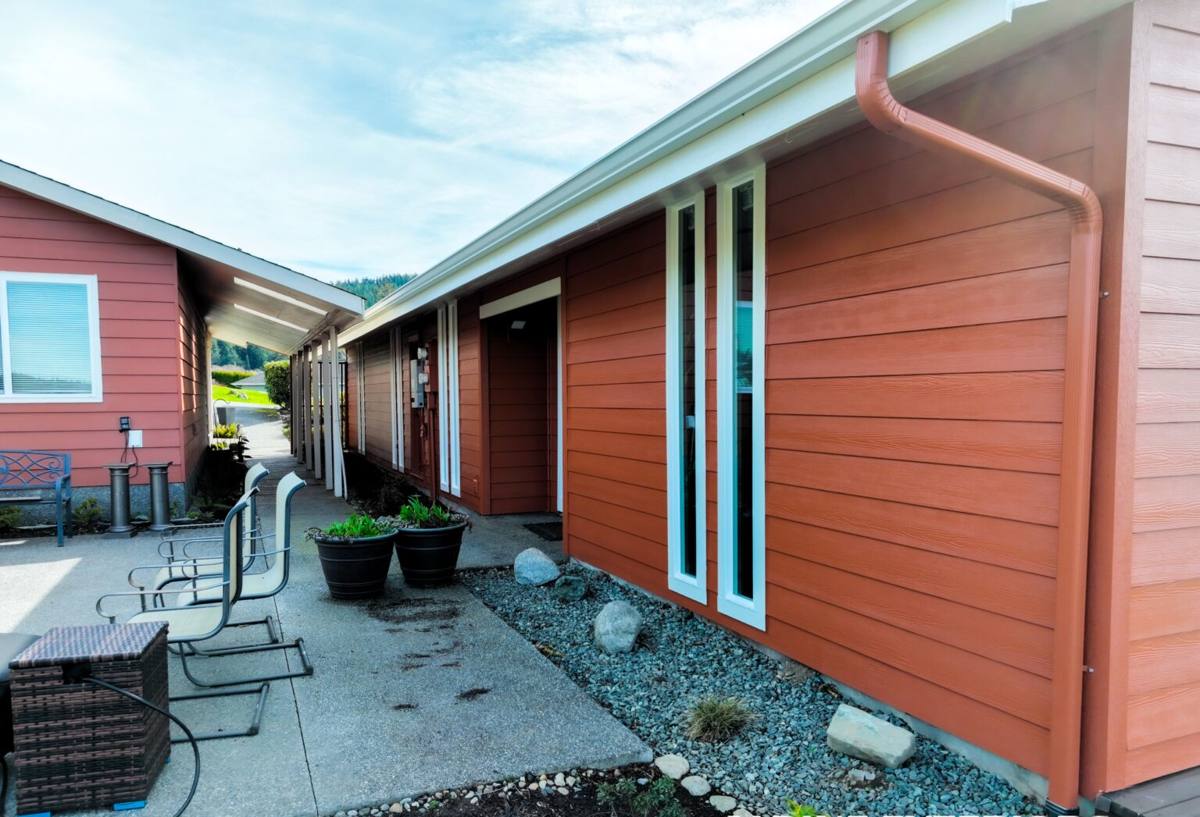
This page is about one job in one place: installing James Hardie fiber cement siding on a Coquina Key home, done correctly, by a crew that already knows this neighborhood's conditions.
What the Climate Actually Does to Siding Here
Pinellas County's exterior materials deal with a combination of stresses that few other regions match:
- Salt air corrosion — canal and bay proximity accelerates rust on exposed fasteners, trim, and hardware, and it degrades some paints and coatings faster than manufacturers' standard testing accounts for.
- Wind-driven rain — Florida storms don't just drop water, they push it sideways into seams, laps, and penetrations. Siding that isn't installed with the right overlap and flashing lets water behind the wall, not just onto it.
- Year-round UV — St. Petersburg's sun exposure is intense for most of the year, which fades paint, chalks vinyl, and dries out wood trim faster than in cooler, less sunny climates.
- Hurricane-force wind loads — even outside a direct hit, tropical systems regularly bring sustained winds strong enough to test how well siding is fastened, not just what it's made of.
- Humidity and moisture cycling — constant humidity keeps wall assemblies damp longer after rain events, which is hard on anything that isn't dimensionally stable or that traps moisture.
Individually, none of these is unusual for Florida. Together, on a canal lot with open sun and water exposure on at least one side of the house, they add up faster than they would a few blocks inland.
What Coquina Key Homes Specifically Need From Their Siding
Waterfront and Canal-Facing Exposure
Homes with a canal-facing elevation take more direct salt spray and reflected sun than the street-facing side of the same house. We look at each elevation separately during an estimate — the water side often shows fading, caulk failure, or fastener staining well before the front of the house does. Any siding choice for a Coquina Key home needs to hold up on its worst-exposed wall, not just its average one.
Mixed Construction and Age
Like much of south St. Petersburg, Coquina Key has a mix of home ages and framing types — some concrete block, some wood-frame additions or second stories. Fiber cement siding installs differently over each substrate, and getting the furring, fastening, and moisture barrier right depends on knowing which one you're working with before the first board goes up.
Low-Maintenance Expectations
Many owners here already deal with pool equipment, dock hardware, and outdoor fixtures that need constant upkeep near saltwater. Siding shouldn't be one more thing added to that list. That's a big part of why we push clients toward a factory-finished fiber cement system instead of anything that needs regular field painting or caulk touch-ups to keep water out.
Why We Install Only James Hardie Fiber Cement
We don't install vinyl, LP SmartSide, Cemplank, Allura, or primed wood siding — not because those products have no place in the industry, but because we've standardized on one system and stand behind it. For a waterfront St. Petersburg home, the reasons matter:
- Non-combustible core. Fiber cement won't contribute fuel to a fire the way wood-based or engineered-wood siding can — a meaningful difference in a state with plenty of lightning-driven ignition risk.
- Factory-applied ColorPlus finish. The finish is baked on under controlled conditions rather than field-painted, which gives more consistent UV and fade resistance than a coat applied on-site in Florida heat and humidity.
- Climate-engineered HZ product line. James Hardie makes a HardieZone HZ5 formulation specifically for high-humidity, moisture-heavy climates like ours — it's engineered to resist moisture-related damage that generic siding isn't tested against.
- Dimensional stability. Fiber cement doesn't expand, contract, warp, or rot the way wood-based products can when humidity swings day to day, which matters on a house that rarely gets a truly dry stretch.
- A real transferable warranty. James Hardie backs its ColorPlus products with a warranty that can transfer to a new owner — relevant on a waterfront street where homes turn over and buyers ask pointed questions about exterior condition.
We'll walk any homeowner through the honest trade-offs of other products if asked. But when it's our name on the install, we only put up the system we trust to perform on a canal lot in Pinellas County.
What a Correct Fiber Cement Installation Actually Involves
Prep and Moisture Management
The siding itself is only part of the system. Before any board goes up, the wall needs a proper weather-resistive barrier, correctly lapped and taped, with flashing integrated at every window, door, and penetration so water is directed out and down, never trapped behind the cladding. On a home with wind-driven rain exposure, this step is what actually keeps water out — the siding is the visible layer, but the barrier underneath is what does the real work.
Fastening and Clearance to Manufacturer Spec
James Hardie publishes specific fastening patterns, nail types, and minimum clearances (from grade, roofing, and decking) for coastal and high-wind zones, and those specs exist for a reason — they're what the wind rating and warranty are actually based on. Skipping or guessing on fastener spacing is one of the most common ways a fiber cement job fails early, and it's invisible until a storm tests it.
Joints, Caulking, and Trim
Butt joints, corners, and trim transitions are where most siding leaks start. We follow Hardie's approved joint treatment and use trim and caulk products rated for the same coastal exposure the siding itself is engineered for — not generic hardware-store sealant that breaks down under UV within a couple of seasons.
Ventilation Behind the Cladding
A drainable space behind the siding lets any moisture that does get past the outer layer escape instead of sitting against the wall sheathing. On a humid, waterfront lot, this detail is part of what separates a siding job that lasts decades from one that hides rot behind a good-looking wall.
How We Handle a Coquina Key Project
- On-site walkthrough. We inspect every elevation, note water/sun exposure, current siding condition, and substrate type, and check for any moisture damage already present behind the existing cladding.
- Written estimate. Scope, product line, color, and price are laid out in plain terms before any work is scheduled — no vague allowances.
- Tear-off and substrate check. Old siding comes off and we inspect sheathing for rot or water damage before covering anything back up — this is where hidden problems get caught, not after the new siding is on.
- Weather barrier and flashing. Installed and inspected before a single piece of Hardie board goes up.
- Fiber cement installation. Installed to James Hardie's fastening and clearance specs for our wind zone.
- Trim, caulk, and final detailing. Joints, corners, and penetrations sealed with coastal-rated materials.
- Walkthrough and punch list. We review the finished job with the homeowner before calling it done.
Fiber Cement vs. Other Siding Options in a Waterfront Climate
| Factor | James Hardie Fiber Cement | Vinyl | Wood / LP SmartSide |
|---|---|---|---|
| Salt air / humidity resistance | Engineered HZ5 formulation for high-moisture climates | Doesn't rot, but can warp/fade in intense sun and heat | Vulnerable to moisture absorption and rot over time |
| UV / fade resistance | Factory-applied ColorPlus finish | Color molded in, but chalks and fades in strong sun | Field-applied paint needs repainting on a maintenance cycle |
| Wind performance | Rated system when installed to spec | Can crack or blow off in high wind if not rated for the zone | Performance depends heavily on fastening and panel quality |
| Fire behavior | Non-combustible core | Combustible plastic material | Combustible wood-based material |
| Ongoing maintenance | Low — occasional wash, no repainting for finish life | Low, but limited repair/color-matching options over time | Higher — periodic painting and moisture inspection needed |
Maintaining Fiber Cement Siding in a Salt-Air Environment
James Hardie siding is genuinely low-maintenance, but "low" isn't "none" — especially this close to the water. A short seasonal routine keeps it performing for the long haul:
- Rinse the exterior with a garden hose a few times a year to clear salt residue, pollen, and grime — a soft wash, not a pressure washer aimed directly at seams or joints.
- Walk the exterior after major storms and check caulking at trim, windows, and joints for cracking or gaps.
- Keep sprinklers and irrigation heads from spraying directly on the siding day after day — constant wetting at one spot stresses any material faster than it should.
- Check fastener heads and metal trim periodically for early rust staining, which shows up faster in salt air than inland.
- Keep landscaping and mulch pulled back from direct contact with the bottom edge of the siding to maintain proper grade clearance.
- Have any caulk or trim gaps addressed promptly rather than left through another rainy season — small gaps are cheap to fix; water damage behind the wall isn't.
Why a Crew That Already Works Coquina Key Matters
Fiber cement is a forgiving material when it's installed right and an unforgiving one when it isn't — the mistakes don't show up as a bad-looking wall, they show up as water damage two or three years later. A crew that regularly works Coquina Key and the surrounding St. Petersburg waterfront neighborhoods already understands the local wind zone requirements, the moisture load these homes carry, and how canal-facing exposure differs from a standard inland elevation. That familiarity shows up in the details — flashing choices, fastening decisions, joint placement — that don't get called out on a simple materials list but determine whether the siding is still doing its job in fifteen years.
It also means faster, more accurate estimates. We're not learning Pinellas County's coastal wind requirements or St. Petersburg permitting on your project — we already know them, which keeps the process moving and the numbers honest from the first walkthrough.
If your Coquina Key home needs new siding or you're weighing options after storm damage or age-related wear, we're happy to take a look and give you a straightforward, no-pressure estimate — just fill out the form below.