 St. Petersburg
 Board & Batten Siding on a Peninsula Neighborhood
Pinellas Point sits out on the water, and that changes how siding has to be built, not just how it looks. Board and batten is one of the more popular styles homeowners ask us about here — the vertical lines read as clean and modern on a ranch or mid-century home, and it works well as an accent on gables, dormers, and entry walls even when the rest of the house is lap siding. But board and batten is also a style that punishes a sloppy installation faster than almost any other siding profile, because the vertical boards and the narrow battens covering the seams create more joints, more fastener points, and more places for water to find a way in if the details aren't right.
In a neighborhood surrounded on multiple sides by Tampa Bay, with the wind-driven rain, salt air, and intense UV that come with that exposure, those details matter even more than they would a few miles inland. This page covers what board and batten siding needs to hold up in Pinellas Point specifically, what a correct installation actually involves, and why we only install it in James Hardie fiber cement.
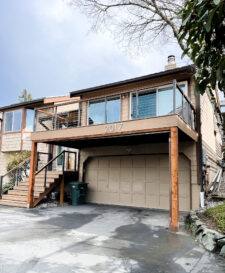
Why Waterfront Exposure Changes the Job
Pinellas Point's position on the bay means homes here deal with a heavier combination of stressors than a typical inland St. Petersburg property:
- Salt air corrosion — airborne salt accelerates the breakdown of fasteners, trim, and unprotected wood fiber, and it's more concentrated the closer a home sits to open water.
- Wind-driven rain — storms off the bay don't just fall on a wall, they push water sideways into every seam and joint, which is exactly where board and batten has the most joints to defend.
- Sustained UV exposure — Florida sun bleaches and breaks down paint film and unfinished wood over years of exposure, well before hurricane season even factors in.
- Humidity load — constant moisture in the air keeps siding materials damp longer after rain, which is hard on anything that isn't dimensionally stable or properly sealed.
None of this means board and batten is a bad choice for a Pinellas Point home. It means the material and the installation method have to be matched to the exposure, not just picked for looks.
What a Correct Board & Batten Installation Involves
The System, Not Just the Boards
Board and batten isn't a single product — it's an assembly. Wide vertical panels or boards go up first, then narrow battens cover the seams between them. Every layer underneath and around that visible surface is what actually determines whether the wall stays dry:
- A properly lapped weather-resistant barrier behind the siding, installed so water drains down and out rather than getting trapped.
- Correct flashing at every window, door, and roofline intersection — this is where the majority of siding leaks actually originate, not in the field of the wall.
- A weep screed or drainage gap at the base of the wall so any moisture that does get behind the siding has somewhere to go.
- Fasteners driven at the manufacturer-specified pattern and depth — overdriven or underdriven nails are one of the most common defects we find on redos.
- Batten spacing and reveal that's consistent across the wall, which is as much a workmanship issue as it is an aesthetic one.
Clearances That Get Skipped
Two clearance rules get ignored constantly on older homes in this area, and both lead to slow rot damage that isn't visible until it's advanced:
- Siding needs to sit above grade, decking, and roof lines by the manufacturer's minimum clearance — not flush against them.
- Butt joints and panel ends need to be properly caulked or capped with trim, not left exposed to catch and hold water.
Why We Only Install This in James Hardie Fiber Cement
Board and batten can be built in wood, vinyl, or fiber cement, and each behaves differently once it's facing bay wind and salt air year after year. We standardized on James Hardie fiber cement — specifically HardiePanel vertical siding with HardieTrim battens — because it's engineered for exactly this kind of climate, and because the failure modes of the alternatives are ones we've seen play out on real homes in this area.
| Factor | Wood Board & Batten | Vinyl Board & Batten | James Hardie Fiber Cement |
|---|---|---|---|
| Moisture behavior | Absorbs water, prone to rot and swelling at joints | Won't rot, but can warp and trap moisture behind panels | Engineered to resist moisture damage; won't rot |
| Hurricane-force wind performance | Depends entirely on fastening; can crack and split | Can crack, warp, or blow off in sustained high wind | Rated for high-wind performance when installed to spec |
| UV / fade resistance | Paint fades and chalks, needs frequent repainting | Color fades and can become brittle over time | ColorPlus factory finish resists fading far longer |
| Salt air / corrosion resistance | Vulnerable without diligent maintenance | Doesn't corrode, but seams and fasteners can | Non-combustible, dimensionally stable in salt exposure |
| Long-term maintenance | High — regular painting, caulking, inspection | Low, but repairs mean full panel replacement | Low — occasional wash and caulk check |
Wood board and batten looks great the day it goes up, but it's an ongoing maintenance commitment in a climate this humid — repainting, caulk inspection, and watching for rot at every joint. Vinyl skips the rot problem but doesn't have the rigidity or wind rating to perform consistently in hurricane-force gusts, and it can't be repaired in sections without the seams showing. James Hardie fiber cement is non-combustible, holds its shape and color, and is engineered specifically for the wind and moisture loads coastal Florida homes deal with. That's why it's the only board and batten system we put on a house.
Our Process for a Pinellas Point Board & Batten Project
- On-site assessment. We walk the exterior, check the current wall assembly and any existing moisture or rot damage, and confirm which areas are candidates for board and batten versus lap siding.
- Design and material selection. We help you choose panel width, batten spacing, and ColorPlus finish color, and confirm how the new siding will meet trim, windows, and adjoining wall sections.
- Written estimate. A clear scope of work and pricing before anything is scheduled — no surprise add-ons once the crew is on site.
- Tear-off and inspection. Old siding comes off and we inspect the sheathing underneath for hidden moisture damage before anything new goes up.
- Weather barrier and flashing. This is the step that determines whether the wall stays dry for the next twenty years, and it's not visible once the job is done — which is exactly why it has to be done right the first time.
- Installation to manufacturer spec. Panels, battens, and fasteners installed to James Hardie's published instructions, not shortcuts that happen to look fine from the curb.
- Final walkthrough. We go over the finished work with you before calling the job done.
Mistakes We Commonly See on Older Pinellas Point Homes
A lot of our board and batten work in this neighborhood is repair or replacement of a previous installation, not new construction. The recurring problems fall into a short list:
- Battens caulked and painted directly over rotted boards instead of the rot being addressed first.
- Missing or improperly lapped flashing around windows, which shows up years later as staining or soft trim.
- Siding installed tight to grade or roof lines with no clearance, trapping moisture at the base of the wall.
- Inconsistent batten spacing from patchwork repairs done over multiple years by different crews.
Every one of these is preventable with correct installation up front, and every one of them costs more to fix later than it would have cost to do right the first time.
Maintenance Expectations After Installation
James Hardie board and batten is low-maintenance, not no-maintenance. In a waterfront neighborhood like Pinellas Point, we recommend homeowners plan for:
- An annual rinse to clear off salt residue and airborne grime, especially on walls facing open water.
- A visual check of caulking at joints and trim once a year, and recaulking as needed — caulk is the one component that wears out before the siding does.
- Prompt attention to any landscaping or irrigation that's throwing water directly onto the wall, which shortens the life of any siding material regardless of brand.
Why a Crew That Already Works This Neighborhood Matters
Board and batten installed correctly on a bayfront lot in Pinellas Point isn't the same job as the same siding installed a few miles inland. A crew that already works this part of St. Petersburg knows to plan for the wind exposure on open water lots, to spec fastener and flashing details for salt air rather than generic inland conditions, and to catch the clearance and drainage mistakes that show up specifically on the older ranch homes common in this area. That familiarity is the difference between siding that looks right on install day and siding that's still performing correctly ten hurricane seasons from now.
If you're weighing board and batten for a home in Pinellas Point, we're happy to walk the property with you, look at what's there now, and put together a straightforward, no-pressure estimate. Fill out the form below to get started.