 St. Petersburg
 St. Pete Beach Is Hard on Siding — Here's Why
St. Pete Beach sits on a barrier island in Pinellas County, sandwiched between the Gulf of Mexico and Boca Ciega Bay. That location is what makes the area beautiful, and it's also what makes it one of the toughest environments in Florida for an exterior wall covering. Homes here take on constant salt-laden air, some of the most intense year-round UV exposure in the continental United States, wind-driven rain that gets pushed sideways into every seam and joint, and — several times a decade — hurricane-force wind gusts that test every fastener in the wall. Siding that performs fine in a landlocked suburb can fail years early a few blocks from the water.
We install James Hardie fiber cement siding exclusively, on every home we side, in every neighborhood we work — including St. Pete Beach. This page covers what that climate actually does to siding over time, what correct installation looks like on a barrier-island home, and why the work matters more here than almost anywhere else in the state.
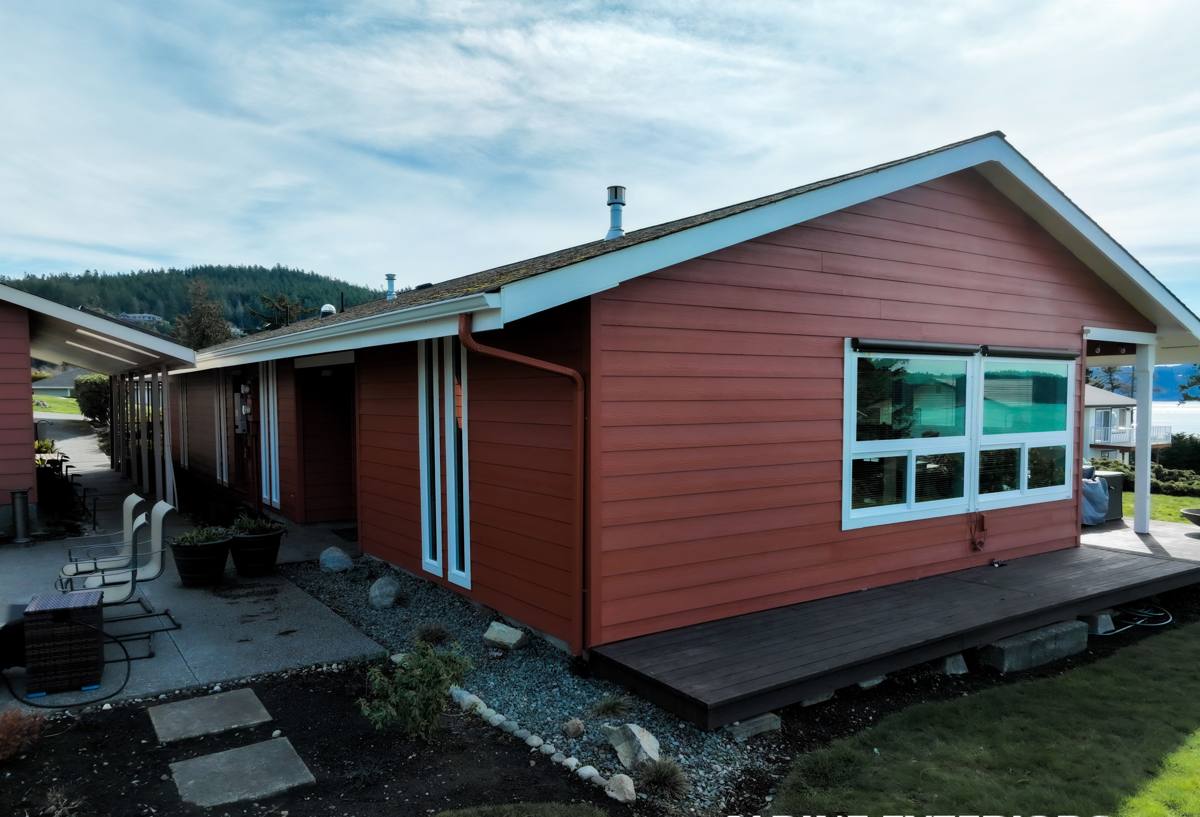
What Salt Air, UV, and Storm Wind Do to Ordinary Siding Over Time
Every siding material has a weak point, and coastal exposure finds it faster than inland conditions do.
- Vinyl siding softens and can warp in direct summer heat, then becomes brittle with years of UV exposure, which is exactly when wind-driven rain and gusts are most likely to work a panel loose.
- Cedar and other wood sidings absorb moisture readily in Gulf Coast humidity, which invites rot at seams, fastener holes, and the bottom edge of each course — repainting on a tight cycle is the only way to hold that back.
- Primed spruce and similar engineered-wood panels are wood at the core. Once moisture gets past a compromised seam or a cracked field cut, the wood substrate swells, and that swelling telegraphs through the paint film as bubbling and cracking.
- Metal fasteners, trim, and hardware of the wrong grade corrode noticeably faster in salt air than the same materials would a few miles inland.
None of this means these products are worthless — it means they carry maintenance and failure-mode trade-offs that get amplified on a barrier island. That's the honest reason we don't install them.
Why We Install Only James Hardie Fiber Cement Here
James Hardie's fiber cement siding is cement, sand, and cellulose fiber — not wood, not vinyl. That composition changes how it behaves in exactly the conditions St. Pete Beach throws at it.
The HZ5 Difference
James Hardie engineers its panels by climate zone. Florida falls in the HZ5 category, formulated for high humidity, wind-driven rain, and moisture-heavy coastal air. It won't rot, it doesn't provide a food source for termites or other wood-boring pests, and it's non-combustible — a meaningful advantage in a state where wildfire and electrical fire risk both exist alongside hurricane risk.
ColorPlus Factory Finish
Rather than a field-applied paint job that starts degrading under Florida sun almost immediately, James Hardie's ColorPlus finish is baked on and UV-cured at the factory under controlled conditions. On a barrier island getting some of the most consistent, intense sun exposure in the country, that factory-cured finish holds its color and resists fading dramatically longer than a job-site paint coat — and it comes backed by its own finish warranty separate from the substrate warranty.
Because fiber cement is dimensionally stable, it doesn't expand and contract with humidity swings the way wood-based products do, which means fewer opened seams for wind-driven rain to exploit and fewer nail pops for salt air to attack.
What a Correct Installation Involves on a Coastal Home
James Hardie siding performs to its rating only when it's installed to spec. On a barrier-island home, a few details matter more than they would inland:
- A correctly installed starter strip and weather-resistant barrier underneath the panels, so the first line of defense against wind-driven rain is in place before a single course goes up.
- Corrosion-resistant fasteners, sized and spaced to James Hardie's high-wind fastening schedule — the fastener spec for a coastal, high-wind zone is tighter than the standard schedule.
- Flashing at every penetration — windows, doors, roof-to-wall transitions, and utility penetrations — so wind-driven rain has nowhere to track behind the cladding.
- Proper clearance between the bottom of the siding and the roofline, deck surfaces, and grade, so moisture doesn't wick up into the panel edge.
- All field-cut edges primed and sealed before installation, and joints sealed with a sealant compatible with the ColorPlus finish rather than left to the elements.
Skip any one of these steps and the panel itself can be flawless while the wall still fails — usually starting at a seam, a corner, or a penetration nobody flashed correctly.
Siding Materials in a Coastal Climate: How They Compare
| Factor | James Hardie Fiber Cement | Vinyl | Wood / Engineered Wood |
|---|---|---|---|
| Salt air resistance | Cement-based, does not corrode | Holds up, but seams can loosen under wind cycling | Fasteners and finish vulnerable over time |
| UV / color retention | Factory-cured ColorPlus finish resists fading | Chalks and fades with age, especially darker colors | Paint film breaks down and needs recoating |
| Wind-driven rain performance | Dimensionally stable, tight seams when installed to spec | Can flex and open at seams in sustained gusts | Swells at compromised seams and fastener holes |
| Moisture / rot resistance | Will not rot; not a food source for pests | Not organic, but trapped moisture behind panels causes hidden damage | Susceptible to rot and pest damage once moisture intrudes |
| Maintenance cycle | Occasional wash; repaint only if desired, decades out | Low maintenance but limited repair options once brittle | Regular repainting/resealing needed |
What Affects the Cost of a Hardie Siding Job in St. Pete Beach
Every home is different, so we quote after an in-person look — but these are the real variables that move a price up or down:
| Factor | Why It Matters |
|---|---|
| Home size and wall complexity | More square footage and more corners, gables, and trim details mean more labor and material |
| Existing siding removal | Tear-off, disposal, and sheathing inspection add time versus siding over an already-sound substrate |
| Substrate condition | Rot or moisture damage found once old siding comes off needs repair before new panels go on |
| Panel profile and finish | Lap, shingle-style, and vertical profiles carry different material and labor costs; ColorPlus finishes vs. primed-for-paint also differ |
| Trim and accessory work | Corner boards, window and door trim, and soffit/fascia work done alongside the siding |
| Access and site conditions | Narrow beach lots, tight setbacks, and multi-story elevations can affect staging and labor time |
Our Installation Process
- On-site inspection and measurement — we look at your current siding, trim, and any visible moisture or storm damage before quoting anything.
- Tear-off and substrate check — old siding comes off and the sheathing underneath gets inspected; anything soft or water-damaged is repaired before new material goes up.
- Weather-resistant barrier and flashing — installed at every wall plane, window, door, and roof transition before the first panel is hung.
- Panel installation to Hardie's coastal fastening spec — correct fastener type, spacing, and clearances for a high-wind, salt-air zone.
- Trim, caulking, and detail work — corners, joints, and penetrations sealed with compatible sealant so the wall reads clean and stays weathertight.
- Final walkthrough and warranty registration — we go over the finished job with you and register the installation so your James Hardie warranty coverage is active.
Signs Your Siding Needs Attention Now
If your St. Pete Beach home shows any of the following, it's worth having it looked at before the next storm season rather than after:
- Visible cracking, warping, or buckling panels
- Chalky, faded, or peeling paint that wipes off on your hand
- Soft spots when you press on the siding, especially near the bottom courses
- Gaps opening up at seams, corners, or trim joints
- Water staining or damage on interior walls near exterior corners
- Visible damage after a tropical storm or high-wind event, even if it looks minor
Why Local St. Pete Beach Experience Matters
A barrier island isn't just "more of the same weather" — it's a different exposure profile depending on whether a home faces the Gulf or backs up to the bay, how close it sits to the water, and how sheltered or exposed the lot is. A crew that regularly works St. Pete Beach knows which fastening and clearance details to tighten up beyond the baseline code minimum, understands Pinellas County's coastal wind-load and permitting requirements for siding replacement, and has already worked through the practical realities of narrow beach lots and tight access. That local experience shows up in fewer surprises during the job and a wall system that's actually built for the exposure it's going to face — not just the exposure a generic install would assume.
If you're weighing a siding replacement or repair for a St. Pete Beach home, we're happy to take a look and give you a straightforward, no-pressure estimate — just fill out the form below to get started.