 St. Petersburg
 Siding Replacement Built for a Barrier Island, Not Just "Florida"
St. Pete Beach sits out on the Gulf side of Pinellas County, and that location changes what a siding job actually has to survive. A few miles inland in St. Petersburg, siding deals with heat and humidity. Out here, it deals with all of that plus a direct line to open water — salt-laden air moving across every wall day and night, wind-driven rain that gets pushed sideways and up under laps during summer storms, and hurricane-force wind gusts that test every fastener and seam during the June-through-November season. Layer in some of the most intense year-round UV exposure in the continental United States, and you have a combination that ages ordinary siding materials faster than almost anywhere else in the state.
That's the environment we design every St. Pete Beach siding replacement around. This page covers what local homes actually need from a siding replacement, what a correctly done job involves from tear-off to finish, how our process works, and why it matters to hire a crew that already works this specific stretch of coastline instead of one that treats every Florida job the same.
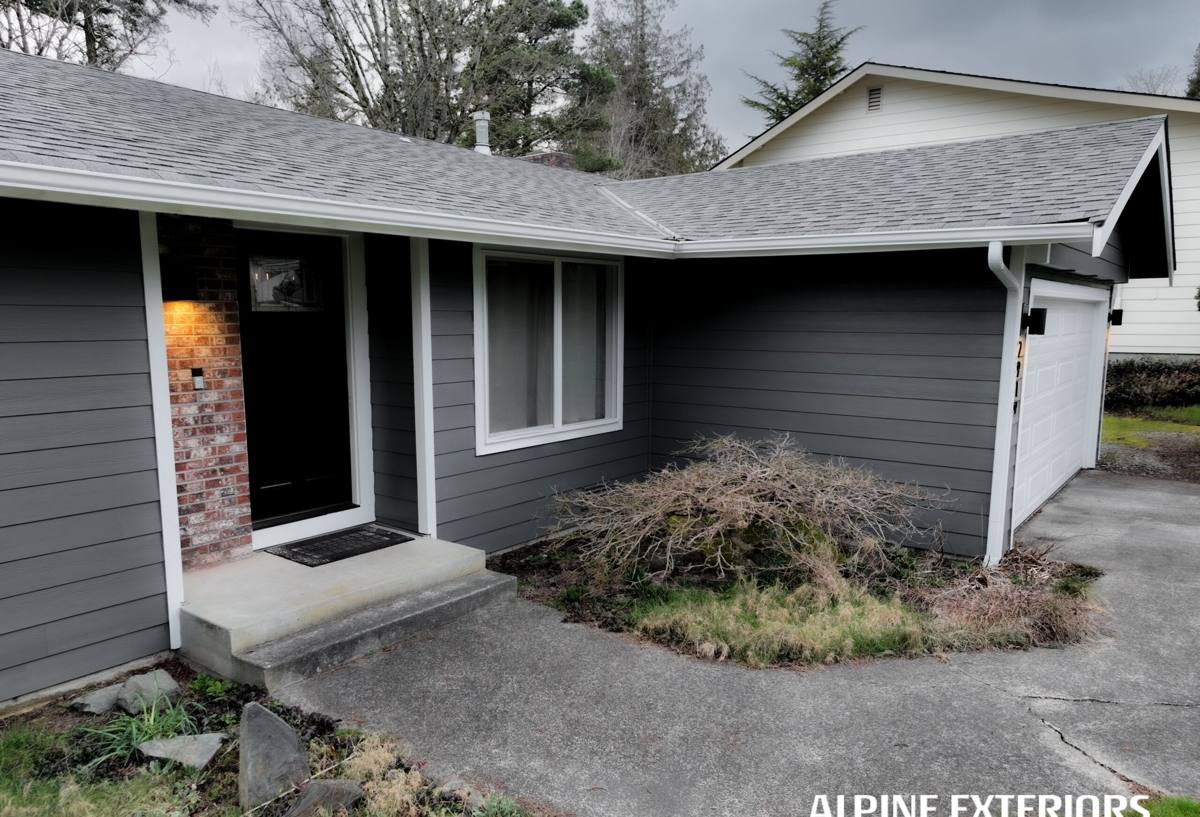
Signs a St. Pete Beach Home Needs Replacement, Not Another Patch
Coastal exposure doesn't fail siding evenly. It tends to show up first at seams, fastener points, and low corners where water and salt linger longest. Before assuming a repair will hold, it's worth checking for these signs:
- Soft, spongy, or crumbling spots when you press on the siding, especially near the bottom courses or under windows
- Streaking, staining, or dark discoloration around seams and panel joints that keeps coming back after cleaning
- Panels that have warped, cupped, or visibly separated from the wall
- Paint that won't hold anymore, peeling or chalking faster than a normal repaint cycle would explain
- Rust bleeding from fastener heads or trim, a sign salt air has gotten into the metal
- Gaps opening up at trim, window returns, or corner boards that weren't there a year or two ago
- Recurring musty smells or moisture staining on interior walls that back up to exterior siding
- Siding that's simply past the manufacturer's rated service life for the product it is
One or two of these in isolation might be fixable with a targeted repair. Several of them together, especially on a home that's had multiple storm seasons of direct wind and salt exposure, usually mean the underlying material has reached the end of what it can reasonably protect. At that point, patching becomes a cycle of chasing the same problems every year instead of solving them.
What a Correct Siding Replacement Actually Involves
Tear-Off and Substrate Inspection
A siding replacement isn't just swapping the visible layer. Once the old siding comes off, we inspect the sheathing and framing underneath for rot, delamination, or hidden moisture damage — which is common on coastal homes where water has been working its way behind failing siding for years without being obvious from outside. Any compromised substrate gets repaired or replaced before anything new goes back on. Installing new siding over damaged sheathing just hides the problem for another few years.
Moisture Management
Everything behind the finished siding matters as much as the siding itself. That means a properly lapped weather-resistant barrier, correctly integrated flashing at windows, doors, and roof-to-wall transitions, and a drainage plane that lets any moisture that does get behind the cladding find its way back out instead of sitting against the wall. On a home this close to the Gulf, skipping or shortcutting this layer is where slow, expensive damage usually starts.
Fastening and Clearances
Fastener choice and placement matter more here than in a drier, calmer inland climate. We follow the manufacturer's fastening schedule and use fasteners rated for coastal exposure, keep the required ground clearance so splashback and standing water don't sit against the bottom edge, and maintain proper clearance at roof lines and other transitions so wind-driven rain has nowhere to collect.
Finish Installation
The final course of siding, trim, and caulking is what everyone sees, but it only performs as well as the layers underneath it. Corners, butt joints, and penetrations for vents, lights, and hose bibs are where a rushed job shows up first in a coastal climate, so those details get the same attention as the flat runs of wall.
Why We Install Only James Hardie Fiber Cement Siding
We don't install vinyl, LP SmartSide, primed wood, or cedar on St. Pete Beach homes, and that's a deliberate standard, not a limitation in what we're capable of installing. James Hardie fiber cement is a mix of Portland cement, sand, and cellulose fiber, cured into a dense, dimensionally stable board that doesn't absorb and release moisture the way wood-based products do and doesn't soften or distort in sustained heat the way vinyl can. It's also non-combustible, which matters to a lot of homeowners and insurers regardless of coastline.
James Hardie engineers its siding by climate zone through what it calls the HardieZone system. For hot, humid coastal regions like Pinellas County, that means the HZ10 product formulation, built for sustained heat, high humidity, and heavy moisture exposure rather than the freeze-thaw cycling that colder-climate formulations are engineered around. It's the right product line for this specific coastline, not a one-size-fits-all national default.
Hardie's ColorPlus factory finish is baked on under controlled conditions rather than field-applied, which gives it better UV and fade resistance than most site-painted finishes hold up over time — a real advantage under St. Pete Beach's year-round sun. The product also carries a strong, transferable limited warranty, which adds real value if the home is ever sold. We put this system on homes because, installed to spec, it holds up to what this coastline actually does to a wall — not because it's the only product on the market.
How Hardie Compares to Other Siding Materials on This Coastline
| Factor | James Hardie Fiber Cement | Vinyl | Wood / LP SmartSide |
|---|---|---|---|
| Salt air resistance | Engineered cement composite, doesn't corrode | Panels don't corrode, but fasteners and trim can | Vulnerable at any exposed or unsealed edge |
| UV / color retention | Factory-baked ColorPlus finish resists fading | Can fade and become brittle over years of sun | Field paint film breaks down under constant UV |
| Wind performance | Rigid, holds shape under gusts when fastened to spec | Can flex, crack, or blow off in high gusts | Performance depends heavily on install quality |
| Moisture behavior | Dimensionally stable, doesn't swell or rot | Doesn't absorb water, but traps it behind panels | Absorbs moisture; can swell, delaminate, or rot |
| Maintenance burden | Occasional wash; repaint cycle is long | Low, but degraded panels can't be spot-repaired well | Regular repainting and edge-sealing required |
| Fire performance | Non-combustible | Combustible | Combustible |
Every material on that list has a legitimate use case somewhere. We simply don't think vinyl, wood, or engineered wood products give a Gulf-front, wind- and salt-exposed home the margin it needs over a 20- or 30-year ownership horizon, which is why we standardized on fiber cement instead of offering all four and letting price alone decide.
Our Siding Replacement Process, Start to Finish
- On-site assessment. We walk the exterior, check the current siding and substrate condition, and note anything specific to the property's wind and sun exposure.
- Written scope and product selection. You get a clear scope of work and help choosing the Hardie profile, texture, and ColorPlus color that fits the home.
- Permitting. We handle the permit application through the appropriate local building department before any work begins.
- Tear-off and substrate repair. Old siding comes off, the sheathing and framing get inspected, and any damage found is repaired before new materials go up.
- Weather barrier and flashing installation. The moisture management layer goes in correctly before a single piece of finished siding is installed.
- Siding installation. Hardie panels or lap siding go on following the manufacturer's fastening schedule and clearance requirements for this climate zone.
- Trim, caulking, and detail work. Corners, joints, and penetrations get finished with the same attention as the main wall surfaces.
- Final inspection and walkthrough. We review the completed work with you before considering the job done.
What Affects the Cost of a St. Pete Beach Siding Replacement
| Factor | How It Affects the Job |
|---|---|
| Home size and wall complexity | More square footage and more corners, dormers, or gables mean more labor and material |
| Substrate condition | Rot or moisture damage found during tear-off adds repair work before new siding can go on |
| Siding profile and trim detail | Board and batten or heavier trim packages take more time than standard lap siding |
| Site access | Narrow barrier-island lots, limited parking, and tight setbacks can slow staging and material handling |
| Color and finish selection | Standard ColorPlus colors versus custom or premium selections can shift material cost |
| Existing exterior features | Working around shutters, existing trim, or attached structures adds detail time |
We give a firm, itemized number after seeing the property in person — not a phone estimate — because the substrate condition alone can change the scope significantly on a coastal home.
Local Code, Permitting, and Barrier-Island Logistics
Siding replacement on St. Pete Beach requires a permit through the appropriate local building department, and coastal wind load requirements factor into how the work is documented and inspected. We handle that permitting process as part of the job rather than leaving it to the homeowner to navigate.
Working this barrier island also means planning around things a purely inland job wouldn't need to consider: narrow lots and limited parking on many streets, seasonal traffic that picks up during tourist months, and in some cases coordinating with vacation-rental or condo association schedules if the property is used that way. None of that changes the quality of the installation, but it does change how a job gets staged and scheduled, and it's easier to get right when the crew has done it before.
Why Hiring a Crew That Already Works St. Pete Beach Matters
A contractor who works this stretch of coastline regularly already knows what tends to be hiding behind older beach cottages versus newer construction, already has a working relationship with the local permitting process, and already understands how to sequence a job around this island's access and parking constraints. That local familiarity shows up in fewer surprises mid-project and a faster path from tear-off to a finished, weathertight wall. When you're vetting anyone for coastal siding work, it's fair to ask directly how many jobs they've done on the beach side of Pinellas County versus inland — the answer tells you a lot.
Get a Free, No-Pressure Estimate
If your St. Pete Beach home is showing any of the warning signs above, or you're simply planning ahead for a siding replacement, we're happy to walk the property, answer questions honestly, and put together a clear, itemized estimate — no pressure, no obligation. Use the form below to get started.