 St. Petersburg
 Composite Decking Built for Roser Park's Conditions
Roser Park is one of the older, more heavily wooded neighborhoods in St. Petersburg, and that changes what a deck needs to survive out here. The mature tree canopy and the ravine terrain the neighborhood is known for mean more shade, more standing organic debris, and slower drying times than you'll find on an open lot a few miles away. Add in what every property in Pinellas County deals with — hurricane-force wind gusts, intense year-round UV, wind-driven rain, and salt-laden air pushing in off Tampa Bay — and a deck that looks fine going in can start showing problems within a season or two if it wasn't built for this specific combination of exposure and shade.
Composite decking earns its place in a climate like this because it doesn't absorb moisture the way wood does, doesn't need refinishing to hold up to UV, and won't rot from sitting damp under a tree canopy for days after a storm. But composite is not maintenance-proof, and it is not installation-proof either. The board itself is only part of the system — the framing underneath, the fasteners holding it down, and the way the whole structure sheds water and airs out matter just as much, especially on a shaded lot like the ones common in Roser Park.
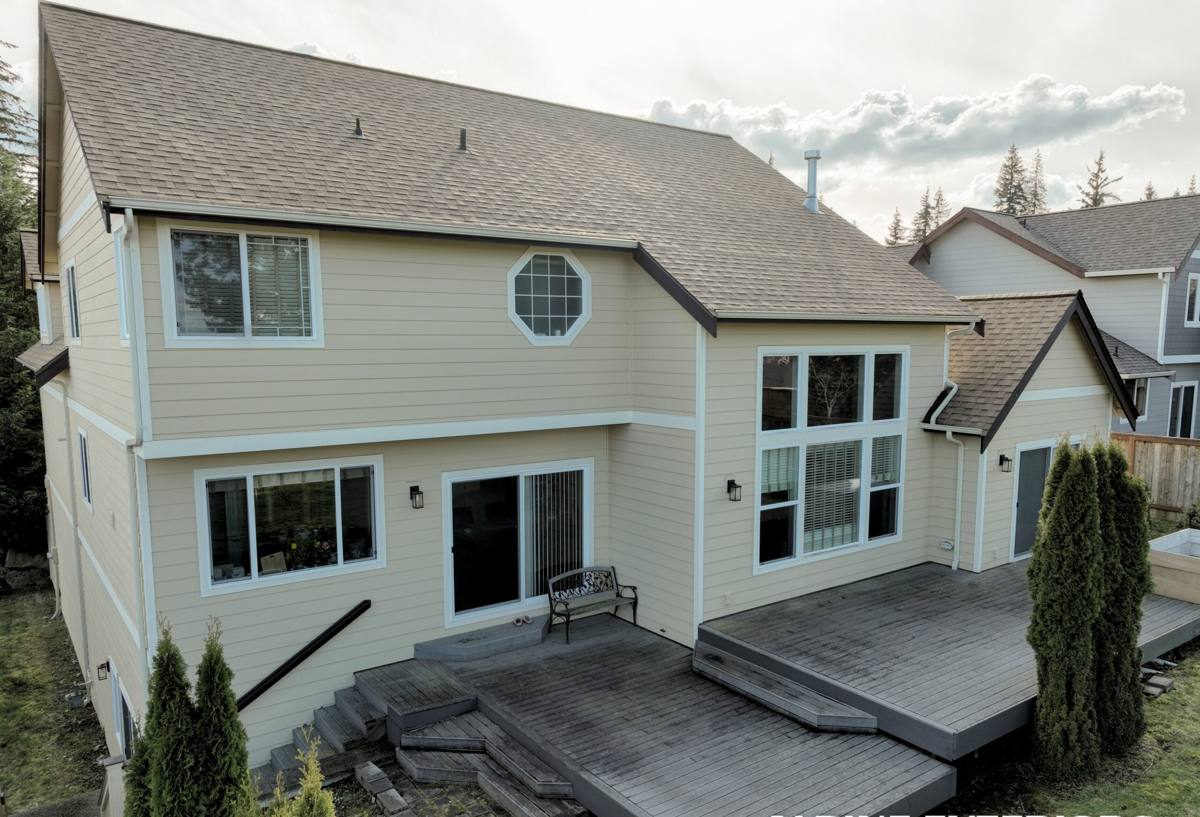
Why Roser Park's Terrain and Tree Canopy Change the Job
Shade slows everything down
A deck built under a mature oak canopy dries differently than one in full sun. Leaf litter, pollen, and organic debris settle into board grooves and framing joints and hold moisture longer than open-air surfaces would. That doesn't rot composite boards, but it does create the conditions for mold and mildew film on the surface, and it puts extra demand on whatever is underneath — joists, ledger boards, hardware — to actually shed water instead of trapping it.
Sloped and uneven lots
Roser Park's rolling, ravine-adjacent terrain means more properties here have grade changes than the flat lots typical of most of St. Petersburg. That affects footing depth, post height, and how a structure ties into the house and the ground. A deck framed for a flat lot elsewhere in the city doesn't automatically translate to a sloped Roser Park yard — the substructure has to be engineered for the actual grade, not a generic assumption.
Historic homes, real constraints
Many homes in this neighborhood are older bungalow and Mediterranean Revival-era construction. Tying a new deck ledger into an older sill plate or foundation wall takes more care than working on new construction, and it's worth getting right the first time — a poorly attached ledger is one of the most common points of failure on any deck, old house or new.
Composite, Wood, or PVC: What Actually Holds Up Here
We install composite because, for most Roser Park homeowners, it's the best balance of durability and upkeep given the shade and humidity this neighborhood deals with. That said, every material has real trade-offs worth knowing before you decide.
| Material | Moisture behavior | Maintenance | Typical lifespan (Florida climate) |
|---|---|---|---|
| Pressure-treated wood | Absorbs and releases moisture; prone to warping, splintering, and rot in shaded, humid spots | Annual sealing/staining recommended | 10–15 years, less in heavy shade |
| Capped composite | Non-absorbent cap resists moisture and staining; core is moisture-resistant but not immune to poor drainage | Periodic washing, no sealing or staining | 25–30+ years with proper installation |
| Cellular PVC | Fully synthetic, does not absorb moisture | Low; can show scratches more visibly than composite | 25–30+ years |
We don't push every customer toward the same product. Uncapped or low-grade composite can hold moisture at cut edges and fade unevenly under intense Florida UV, which is why we generally recommend capped composite for shaded lots specifically — the cap layer is what keeps mildew from taking hold on boards that don't get much direct sun to dry them out.
What a Correct Composite Deck Installation Involves
Framing and substructure
Composite boards are only as good as what's underneath them. That means joist spacing rated for the board manufacturer's specifications, footings sized for the actual soil and grade conditions on the lot, and — for sloped Roser Park properties — post heights and bracing engineered for the real terrain rather than a flat-lot default.
Fasteners and hardware
Salt air corrodes standard hardware faster than most homeowners expect, even at a distance from the water. We use stainless or coated fasteners and connectors rated for coastal exposure, and we follow manufacturer specifications for hidden fastener systems so boards stay locked down under hurricane-force wind loads instead of working loose over time.
Drainage and airflow
This is the step that matters most under a tree canopy. Framing needs a clear path for water to run off and air to move underneath the deck — blocked or under-ventilated substructures are exactly where mildew and hidden rot in the framing (even when the decking itself is composite) get started. On shaded lots we pay particular attention to joist tape, proper flashing at the ledger, and keeping the structure high enough off grade for airflow.
Board layout and expansion gaps
Composite expands and contracts with heat, and Florida's temperature swings between a summer afternoon and a cooler evening are real. Gaps at butt joints and around fixed objects need to be set correctly at install, not eyeballed, or you end up with buckling boards a year or two in.
Our Process, Start to Finish
- Site visit and assessment — we walk the actual lot, note grade, shade coverage, drainage patterns, and how the deck will tie into the house.
- Design and material selection — board style, color, and railing system chosen based on the home and how much direct sun versus canopy shade the space gets.
- Permitting — City of St. Petersburg and Pinellas County permitting and wind-load requirements are handled before work starts, not worked around.
- Framing and structural work — footings, posts, joists, and ledger attachment built to the lot's actual conditions.
- Decking installation — boards, hidden fasteners, and railing installed to manufacturer spec, with attention to expansion gaps and drainage.
- Final walkthrough — we go over care basics and answer questions before we consider the job done.
What Composite Decking Costs in Roser Park
Composite decking costs more upfront than pressure-treated wood but less over the life of the deck once you factor out annual staining and earlier replacement. Exact pricing depends on square footage, framing complexity, and site access, but a few factors move the number more than homeowners expect:
| Cost factor | Why it matters here |
|---|---|
| Grade and slope | Sloped Roser Park lots often need taller posts, extra bracing, or stepped footings |
| Tree canopy and access | Mature trees can limit equipment access and require extra hand work or root protection |
| Ledger condition | Older home sill plates sometimes need reinforcement before a ledger can be safely attached |
| Board tier | Capped composite and premium PVC cost more per square foot than base-tier composite but hold up better in shade |
| Railing and stair complexity | Multi-level decks common on sloped lots add material and labor |
We'll give you a real number for your specific lot rather than a generic square-footage estimate — the slope and tree coverage on a given Roser Park property can shift the framing scope more than the decking material itself does.
Maintenance: Less Work, Not No Work
Composite decking cuts out sanding, staining, and sealing, but a shaded, humid lot still needs some seasonal attention to stay ahead of mildew and debris buildup.
- Sweep leaf litter and debris out of board grooves regularly, especially after storms
- Wash the deck surface a few times a year with a soft-bristle brush and mild soap and water — avoid pressure washing directly into board seams
- Check that gutters and downspouts near the deck are directing water away, not onto or under it
- Keep vegetation trimmed back from the structure so air can keep moving underneath
- Inspect railing posts and stair connections annually for looseness, particularly after high-wind events
Why Hiring a Crew That Already Works Roser Park Matters
A lot of deck problems in this neighborhood trace back to a design that assumed flat ground, full sun, or a straightforward ledger attachment — none of which describe the typical Roser Park lot. Crews unfamiliar with the neighborhood's terrain and older housing stock tend to build to a generic spec and let the homeowner find out later that drainage wasn't planned for the shade, or that the framing wasn't sized for the slope. We've worked this part of St. Petersburg enough to know what the ground, the tree cover, and the older construction actually require before the first footing goes in.
If you're planning a new composite deck or replacing an aging wood one in Roser Park, we're glad to come take a look at your specific lot and walk you through what it would actually take. The estimate is free, there's no pressure attached, and you'll get a straight answer about what your property needs — use the form below to get started.