 St. Petersburg
 Gulfport Sits Right on the Water — Its Siding Has to Perform Accordingly
Gulfport is one of the more exposed pockets of Pinellas County. Tucked along Boca Ciega Bay on St. Petersburg's west side, homes here catch salt-laden air coming straight off the water almost year-round, on top of the same relentless Florida sun and storm exposure that every coastal community in this county deals with. That combination is hard on exterior building materials, and it's especially hard on siding that wasn't built with coastal humidity and salt exposure in mind.
We work on homes throughout St. Petersburg and Pinellas County, and Gulfport properties consistently show a pattern: siding failures happen faster and more visibly here than they do a few miles inland. That's not a knock on any particular product line — it's physics. Salt air accelerates corrosion of fasteners and trim hardware, UV breaks down surface coatings faster at this latitude, and wind-driven rain during summer storms and hurricane season finds every gap in a siding system that wasn't installed with water management as a first principle.
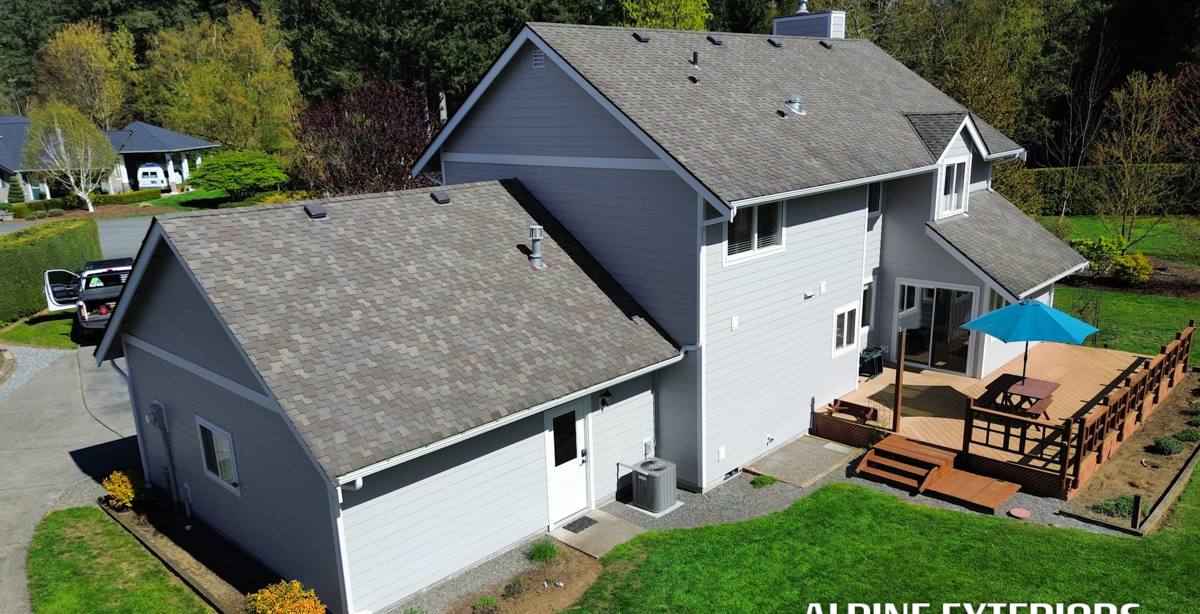
What Coastal Exposure Actually Does to Siding Over Time
It helps to understand the specific mechanisms at work, because they explain why some siding choices hold up in Gulfport and others don't:
- Salt air corrosion — airborne salt accelerates rust on nails, fasteners, and any exposed metal trim, which can loosen siding panels and stain finishes years before a typical inland home would show the same wear.
- UV degradation — Florida's sun angle and year-round intensity fade paint and break down certain coatings faster than in most of the country, leading to chalking, color loss, and brittleness in some materials.
- Wind-driven rain — summer storms and hurricane-season systems don't just drop rain straight down; wind pushes it sideways and up under laps, seams, and trim. Siding systems and installation details that assume gentle, vertical rainfall underperform here.
- Humidity and moisture cycling — constant humidity followed by wet-dry cycles stresses materials that swell, warp, or absorb moisture, and it's the environment where rot and mold get a foothold if water gets behind the cladding.
- Wind load — Gulfport homes need siding rated to hold up under hurricane-force gusts, with fastening schedules that match the exposure, not the bare code minimum for an inland lot.
None of these forces act alone. A siding system that's marginal on one of them — say, moisture tolerance — tends to fail faster once you add salt exposure and constant UV on top of it. That's the environment any siding replacement in Gulfport has to be engineered for, not just installed in.
How Different Siding Materials Hold Up in This Environment
| Material | Salt Air / Coastal Behavior | UV / Sun Exposure | Moisture Tolerance |
|---|---|---|---|
| Vinyl siding | Fasteners and trim hardware still corrode; panels can warp or become brittle | Fades and chalks over time; darker colors absorb heat and can warp | Not a water barrier itself — relies entirely on the underlying wrap and flashing |
| Primed wood / cedar | Salt accelerates finish breakdown and fastener corrosion | Requires frequent repainting to hold color and protect the substrate | Absorbs moisture readily; rot risk is high without diligent maintenance |
| LP SmartSide (engineered wood) | Cut edges and fastener points are moisture-sensitive if not sealed and maintained | Factory finishes hold up reasonably but still fade over time | Engineered wood core is more moisture-resistant than raw wood but still wood-based |
| James Hardie fiber cement | Non-combustible, dimensionally stable material; factory finish resists salt-driven fading | ColorPlus factory finish is engineered for UV stability, holds color years longer | Fiber cement doesn't swell, rot, or absorb moisture the way wood-based products do |
This is exactly why we standardized on James Hardie fiber cement and don't install vinyl, LP SmartSide, Cemplank, Allura, or primed wood. It's not that those products have no place anywhere — it's that in a Boca Ciega Bay-adjacent, salt-air, hurricane-exposed environment like Gulfport, we've made a professional decision to put our name behind the one system that consistently performs.
Signs a Gulfport Home Needs Siding Replacement, Not Just Repair
Not every siding problem calls for a full tear-off. But in this climate, small issues escalate quickly, so it's worth knowing what actually warrants replacement rather than a patch:
- Soft, spongy, or crumbling spots when you press on the siding — usually a sign of water intrusion and rot behind the surface
- Persistent bubbling, peeling, or chalking paint that keeps coming back after repainting
- Visible warping, buckling, or panels pulling away from the wall
- Rust streaks running down from fasteners or trim, a sign that hardware is failing
- A musty smell or visible mold/mildew growth along seams and bottom edges
- Cracked or missing caulking at seams, corners, and window trim that's let water in repeatedly
- Siding that's original to a home 20+ years old and has never been replaced, even if it "looks okay" from the street
If you're seeing more than one of these at once, that's usually a sign the underlying water-resistive barrier has been compromised — which means the fix needs to happen at the wall assembly level, not just the surface.
What a Correct Siding Replacement Actually Involves
A siding replacement is a water-management project first and a cosmetic upgrade second. The visible panels matter, but what happens underneath determines whether the job lasts 5 years or 30. A correct job on a Gulfport home includes:
1. Full tear-off and substrate inspection
Old siding comes off completely so we can inspect the sheathing underneath for rot, soft spots, or prior water damage. Anything compromised gets replaced before new siding goes up — covering over damaged sheathing just locks the problem inside the wall.
2. Water-resistive barrier and flashing
A new weather-resistant barrier goes over the sheathing, with proper flashing at every window, door, and penetration. In a wind-driven-rain environment like this one, flashing details at these transition points are usually where failures start if they're rushed.
3. Correct fastening for wind exposure
James Hardie panels and fasteners get installed to the manufacturer's specifications for the local wind zone — not a generic fastening schedule. This matters directly for hurricane performance and for keeping panels secure through repeated wind events over the years.
4. Trim, caulking, and seam detailing
Corners, butt joints, and trim boards are where most siding failures actually originate. We detail these carefully with the right sealants and gapping so water sheds instead of wicking in.
5. Final inspection and cleanup
Once the siding is up, we walk the exterior to confirm every seam, corner, and penetration is sealed correctly before calling the job finished.
Why James Hardie Is What We Install
James Hardie fiber cement is engineered specifically for climates like ours. The HZ5 product line is formulated for high-humidity, hot climates, which matters more in Gulfport than almost anywhere else in the county given the direct bay exposure. It's non-combustible, which is a real safety advantage over wood-based sidings. The ColorPlus factory finish process bakes color onto the panel under controlled conditions, which holds up to UV and salt air far longer than field-applied paint on wood or vinyl. And it comes with a strong, transferable manufacturer warranty that reflects the confidence behind the product.
We won't pretend fiber cement is the cheapest option on day one — it isn't. But when a Gulfport homeowner is weighing a siding decision, the real comparison isn't the upfront number, it's the cost of repainting, patching, and eventually replacing a lower-durability product on a compressed timeline because of salt air and sun exposure. That's the trade-off we ask every homeowner to think through before choosing.
What Drives the Cost of a Siding Replacement
| Cost Factor | Why It Matters in Gulfport |
|---|---|
| Home size and wall complexity | More square footage, corners, and roof lines mean more material and labor |
| Substrate condition | Homes with hidden rot or water damage need sheathing repair before new siding goes on |
| Siding profile and trim package | Lap width, trim detailing, and accent choices affect material cost and install time |
| Access and site conditions | Older Gulfport lots, mature landscaping, and tight setbacks can affect staging and labor time |
| Age and construction of the home | Older homes may need additional flashing or structural attention around windows and doors |
Every home is different, which is why we walk the property and give a real, itemized estimate rather than a phone quote. There's no way to responsibly price a siding job without seeing the current condition of the walls.
Why Hiring a Crew That Already Works Gulfport Matters
Gulfport's building stock skews toward older homes, many built decades before current wind-load and moisture-barrier standards existed. A crew that regularly works this specific area knows what to expect when the old siding comes off — where rot tends to hide, how these homes were originally sheathed, and how to adapt the installation without cutting corners on the parts that matter for hurricane and moisture performance. That local pattern recognition is worth more than it sounds like, because it's the difference between catching a problem during tear-off and discovering it as a leak two years later.
We also handle the practical side that matters to Pinellas County homeowners — permitting, wind-load compliance for the local building code, and coordinating the job around Florida's storm season so your home isn't left exposed mid-project longer than necessary.
Get a Straight Answer on Your Gulfport Home
If your siding is showing wear, or you're just trying to plan ahead before the next storm season, we're happy to take a look and give you an honest read on where things stand — no pressure, no upsell. Fill out the form below for a free estimate, and we'll walk your property and talk through what a correct James Hardie installation would look like for your home.