 St. Petersburg
 Pinellas Park sits in the middle of the peninsula, but "inland" doesn't mean sheltered. Homes here still take the same year-round UV load, the same wind-driven summer storms, and enough salt-laden air drifting in off Tampa Bay and the Gulf to matter for anything built outdoors. A deck in this neighborhood has to survive all of it at once — baking sun for months, sudden downpours, and the occasional hurricane-force wind event. Building one that actually holds up here is a different job than building the same deck somewhere with a mild, dry climate.
We build and repair decks throughout St. Petersburg and Pinellas Park, and this page covers what we've found actually matters for a deck's long-term performance in this specific area: material choice, framing and fastener decisions, permitting, and the maintenance a homeowner should realistically expect.
What Pinellas Park's Climate Actually Does to a Deck
Every deck failure we get called out for traces back to one of a few climate-driven causes. Understanding them up front explains almost every decision in how we build.
UV and Heat
Central Florida sun is intense and consistent — there's no real off-season for UV exposure. Untreated or poorly finished wood grays and checks (cracks along the grain) faster here than in most of the country. Lower-grade composite decking can fade or chalk under sustained UV if it wasn't formulated for it.
Wind-Driven Rain and Humidity
Afternoon storms don't just drop rain straight down — wind pushes it sideways and up under railings, ledger boards, and stair stringers. Combined with Pinellas County's humidity, any spot where water can collect and not dry out becomes a rot or mildew problem, usually one you can't see until it's advanced.
Salt Air
Pinellas Park isn't beachfront, but it's close enough to the bay and Gulf that airborne salt reaches fasteners, connectors, and any exposed metal hardware. Standard hardware corrodes faster here than inland-standard products are rated for.
Storm and Wind Load
Pinellas County building code reflects the real risk of hurricane-force winds. A deck's structural connections — especially how it attaches to the house and how the railing posts are anchored — have to be built to resist uplift and lateral loads, not just support a static weight.
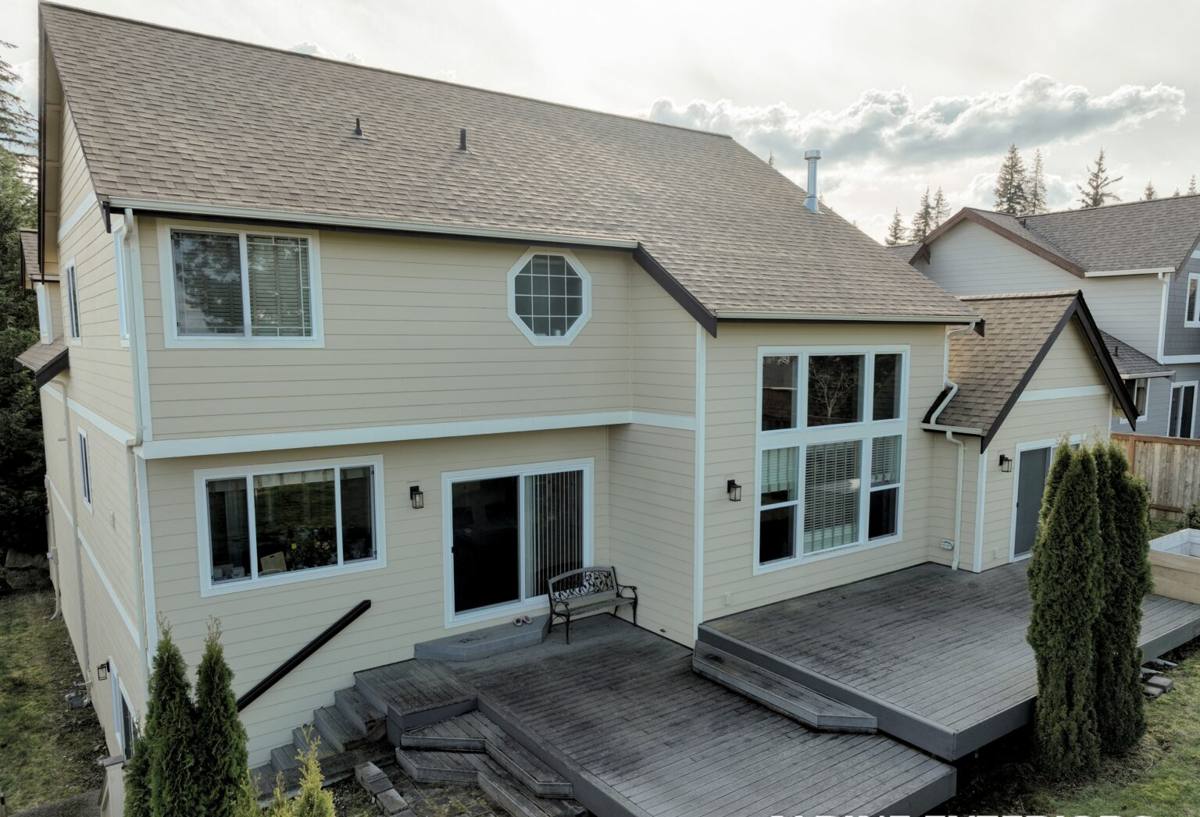
Choosing the Right Decking Material
There's no single "best" decking material — there's the right material for how a household will use the deck, what upkeep they're willing to do, and what budget they're working with. Here's how the common options actually compare under Pinellas Park conditions.
| Material | UV/Heat Performance | Moisture Behavior | Maintenance | Typical Lifespan |
|---|---|---|---|---|
| Pressure-treated pine | Fades and checks with sun exposure; needs periodic sealing | Prone to warping/rot if sealing lapses | Reseal every 1-2 years | 10-15 years with upkeep |
| Tropical hardwood (e.g. ipe) | Naturally UV/rot resistant; will gray without oiling | Dense, sheds water well | Oil annually to hold color | 25+ years |
| Capped composite | Strong UV resistance from cap layer | Won't rot or absorb water | Occasional washing | 25-30 years |
| Uncapped/older composite | Can fade or chalk over time | Some moisture absorption at cut edges | More frequent cleaning | 15-20 years |
| PVC decking | Excellent UV resistance | Fully waterproof board | Low | 25-30 years |
Our default recommendation for most Pinellas Park homeowners is capped composite or PVC decking — the upfront cost is higher than pressure-treated pine, but the maintenance burden drops dramatically, and in a climate this hard on wood, that trade-off pays for itself. We still build in real wood when a homeowner wants that look and understands the sealing schedule it requires. What we steer people away from is uncapped composite with a poor moisture-resistance track record at cut edges — in a humid climate, that's a maintenance headache we'd rather not sell someone.
Framing and Fasteners: Where Decks Actually Fail
The decking boards get all the attention, but the framing underneath and the fasteners holding it together are what determine whether a deck lasts 10 years or 30. This is also where corner-cutting is easiest to hide and hardest to catch until something fails.
Ledger Board Attachment
If the deck attaches to the house, the ledger board connection is the single most important structural joint on the whole project — and the most common failure point we see on older decks. It needs proper flashing to keep water from getting behind it and into the house rim joist, and the right structural fasteners (not just deck screws) rated for the load. Wind-driven rain in this area makes ledger flashing non-negotiable.
Fastener and Hardware Grade
Given the salt air exposure, we use stainless steel or coated fasteners and connectors rated for coastal/corrosive environments rather than standard hardware. It costs more up front. It also means the joist hangers and post bases aren't the thing that fails first.
Joist Spacing and Post Anchoring
Joist spacing needs to match the decking material's span rating — composite and PVC boards often require tighter spacing than solid wood to avoid flexing. Railing posts need to be through-bolted and properly anchored, since a loose railing post is one of the more common wind-related failures on older decks in storm events.
Permitting in Pinellas Park
Most new deck construction and many substantial repairs require a permit through Pinellas Park's building department (or Pinellas County, depending on jurisdiction), with inspections tied to Florida Building Code wind load requirements. This isn't paperwork for its own sake — it's the mechanism that makes sure the framing, footings, and railing anchoring can actually take a hurricane-force gust without failing.
We pull permits and schedule inspections as part of the build rather than leaving it to the homeowner. Skipping this step is one of the more common problems we find on decks built by unlicensed labor — it can complicate insurance claims and resale, and it means nobody ever verified the structure meets current wind code.
Foundations for Florida Soil
Footing design has to account for local soil conditions, which in much of Pinellas County means sandy, well-draining soil that behaves differently than clay-heavy soil elsewhere. Footings need to be sized and set to the depth the local code requires for frost-free, stable bearing in that soil — undersized or shallow footings are a common source of deck settling and post movement over time. For some sites, helical piles are a better fit than poured concrete footings; we evaluate that case by case rather than defaulting to one method everywhere.
Our Process
We keep the process straightforward and don't skip the parts that protect the homeowner:
- On-site assessment — we look at the house's ledger point, yard grade, sun/shade exposure, and how the space will actually be used.
- Design and material selection — sizing, layout, decking material, and railing style, with honest trade-offs explained for each option.
- Permitting — we handle the permit application and coordinate required inspections.
- Framing and structural work — footings, posts, ledger flashing and attachment, joists — the part that determines how the deck performs in wind and rain.
- Decking, railing, and finish work — boards, railings, stairs, and any lighting or fascia details.
- Final walkthrough — we go over the finished deck and its maintenance needs with the homeowner directly.
Maintaining a Deck in This Climate
Even a well-built deck needs some seasonal attention in Pinellas County's climate. A simple annual routine goes a long way:
- Rinse salt residue and pollen buildup off decking and railings periodically, especially after storms
- Check ledger board flashing and any visible fasteners for rust staining or corrosion once a year
- Reseal or oil wood decking on the schedule the material requires — don't wait for visible graying
- Clear leaves and debris from between boards so water doesn't pool and mildew doesn't take hold
- Inspect railing posts and stair stringers for looseness before hurricane season each year
- Address any soft or spongy decking boards immediately rather than waiting — it's usually moisture intrusion that will spread
Why a Local Crew Matters
A contractor who works Pinellas Park and greater St. Petersburg regularly already knows the local permitting office's expectations, the soil conditions common to the area, and which material and hardware choices actually hold up here versus which ones look fine in a showroom and disappoint two years in. That local track record is worth something a general contractor passing through for a single job won't have.
If you're considering a new deck or need to know whether an existing one is still sound, we're happy to take a look and give you a straightforward, no-pressure estimate. Use the form below to request one.