 St. Petersburg
 Gulfport's Siding Takes a Different Kind of Beating
Gulfport sits right on Boca Ciega Bay, which means the siding on these homes deals with a harsher mix of conditions than siding just a few miles inland. Salt-laden air off the water accelerates corrosion on fasteners and trim, wind-driven rain during Pinellas County's summer storm season finds every gap in a siding system, and the same intense Gulf Coast sun that makes the neighborhood's bungalows and mid-century cottages so livable also bakes paint and caulk until it cracks. Add the hurricane-force wind gusts this stretch of coastline can see in a bad storm season, and you've got a recipe for siding problems that show up faster here than in drier, more sheltered parts of the St. Petersburg area.
That's the backdrop for every siding repair call we get in Gulfport. The fixes themselves usually aren't exotic, but they only hold up if they're done with this climate in mind. Patch a bad section with the wrong material, the wrong flashing detail, or the wrong caulk, and you'll be back out here doing it again in a year or two instead of a decade or two.
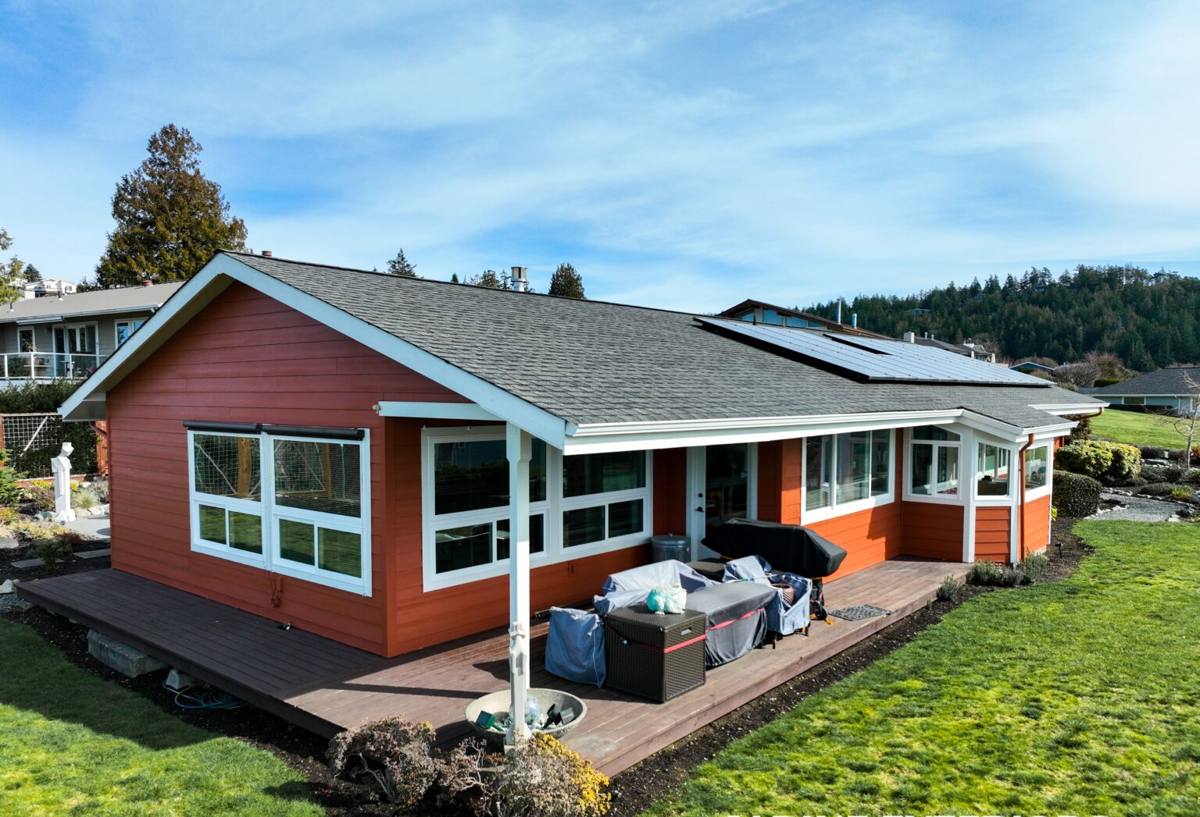
What We Actually Find Failing on Gulfport Homes
Most siding repair calls in this neighborhood fall into a handful of categories. Knowing which one you're dealing with matters, because the right fix is different for each:
- Cracked or buckled lap siding — usually from moisture getting behind the board, or from panels installed without enough room to expand and contract through Florida's heat swings.
- Rot and soft spots at trim and butt joints — the seams where boards meet are the weak point on any siding system; once water gets past a failed joint, wood-based products and even poorly sealed fiber cement can soften underneath.
- Nail pops and popped fasteners — wind gusts flex siding over time, and fasteners that weren't set to spec eventually back out, leaving a gap for water to follow.
- Caulk and sealant failure — UV exposure this intense breaks down caulk faster than a lot of manufacturer estimates assume; a joint that might last a decade in a cooler, cloudier climate can fail in half that time on a bay-facing wall here.
- Storm-damaged sections — cracked, dented, or torn-loose panels after a wind event, sometimes with hidden damage to the water-resistive barrier behind them that isn't obvious from the ground.
- Faded, chalking paint — a cosmetic issue on its own, but often the first visible sign that a coating system is breaking down and taking moisture protection with it.
Repair or Replace? Signs to Watch For
Not every problem needs a full re-side, and not every problem is fixable with a patch. A short visual check can tell you which category you're in before you call anyone out:
- Soft or spongy siding when you press on it — a sign of moisture damage underneath
- Visible daylight or gaps at seams and corners
- Paint peeling in sheets rather than just chalking or fading evenly
- Cracks running through multiple boards in one area, not just a single panel
- A musty smell or staining on an interior wall near an exterior one — often a sign water has been getting in longer than the outside damage suggests
- Siding that flexes or feels loose when you push on it near a bottom edge
One or two isolated spots on an otherwise sound wall are usually a straightforward repair. Damage spread across a whole elevation, especially combined with soft sheathing underneath, is a sign the repair budget is better put toward replacement instead.
What a Correct Repair Actually Involves
The visible crack or gap is rarely the whole story. A repair that only addresses what you can see from the yard tends to fail again within a season or two in this climate. Here's how the symptoms we see most often break down:
| What You See | What's Usually Happening | What a Correct Fix Requires |
|---|---|---|
| Cracked board, dry underneath | Impact damage or fastener stress, no water intrusion yet | Remove and replace the section, re-flash the joint, match paint or factory finish |
| Soft spot at a seam | Water has been getting behind the joint for a while | Open the area, check the sheathing, dry it out, correct the flashing before closing it back up |
| Nail pops in a cluster | Fastener spec or spacing wasn't right for this wind exposure | Re-fasten to code-correct spacing and depth, not just re-drive the same nails |
| Failed caulk joint | UV breakdown, often faster on south- and west-facing walls | Remove old sealant fully, use a sealant rated for this exposure, not a quick bead over the old joint |
The pattern across all four rows is the same: the surface fix and the surface-plus-cause fix can look identical from the driveway, but only one of them actually lasts.
Repairing Different Siding Materials
What the home is already sided in changes the repair approach. We work on whatever's on the house, but it's worth understanding how each material behaves once it's damaged:
Fiber Cement (James Hardie)
This is the material we install new, and it's also the most straightforward to repair correctly. Damaged sections come out and get replaced with matching Hardie board, joints get flashed and caulked to spec, and on homes with factory ColorPlus finish, a color-matched replacement plank keeps the repair from standing out against older, sun-faded boards. Fiber cement doesn't rot, so a repair here is almost always about correcting an installation detail — flashing, fastening, joint treatment — rather than the board material breaking down on its own.
Wood and Engineered Wood (including LP SmartSide)
Wood-based siding is more forgiving to patch cosmetically but far less forgiving once moisture gets into the substrate. A soft spot on an engineered wood product often means the damage has already spread past what's visible, because the core material swells and loses strength once water reaches it. Repairs here need a more conservative cut line — removing more than just the visibly bad section — to make sure the new patch is tying into solid material rather than material that's already compromised a few inches further out.
Vinyl
Vinyl repairs are usually about replacing a cracked or wind-torn panel outright, since it can't really be patched in place the way fiber cement can. The bigger challenge in a sun-intensive market like this one is color match — vinyl fades unevenly over the years, and a brand-new panel next to a decade of faded panels is often visibly different even when the box says it's the "same" color.
Our Repair Process
We treat every repair call the same way, whether it's one damaged board or a full wall section:
- Assess the full area, not just the spot you called about — we check adjacent boards, corners, and trim for related damage that isn't obvious yet.
- Check for moisture intrusion behind the siding before closing anything back up, since that's the part that determines whether the repair actually solves the problem or just hides it.
- Match material and finish as closely as possible, including color-matching factory-finished Hardie board where the home already has it.
- Correct the underlying detail — flashing, fastener spacing, joint sealant — so the same failure doesn't happen again in the same spot.
- Walk the repair with you before we leave, so you know exactly what was found and exactly what was done about it.
Why a Crew That Already Works Gulfport Makes a Difference
Gulfport is a small, distinct community within the greater St. Petersburg area, and it carries its own permitting requirements and its own weather exposure that can differ even from Pinellas County neighborhoods just a few miles further inland. A crew that's already pulled permits and done repair work here knows the wind-zone requirements that apply to fastening and flashing, knows how much faster caulk and paint break down on a house facing the bay compared to one set back from the water, and isn't learning the neighborhood on your dime. That familiarity shows up as fewer surprises mid-repair and a faster path from estimate to finished work — which matters more here than in most places, given how often storm season turns "we'll get to it eventually" into "we needed this done last week."
What Siding Repair Typically Costs
Every repair is different, but the scope generally falls into a few tiers. These are broad ranges meant to help you understand what drives the price, not a quote — the only way to get an accurate number is a look at the actual damage in person.
| Repair Scope | What Drives the Cost |
|---|---|
| Single board or small section | Material match, accessibility, whether trim or flashing also needs attention |
| Multiple sections on one wall | Extent of hidden moisture damage, amount of sheathing repair needed underneath |
| Storm damage repair | Number of panels affected, whether the water-resistive barrier needs replacing, insurance documentation needs |
| Full elevation repair | At this scope it's worth comparing repair cost against replacing that wall in Hardie, since patched-together old siding rarely matches as cleanly as a full section |
When Repair Turns Into a Replacement Conversation
Sometimes a repair estimate turns into a replacement recommendation, and we'll tell you honestly when that's the case rather than patching something that's just going to keep failing. If the siding is old enough that matching material or color isn't realistic, if damage is spread across most of an elevation, or if the underlying material is one that doesn't hold up well to repeated moisture exposure, replacement in James Hardie fiber cement is usually the better long-term investment for a home this close to the water. It's the only material we install new for exactly this reason — it holds paint and factory finish longer under this UV load, doesn't rot when a joint eventually needs attention decades from now, and is engineered for the wind and moisture conditions this stretch of the Gulf Coast deals with every year.
If you're dealing with a cracked panel, a soft spot, storm damage, or just want a second opinion on a repair someone else quoted, we're happy to take a look. Fill out the form below for a free, no-pressure estimate on your Gulfport siding repair.