 St. Petersburg
 Shore Acres Sits Where Florida's Climate Hits Siding Hardest
Shore Acres is a waterfront canal community on the Tampa Bay side of St. Petersburg, and that location matters when you're choosing exterior siding. Homes here sit closer to open water and tidal canals than most of Pinellas County, which means more direct exposure to salt-laden air, more humidity soaking into wall assemblies overnight, and a longer stretch of unbroken sun off the water hitting south- and west-facing walls. Siding that would hold up fine ten miles inland can fail early here — not dramatically, but through slow, cumulative damage that shows up as swelling, fading, or soft spots years before a homeowner expects to think about replacement.
We install exclusively James Hardie fiber cement siding, and that choice is deliberate. Before we get into why, it's worth understanding exactly what a Shore Acres home is up against, because the "why Hardie" answer only makes sense once you understand the "why not something else" problem first.
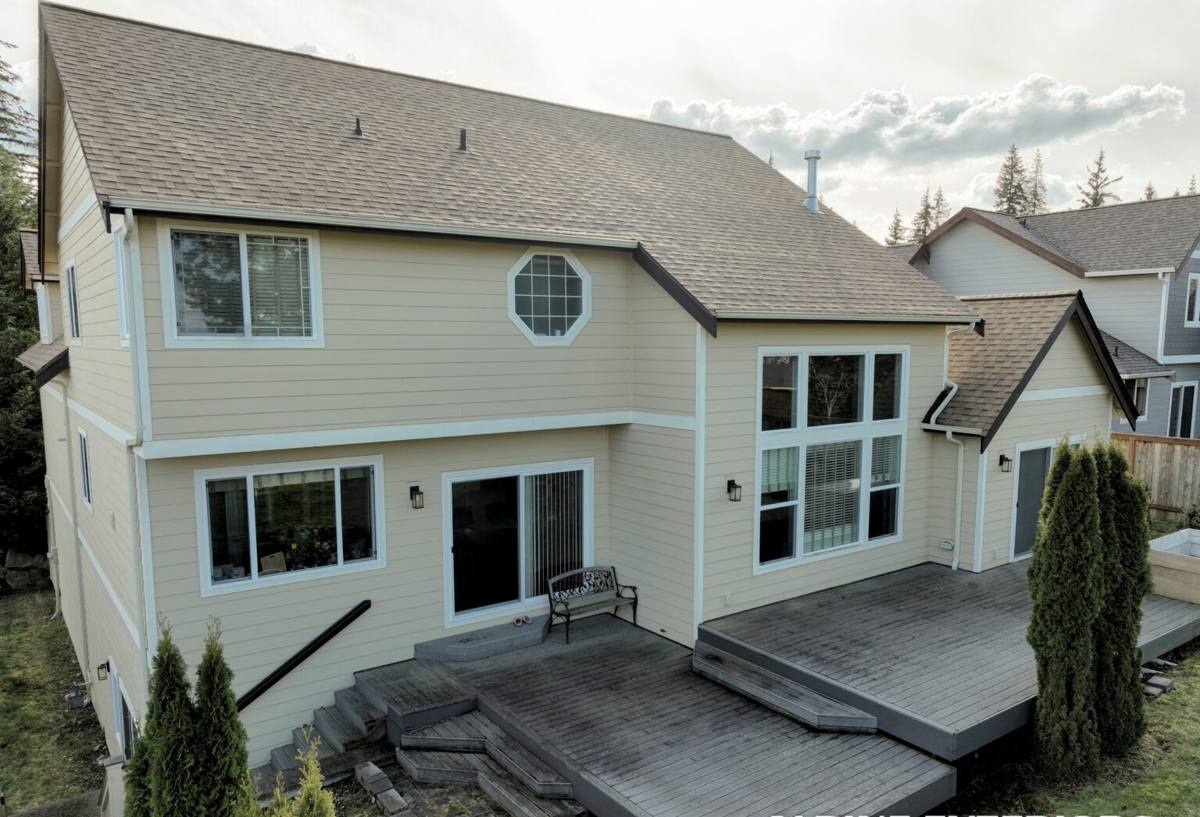
What Salt Air, Wind-Driven Rain, and UV Actually Do to Siding
Salt Air
Airborne salt from Tampa Bay settles on exterior surfaces and holds moisture against them longer than dry air alone would. On wood-based or wood-composite products, that moisture works into seams, fastener holes, and cut edges, starting rot from the inside where you can't see it. On vinyl, salt residue accelerates surface breakdown and can leave a chalky, pitted finish over time. Fiber cement doesn't behave the same way, because it isn't wood and it isn't a petroleum-based plastic — but even fiber cement needs to be sealed and finished correctly at every cut edge and joint, or salt-driven moisture will still find a way in.
Wind-Driven Rain
Pinellas County's storms don't just drop rain straight down — wind pushes it sideways, up under laps, and into any gap in the water-resistive barrier behind the siding. A siding system is only as good as its weakest seam. This is why installation quality matters as much as the product itself: correct lap spacing, proper flashing at windows and doors, and sealed penetrations are what actually keep a wall assembly dry during a summer squall or a tropical system.
Year-Round UV
St. Petersburg gets intense sun essentially every month of the year, not just in summer. Field-applied paint on any siding material breaks down under that kind of exposure faster than most homeowners expect, leading to chalking, fading, and the need for repainting on a shorter cycle than a cooler climate would require. This is one of the biggest practical differences between products — and one of the main reasons we standardized on a factory-finished system rather than anything that depends on a good field paint job to survive Florida sun.
Why We Only Install James Hardie
We don't install LP SmartSide, vinyl, Cemplank, Allura, primed spruce, or cedar. That's not a marketing position — it's a decision based on what holds up under the specific conditions Pinellas County homes face, and what we're willing to warranty our workmanship on.
- Non-combustible core: James Hardie fiber cement is engineered from cement, sand, and cellulose fiber, giving it a non-combustible composition that wood-based and vinyl products can't match.
- Factory-applied ColorPlus finish: the color is baked on at the factory under controlled conditions, not brushed on at the jobsite, which gives it far better UV and fade resistance than field-applied paint.
- Climate-engineered product lines: Hardie makes an HZ5 formulation specifically engineered for humid, high-moisture climates like ours — it isn't a one-size-fits-all product shipped the same way to Arizona and Florida.
- Manufacturer-backed warranty: Hardie's warranty structure is transferable and well-documented, which matters both for your own peace of mind and for resale value down the line.
We're not going to tell you every alternative product is worthless — vinyl and engineered wood siding both have legitimate uses and can perform reasonably well in the right climate and application. But for a waterfront-adjacent neighborhood like Shore Acres, the trade-offs on moisture sensitivity, field-finish durability, and long-term maintenance burden are real, and they're the reason we don't put those products on homes in this part of the state.
Why the HZ5 Line Matters Specifically Here
James Hardie's HZ5 (HardieZone 5) products are engineered for hot, humid climates with significant moisture exposure — which describes Pinellas County generally and a waterfront neighborhood like Shore Acres specifically. The formulation and finish system are built to resist moisture-related damage and hold color and finish integrity through repeated wet-dry cycles, which is exactly the stress pattern a canal-adjacent home experiences: humid nights, sudden downpours, then hours of direct sun baking the wall dry again.
This matters more in Shore Acres than it would in a home ten or fifteen miles inland, simply because the moisture load on the building envelope is higher, more consistent, and paired with more salt content in the air. Product selection alone doesn't solve that — installation has to match it — but starting with the right-engineered product is the foundation everything else builds on.
What a Correct James Hardie Installation Actually Involves
A lot of what separates a siding job that lasts 30-plus years from one that causes problems in year five isn't the product — it's the installation details most homeowners never see once the job is finished.
Water-Resistive Barrier and Flashing
Before a single piece of siding goes up, the wall needs a correctly installed water-resistive barrier with properly lapped and taped seams, and flashing integrated at every window, door, and penetration so water is directed out and down, never behind the siding.
Fastening and Clearances
James Hardie has published fastening and clearance specifications for a reason — correct nail spacing, proper embedment, and minimum clearances from grade, roofing, and decking all affect how the wall performs over time. Panels installed too tight to grade or roofline trap moisture; panels under-fastened can work loose in high wind.
Caulking and Sealed Joints
Every joint, seam, and cut edge needs to be properly sealed — a cut edge of fiber cement that's left unsealed is a point where moisture can wick in, defeating the purpose of using a moisture-resistant product in the first place.
Painting Cut Edges
Factory finish covers the face of the board, but field cuts expose raw material that needs to be field-treated per manufacturer specification before installation. Skipping this step is one of the most common corner-cuts in fiber cement installation, and it's invisible until it isn't.
Hardie vs. Other Siding Materials Under Shore Acres Conditions
| Factor | James Hardie Fiber Cement | Vinyl | Engineered Wood / LP-Type |
|---|---|---|---|
| Salt air resistance | Strong when properly sealed and finished | Moderate; can chalk/pit over time | Weaker; moisture at seams is a known risk point |
| UV/color stability | Factory ColorPlus finish resists fading | Can fade and become brittle over years of sun | Field paint required; fades on a shorter cycle |
| Wind-driven rain performance | Strong when flashing/laps done correctly | Can be pushed/lifted in high wind if under-fastened | Moisture intrusion at seams is a common failure mode |
| Combustibility | Non-combustible core | Combustible (petroleum-based) | Combustible (wood-based) |
| Maintenance cycle | Repaint/recaulk on a longer interval | Low maintenance but limited repair options | Repainting and seam maintenance on a shorter cycle |
Our Process for a Shore Acres Siding Project
- On-site assessment: we walk the exterior, check the current wall assembly and any moisture damage, and note site-specific factors like proximity to the canal, sun exposure, and existing drainage.
- Product and line selection: we spec the correct HZ5 Hardie product, panel style, and ColorPlus finish for your home and HOA or neighborhood aesthetic, where applicable.
- Tear-off and substrate check: old siding comes off and we inspect sheathing underneath for hidden rot or moisture damage before anything new goes up.
- Water-resistive barrier and flashing installation: this is the step that determines long-term performance more than any other, and we don't rush it.
- Hardie installation to manufacturer spec: correct fastening, clearances, lap spacing, and sealed/painted cut edges throughout.
- Final walk-through: we go over the finished job with you, including basic care guidance specific to a waterfront property.
Maintaining James Hardie Siding in a Waterfront Neighborhood
- Rinse siding periodically to clear salt residue and airborne buildup, especially on walls facing open water.
- Inspect caulking at joints, window trim, and corners annually — sealant is the first line of defense and the first thing to wear.
- Keep an eye on areas near grade and near irrigation heads, where prolonged dampness against the siding is more likely.
- Address any impact damage (lawn equipment, storm debris) promptly rather than letting a chipped edge sit exposed.
- Have gutters and downspouts checked to make sure water is being directed away from walls, not sheeting down them.
None of this is heavy maintenance — that's part of the point of choosing a factory-finished fiber cement product — but a waterfront property benefits from slightly more attentiveness than one further inland.
Why It Matters That We Already Work in Shore Acres
Siding decisions in a neighborhood like Shore Acres aren't generic. A crew that regularly works this specific stretch of St. Petersburg has a working sense of how close a given property sits to the water, how exposed a wall is to prevailing wind off the bay, and what kind of moisture load the neighborhood's homes typically deal with. That context shapes real decisions — clearance details, sealant choices, and where extra attention at flashing and joints actually pays off versus where it's overkill.
It also means fewer surprises during the job itself. Permitting patterns, typical substrate conditions in homes of a certain era, and realistic project timelines around Pinellas County's weather windows are all things a crew learns by doing the work here repeatedly, not by reading a spec sheet once.
Get a Straight Answer for Your Home
Every Shore Acres property is a little different — orientation to the water, tree cover, age of the home, and current siding condition all factor into what a correct job looks like and what it should cost. If you'd like a straightforward, no-pressure look at your home's siding and a clear explanation of what James Hardie would involve for your specific property, request a free estimate using the form below.