 St. Petersburg
 Historic Kenwood's Older Homes Are Fighting a Different Battle Than New Construction
Historic Kenwood is one of St. Petersburg's oldest and most architecturally distinct neighborhoods, known for its concentration of early-20th-century bungalows and period homes. Houses built in that era were designed for a Florida that existed before modern hurricane building codes, before house wrap and rainscreen detailing were standard practice, and long before anyone was thinking about 100-mph wind loads. That doesn't make these homes weak — many have held up remarkably well — but it does mean their siding is carrying decades of exposure that newer subdivisions simply haven't experienced yet.
Pinellas County sits on a peninsula, and Kenwood's tree-lined streets don't change the fact that every home here deals with the same regional stress test: hurricane-force wind events, intense year-round UV, wind-driven rain that gets pushed sideways into wall assemblies, and salt-laden air drifting in off Tampa Bay and the Gulf. On a historic home, that stress test has been running for 80 to 100 years, and the siding usually shows it first.
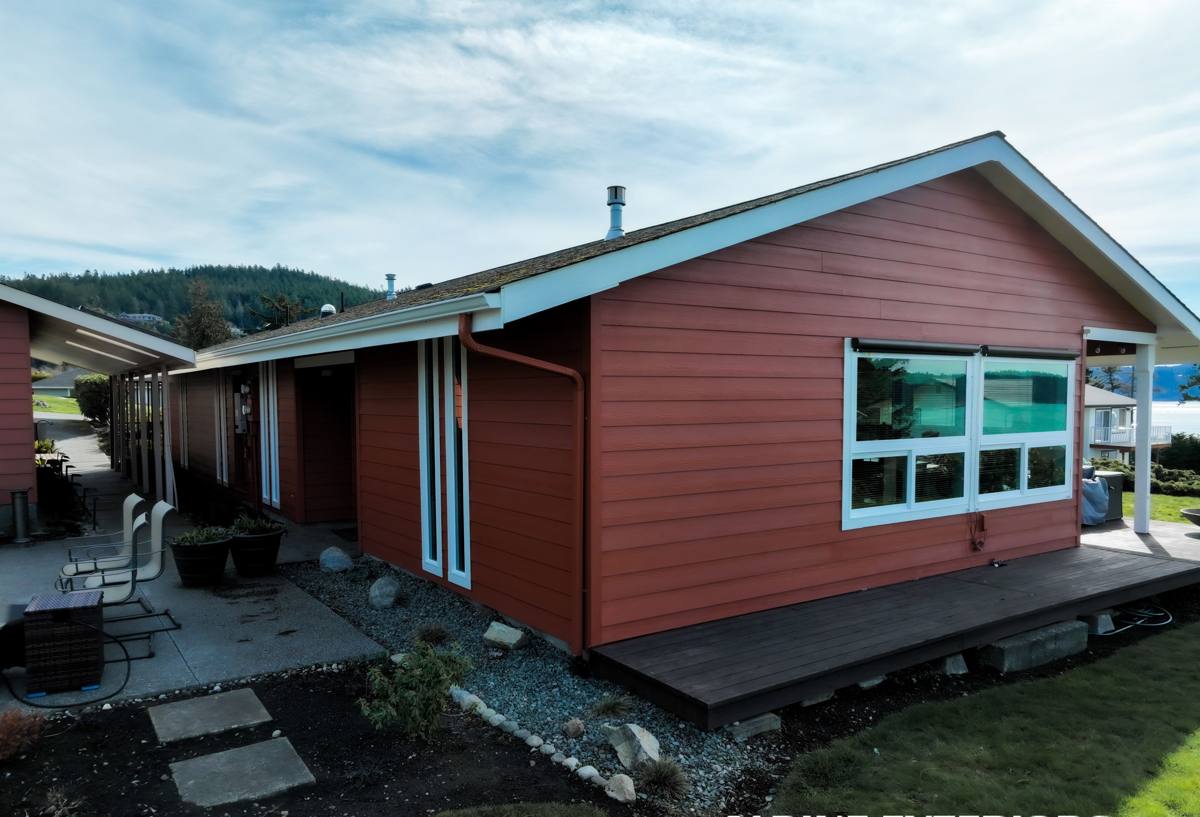
Why Older Siding in Kenwood Wears Differently Than Newer Siding
A lot of the original siding on Historic Kenwood homes is old-growth wood lap siding, sometimes covered at some point by asbestos-cement shingles, aluminum, or vinyl retrofitted over the original material. Each of these has its own failure pattern, and repairing them correctly means understanding what's actually underneath, not just what's visible from the curb.
- Original wood lap siding: Old-growth heart pine or cypress is genuinely durable wood, but a century of Florida humidity and UV exposure breaks down paint film and opens the door to moisture intrusion at butt joints, nail holes, and bottom edges.
- Retrofit siding over original material: When a layer was added decades ago without addressing what was underneath, trapped moisture can rot the original wall sheathing invisibly for years before it shows up as soft spots or bulging.
- Multiple past repairs: Houses this age often have a patchwork of repair attempts from different decades — mismatched boards, inconsistent nailing patterns, and caulk used to hide problems instead of solve them.
- Settling and framing movement: Century-old wood-framed houses shift over time, which stresses siding joints and trim in ways a slab-on-grade home built in the 1990s doesn't experience.
What a Correct Siding Repair Involves on a Historic Home
Repairing siding on a Historic Kenwood home is not the same job as patching siding on a house built in 2005. It starts with figuring out what's actually failing before touching a single board.
Diagnosis before demolition
Any legitimate repair begins with pulling back damaged sections to inspect the sheathing, framing, and any existing moisture barrier underneath. On a historic home, this step matters more, not less — there's a real chance of finding rot, old pest damage, or a layer of siding history nobody knew was there. Skipping this step and just nailing new material over a soft wall is how small problems become expensive ones.
Matching what's there — or replacing it with something better suited to the climate
Where a repair can be isolated to a small section and the surrounding siding is sound, matching the existing reveal, profile, and paint line is the right call. But where damage is widespread, or where the underlying material has reached the end of its useful life, patching around failure points stops making sense. That's the point where we talk with homeowners honestly about full or partial re-siding rather than chasing repairs on material that's going to keep failing.
Getting the water management right
Wind-driven rain in a Gulf Coast storm doesn't fall straight down — it gets forced sideways and upward under siding laps and around trim. A correct repair addresses flashing at windows, doors, and butt joints, proper lap overlap, and a continuous drainage plane behind the siding. Cosmetic-only repairs that ignore water management just delay the next failure.
Repair or Replace? Weighing the Options for an Older Kenwood Home
Every historic home is different, but the decision usually comes down to how much of the wall system is still sound versus how much has already failed. This is a general guide, not a substitute for an on-site inspection.
| Situation | Likely Approach | Why |
|---|---|---|
| Isolated damage (one section, storm impact, localized rot) | Targeted repair | Surrounding siding and sheathing are sound; no reason to disturb more of the wall than necessary |
| Recurring paint failure and soft spots across multiple walls | Broader repair or partial re-siding | Points to a systemic moisture or material-age problem, not a one-time event |
| Multiple past patch jobs with visible mismatch | Section or full re-siding | Patchwork repairs compound over time and rarely hold paint or caulk consistently |
| Original material is at end of service life (widespread rot, delamination) | Full re-siding with a climate-appropriate product | Repeated repair costs eventually exceed the cost of doing it right once |
Where James Hardie Fits Into Historic Kenwood Repair Work
We install James Hardie fiber cement exclusively — we don't install vinyl, LP SmartSide, or raw wood siding, including on repair work. On a historic home, that standard matters even more than usual, because whatever goes into a repaired section needs to survive the same hurricane winds, UV load, and salt air as the rest of the house for decades, not just look right on installation day.
Hardie's lap and shingle profiles are manufactured in styles that replicate traditional wood siding reveals, which makes it possible to introduce Hardie into a repair or partial re-siding project on an older home without the finished wall looking out of place next to original trim and detailing. Fiber cement doesn't rot, doesn't feed termites, and holds paint far longer than old-growth wood exposed to a century of Gulf Coast sun — which is exactly the failure pattern we see most often on Kenwood's original siding.
When a full section needs replacing, we also talk through Hardie's ColorPlus factory-finished color options versus field-applied paint, since historic properties sometimes have specific color or appearance expectations from the neighborhood or a homeowner's association. We'll walk through what's realistic for your specific home before any work starts.
Historic Character Isn't Something We Work Around — It's Something We Work With
Kenwood's identity as a historic neighborhood comes from the consistency of its architecture — rooflines, trim details, porch profiles, and siding reveals that read as a coherent style block by block. A repair crew that doesn't understand that will "fix" the siding while quietly making the house look wrong: the wrong reveal width, mismatched corner boards, or trim details that don't match the original casing. None of that shows up on a work order, but it shows up the moment you stand across the street and look at the house.
Correct historic repair work means paying attention to reveal size, board width, and trim relationships — not just getting a wall watertight. It's a slower, more deliberate way to work, and it's the standard we hold repair work to on any older home, Kenwood included.
Our Process for Siding Repair in Historic Kenwood
- On-site inspection: We look at the full exterior, not just the section you called about — damage is rarely isolated to one wall on a house this age.
- Diagnosis: We open up affected areas to check sheathing and framing condition before quoting anything.
- Honest recommendation: Targeted repair, partial re-siding, or full re-siding — whichever actually solves the problem, explained in plain terms with the reasoning behind it.
- Matched or upgraded materials: We match existing profiles where a targeted repair makes sense, or bring in James Hardie fiber cement where replacement is the right call.
- Correct water management: Flashing, lap overlap, and drainage details get addressed as part of the repair, not treated as optional extras.
- Final walkthrough: We check the work against the rest of the house, not just against the section that was repaired.
Why Hiring a Crew That Already Works in Kenwood Matters
A contractor who's worked on Historic Kenwood homes before has already seen what's typically hiding behind the original siding on houses of this age and construction style in this part of Pinellas County. That experience shortens the diagnosis phase, avoids guesswork, and means fewer surprises once a wall is opened up. It also means a crew that respects the visual character of the neighborhood instead of treating every repair like a standard suburban patch job.
Just as important: a crew that understands St. Petersburg's climate risks — salt air corrosion, UV degradation, and wind-driven rain during storm season — builds repairs that are meant to last through the next decade of Gulf Coast weather, not just look finished for the next inspection.
A Quick Checklist Before You Call a Contractor
- Note which sides of the house show damage — sun-facing and storm-facing walls often fail first and differently.
- Look for soft spots, bubbling paint, or visible gaps at board joints and trim corners.
- Check whether there's a history of past siding repairs on the home, even if you don't know the details — ask a previous owner or check any records you have.
- Avoid caulking over problem areas yourself before an inspection — it can hide the extent of the damage from the contractor.
- Ask any contractor you're considering directly what material they'll use for repairs and why.
If your Historic Kenwood home has siding that's cracking, soft, gapping, or just past its best years, we're happy to take a look and give you a straight answer about what it actually needs. Estimates are free, there's no pressure, and we'll tell you honestly if a targeted repair is enough or if it's time to talk about something more permanent.