 St. Petersburg
 Roofing in a Waterfront Neighborhood
Gulfport sits on Boca Ciega Bay, and that location shapes what a roof here has to survive. Homes just blocks from the water take on more salt-laden air than roofs further inland, and that salt accelerates corrosion on metal flashing, fasteners, vents, and drip edge. Add in the intense, near year-round Florida UV that bakes shingles and dries out sealants, plus the wind-driven rain that comes with Gulf Coast storms, and you get a roof that ages faster than the calendar suggests. Hurricane-force gusts don't need a direct hit to do damage either — they lift shingle edges, work flashing loose, and drive rain sideways under laps that were never designed to handle horizontal water.
Gulfport's housing stock adds another wrinkle. The neighborhood has a mix of older bungalows and cottages alongside newer construction and renovated homes, which means roof decks, ventilation setups, and prior repair quality vary a lot from one house to the next. A repair approach that works on a roof re-decked five years ago can be the wrong move on an original deck with decades of prior patch jobs layered underneath it. Local knowledge of what these Gulfport roofs typically look like under the surface matters as much as knowing the current shingle line.
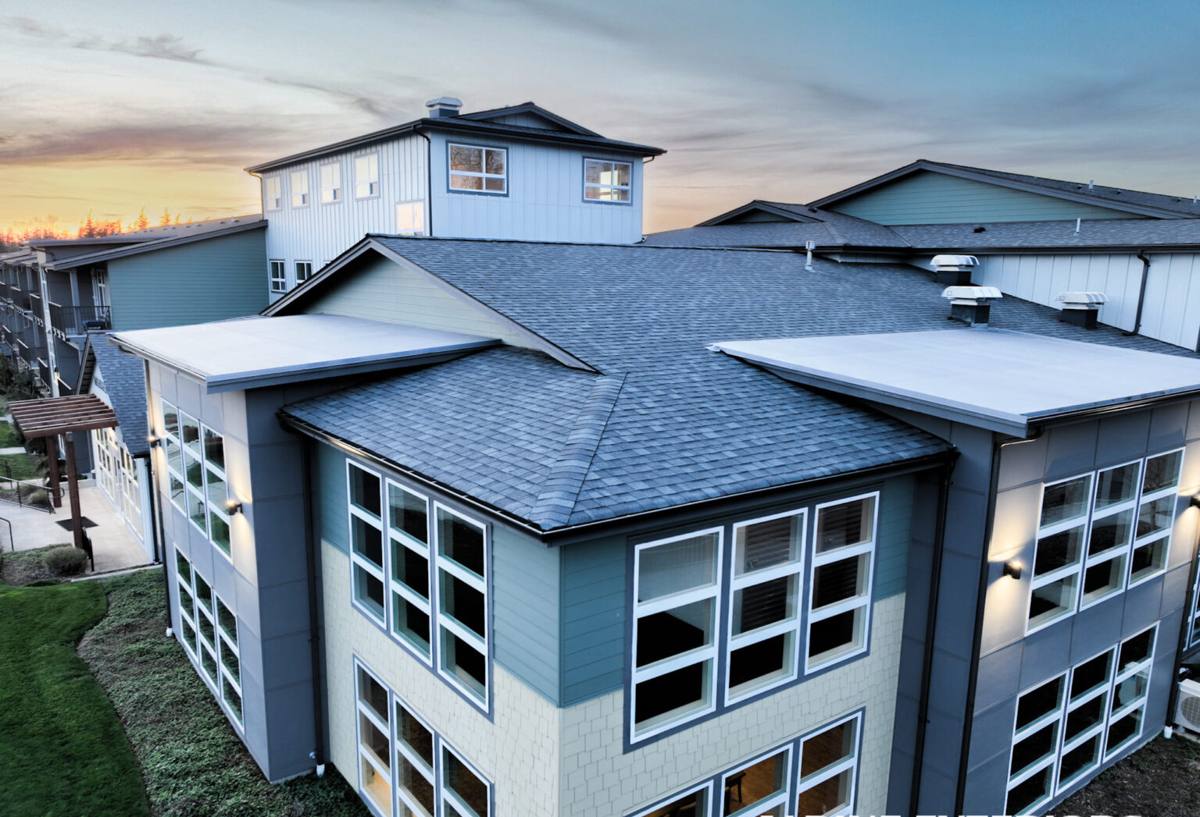
Signs Your Gulfport Roof Needs Repair
Most roof problems don't show up as a hole in the ceiling — they show up as small clues first. Catching them early is usually the difference between a repair bill and a replacement bill.
- Granules collecting in gutters or at downspout outlets, a sign shingles are wearing thin from UV exposure
- Shingles that look curled, cupped, or lifted at the edges, especially on the sides that face prevailing wind
- Rust streaks or soft, pitted metal at flashing points around chimneys, vents, and skylights
- Dark staining or a soft, spongy feel on ceilings or in the attic after heavy rain
- Missing or displaced shingles after a storm, even if there's no visible leak yet
- Nail pops — small raised bumps under shingles where a fastener has backed out
- Sealant around penetrations that's cracked, shrunk, or pulling away from the surface it's bonded to
Any one of these on its own might just need a targeted fix. Several at once, or damage concentrated in one area of the roof, usually points to a section that's failing faster than the rest and needs a closer look before it spreads.
What Actually Causes Repair Needs Here
Wind and Uplift
Roofs facing open water or wide yards catch more wind than roofs shielded by mature trees or neighboring structures. Once wind gets under a single lifted shingle tab, it works like a lever on the ones around it. A repair that only replaces the obviously missing shingles without checking the surrounding field often leaves the underlying weakness in place.
UV Breakdown
Asphalt shingles rely on their granule coating to block UV and protect the asphalt underneath. Florida's sun exposure is harder on that coating than it is in most of the country, and once granules wear thin, the asphalt dries out, becomes brittle, and loses its ability to seal. This tends to show up first on south- and west-facing slopes.
Salt Air and Corrosion
Metal components — flashing, drip edge, fasteners, vent boots with metal collars — corrode faster this close to the bay. Corroded flashing doesn't fail all at once; it thins and pits until water finds a path through a seam that used to be tight. This is one of the most common causes of a "mystery leak" that shows up nowhere near where you'd expect.
Wind-Driven Rain
Standard shingle installations assume rain falls mostly straight down. Storms here regularly drive rain sideways, which pushes water up under laps and around fasteners that would stay dry in a calmer climate. This is why proper underlayment and flashing technique matter more here than in drier, calmer regions.
Repair vs. Replacement: How We Decide
Not every damaged roof needs a full tear-off, and not every roof that looks rough on top is actually a repair candidate. We look at the whole picture before recommending either.
| Factor | Favors Repair | Favors Replacement |
|---|---|---|
| Age of roof | Under roughly 12-15 years for asphalt | Near or past expected material lifespan |
| Extent of damage | Isolated to one section or a few penetrations | Spread across multiple slopes |
| Deck condition | Solid, no rot found on inspection | Soft spots or rot found under shingles |
| Leak history | First occurrence, source clearly identified | Recurring leaks in different spots over time |
| Prior repairs | Few, and done correctly | Multiple patch layers stacked over the years |
When a repair is the right call, we'll say so — there's no benefit to us or to you in replacing a roof that has years of good service left. When a repair would just be a temporary patch on a roof that's genuinely at the end of its life, we'll explain exactly why and let you make the call with real information instead of pressure.
What a Correct Repair Actually Involves
A roof repair done right isn't just swapping out the shingles you can see. It starts with finding the actual source of the problem, which is often several feet from where the stain or leak shows up inside, since water travels along the deck and framing before it drips through.
- Diagnose the source — trace the leak or damage back to its actual entry point, not just the visible symptom
- Check the deck — any repair over a soft or rotted deck section fails again quickly, so this gets confirmed before shingles go back on
- Replace underlayment in the repair zone — old felt or synthetic underlayment that's been wet doesn't dry out and re-seal itself
- Rebuild flashing correctly — proper laps and step flashing at walls, chimneys, and penetrations, not just a bead of sealant over the gap
- Match materials appropriately — new shingles installed with correct nailing pattern and exposure to blend and perform with the surrounding roof
- Re-seal penetrations — vent boots, pipe collars, and fasteners get proper sealant rated for exterior, UV-exposed use
Skipping the underlayment or flashing step to save time is the single most common reason a "repaired" roof leaks again within a year or two. It looks finished from the ground, but the water path underneath was never actually closed off.
Our Process on a Gulfport Repair Call
We keep the process straightforward because a roof repair shouldn't feel like a mystery.
- Inspection first. We get on the roof, not just a look from the driveway, and check the attic side too when access allows it.
- Honest scope. You get a clear explanation of what's actually wrong, what caused it, and what the repair will involve — in plain language.
- Written estimate. A defined scope and price before any work starts, no surprise add-ons mid-job.
- Correct repair, not a patch. We fix the cause, not just cover the symptom, using the diagnose-and-rebuild approach above.
- Cleanup. Old materials, nails, and debris removed from the roof and yard when the work is done.
Materials We Use for Repairs
For asphalt shingle repairs, we match the existing shingle line where possible and use dimensional/architectural shingles when a section needs a fresh start, since they hold up better to wind uplift than older three-tab profiles. For flashing and drip edge, we favor corrosion-resistant metal given how much faster standard-grade metal pits this close to the bay. Underlayment gets replaced with synthetic or self-adhering membrane in vulnerable areas — valleys, around penetrations, along eaves — rather than reused, since a membrane that's already absorbed water won't reliably seal again.
We don't push premium materials on every repair. A small, isolated fix on a roof with years of life left doesn't need top-tier everything — it needs the right fix, done correctly, with materials suited to what that specific section is exposed to.
Maintenance That Extends a Repair's Life
A good repair lasts longer with a little basic upkeep, especially given the pace of wear here in Pinellas County.
- Clear gutters and downspouts before summer storm season so water isn't backing up under the roof edge
- Trim back branches that overhang the roof to reduce debris buildup and abrasion during wind
- Have penetrations and flashing points checked annually, since sealant and metal are the first things to wear here
- Look at the roof after any significant storm, even if nothing seems wrong from inside the house
- Address small issues promptly — a missing shingle or loose flashing piece is a quick fix now and a bigger repair later
If you're seeing signs of wear, storm damage, or a leak on a home in Gulfport or elsewhere in St. Petersburg, we're glad to take a look and give you a straight answer about what it needs. Reach out for a free, no-pressure estimate using the form below.