 St. Petersburg
 Fiber Cement Siding Built for Kenneth City's Climate
Kenneth City sits in the middle of Pinellas County, surrounded by St. Petersburg and the greater Tampa Bay area — close enough to the Gulf and the Bay that salt-laden air, heavy summer humidity, and hurricane-season wind and rain reach every block, even though the community itself isn't waterfront. Homes here are a mix of older ranch-style houses from the mid-century building boom and newer infill construction, and both types face the same enemy: a subtropical climate that never really gives siding a break. There's no off-season for UV exposure, no month where humidity isn't working against paint and seams, and no guarantee that a summer storm won't bring straight-line winds or wind-driven rain that tests every joint and fastener on the exterior of a house.
This page covers one thing specifically: what it takes to do fiber cement siding right on a Kenneth City home, why we only install James Hardie products, and what our process looks like from first look to final walk-through.
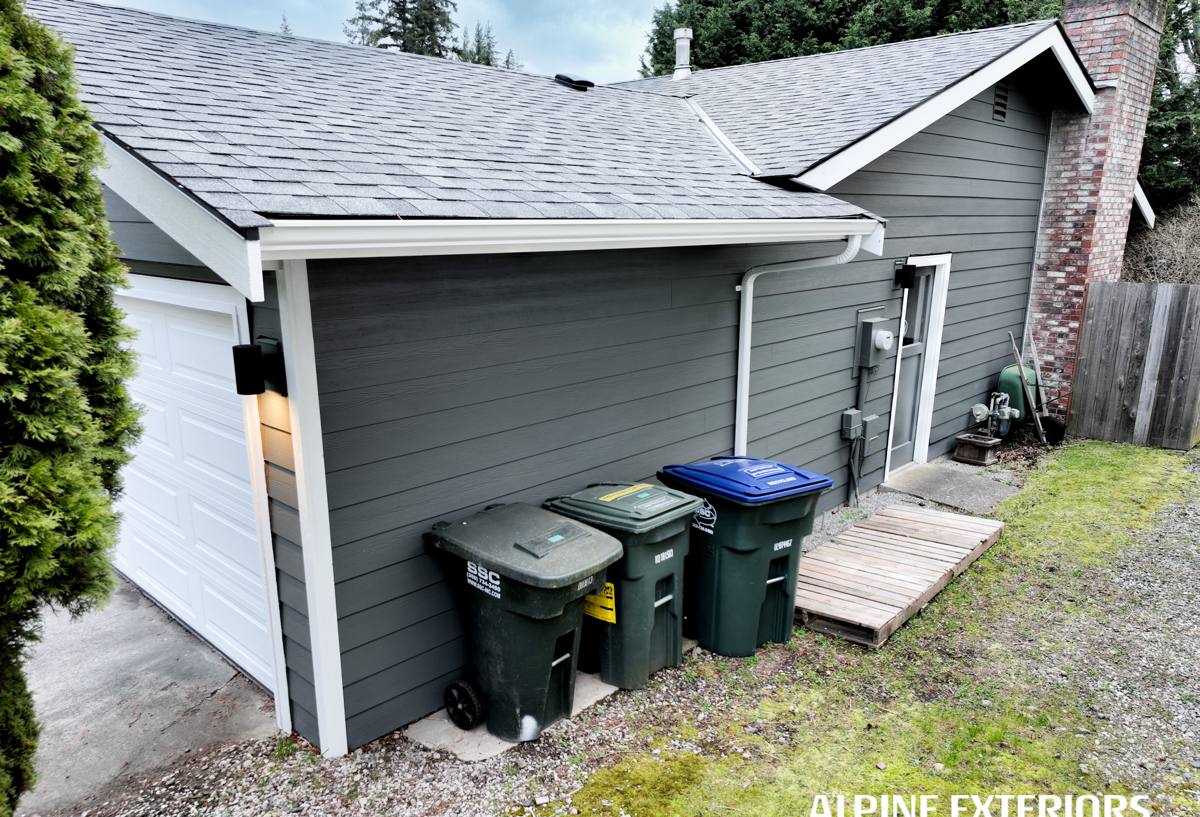
What Pinellas County Weather Actually Does to Siding
It helps to be specific about what siding is up against here, because the failure modes in Kenneth City aren't hypothetical — they're the predictable result of a specific climate.
Wind and wind-driven rain
Pinellas County sees tropical storms and hurricane-force wind events on a recurring basis. Wind alone rarely destroys siding outright, but wind-driven rain forces water sideways and upward into laps, seams, and fastener points that were never designed to handle water moving in that direction. Siding that isn't installed with the right overlap, flashing, and gap tolerances will let that water behind the cladding, where it can sit against sheathing and framing for days.
Year-round UV load
Central Florida gets intense sun exposure essentially every month of the year, not just in summer. UV breaks down pigments and resin binders in paint over time, which is why field-painted or poorly finished siding tends to fade, chalk, and need repainting far sooner here than in milder climates.
Salt air
Kenneth City isn't beachfront, but it's well within the reach of salt-laden air moving in off Tampa Bay and the Gulf. Salt accelerates corrosion on fasteners, trim accessories, and any metal flashing components, and it can also affect how coatings adhere and hold up over the life of the siding.
Humidity and moisture cycling
Pinellas County's humidity means siding rarely gets to fully dry out between rain events, especially on shaded elevations. Materials that absorb moisture and swell, or that trap moisture behind them due to poor installation detailing, are at a real disadvantage in a climate like this.
Why We Install Only James Hardie Fiber Cement
We standardized on James Hardie products for every siding job we do, including the ones in Kenneth City, and we don't install LP SmartSide, vinyl, Cemplank, Allura, primed spruce, or cedar. That's not a marketing position — it's a decision built around what actually holds up in this specific climate over the long run.
Fiber cement is a blend of cement, sand, and cellulose fibers, which makes it dimensionally stable in a way wood-based and vinyl products aren't. It doesn't expand and contract with heat the way vinyl does, and it doesn't absorb and swell with moisture the way engineered wood products can. It's also non-combustible, which matters to insurers and to homeowners thinking about long-term risk.
James Hardie specifically engineers its HZ5 product line for Florida's climate zone — the formulation and finish system are built around the reality of high humidity, intense UV, and wind-driven rain, rather than a one-size-fits-all national product. Combined with the factory-applied ColorPlus finish (baked on and cured under controlled conditions rather than painted on-site after installation), the result is a finish that resists fading and chipping far better than field-applied paint, and a substrate that isn't fighting moisture absorption the way wood-based sidings do.
None of this means other products are junk — LP SmartSide and vinyl both have legitimate use cases and loyal manufacturers behind them. Our position is narrower: for the way we build and warranty our work, and for what we've seen hold up in Gulf Coast conditions over time, Hardie's engineered fiber cement is the product we're willing to put our name on.
What a Correct Installation Involves
Fiber cement siding is only as good as the installation behind it. A huge share of the siding failures we get called out to inspect aren't material failures at all — they're installation shortcuts that let water in. On a Kenneth City home, correct installation means:
- Proper starter strip and clearance from grade, decks, and roof lines so water has somewhere to go and siding isn't wicking up moisture from the ground
- Correct fastener type, spacing, and embedment depth — corrosion-resistant fasteners matter more here given the salt air
- Weather-resistant barrier installed and lapped correctly behind the siding, not just stapled on as an afterthought
- Flashing at every window, door, and penetration, integrated with the water-resistive barrier in the right shingle-lap order
- Correct joint treatment and caulking at butt joints and trim intersections, using products rated for the exposure
- Proper nailing pattern that doesn't over-drive or under-drive fasteners, which can crack the board or let it work loose in high wind
- Manufacturer-specified gaps at trim and corners to allow for minor movement without cracking the finish
Skip any one of these and the siding can look fine for a year or two while a problem builds behind it. That's the real risk with fiber cement — it's a forgiving, durable material when installed correctly, and an expensive callback when it isn't.
Our Process for a Kenneth City Siding Job
1. On-site assessment
We start with a walk-around of the house to look at current siding condition, trim and flashing details, any signs of past water intrusion, and the general exposure of each elevation — a south or west wall in full sun behaves differently than a shaded north wall.
2. Tear-off and substrate check
Once old siding comes off, we inspect the sheathing underneath for rot or water damage before anything new goes up. Covering a compromised substrate with new siding just hides the problem — we address it first.
3. Weather barrier and flashing
New water-resistive barrier goes on with correct laps, and flashing is installed at every window, door, and penetration before siding starts.
4. Hardie installation to manufacturer spec
Siding goes up following James Hardie's published installation guidelines for fastening, clearances, and joint treatment — not a generalized approach adapted from other materials.
5. Trim, caulking, and final detail work
Corners, trim boards, and joints get finished with attention to the details that determine how the job performs in wind-driven rain, not just how it looks on install day.
6. Final walk-through
We walk the finished job with the homeowner, point out what was done and why, and answer questions before calling it complete.
Fiber Cement Compared to Other Siding Options
| Factor | James Hardie Fiber Cement | Vinyl | Engineered Wood (e.g. LP SmartSide) |
|---|---|---|---|
| Combustibility | Non-combustible | Combustible, can melt/warp near heat | Combustible |
| Moisture behavior | Dimensionally stable, resists moisture absorption | Doesn't absorb moisture but can warp/crack with heat cycling | Wood-based, more sensitive to sustained moisture exposure |
| UV/fade resistance | Factory-baked ColorPlus finish resists fading | Color molded through, but can fade and chalk over time | Field-applied or factory finish, variable durability |
| Wind performance | Rigid, holds up well when correctly fastened | Lighter, more prone to flexing/detaching in high wind | Rigid but seams are a moisture entry risk in wind-driven rain |
| Salt air durability | Strong, especially with corrosion-resistant fasteners | Generally resistant but trim/fasteners still at risk | Moderate — moisture-sensitive substrate is the concern |
What Affects the Cost of a Kenneth City Siding Job
| Cost Factor | Why It Matters |
|---|---|
| House size and elevation count | More square footage and more corners/dormers mean more material and labor |
| Existing substrate condition | Rotted sheathing found during tear-off adds repair scope before siding can go on |
| Product line and profile | Hardie offers multiple plank profiles, panel styles, and trim options at different price points |
| Trim and detail complexity | Homes with lots of window/door trim, corner boards, and architectural detail take more labor |
| Access and site conditions | Tight lot lines, fencing, or landscaping can affect setup and disposal logistics |
We don't quote a project without seeing it — anyone giving a firm number over the phone for a full siding job is guessing. A proper estimate accounts for the specific house, not a generic square-footage average.
Signs Your Kenneth City Home May Need New Siding
- Visible cracking, warping, or buckling in the siding panels or boards
- Soft spots when you press on the siding, which can indicate water damage behind it
- Paint that's peeling, bubbling, or chalking heavily, especially on sun-exposed walls
- Gaps opening up at seams, corners, or trim that weren't there before
- Rising energy bills that could point to compromised insulation behind failing siding
- Visible mold, mildew, or staining that keeps coming back despite cleaning
- Siding that's original to an older home and has never been replaced or inspected
Why It Matters to Hire a Crew That Already Works Kenneth City
A contractor who works regularly in Kenneth City and the surrounding St. Petersburg area already understands the practical realities of this climate — how quickly UV and humidity age a bad installation, what wind-driven rain during a summer storm actually does to a poorly flashed window, and how salt air factors into fastener and hardware choices. That's different from a crew that mostly works inland climates and treats Florida installation guidelines as a formality. Local experience also means we're familiar with Pinellas County permitting and inspection processes, so the paperwork side of the job doesn't slow things down unnecessarily.
If you're weighing a siding replacement or repair for your Kenneth City home, we're happy to take a look and walk you through what we're seeing — no pressure, no obligation. Reach out for a free estimate using the form below.