 St. Petersburg
 Why Siding Repair Looks Different in Pinellas Park
Pinellas Park sits inland from Tampa Bay but still gets the full weather package that defines this part of Pinellas County: long stretches of intense UV exposure, sudden wind-driven downpours, tropical-storm and hurricane-force wind events, and a steady dose of salt-laden air moving in off the Gulf and the bay. None of that is dramatic on any single day. The damage shows up slowly, in the form of cracked caulk lines, swollen board edges, chalky paint, or a soft spot near a window trim that wasn't there last year.
Siding repair in this climate isn't just "patch the hole and move on." A repair that doesn't account for what's happening behind the siding — moisture intrusion, trapped humidity, fastener corrosion, flashing failure — tends to fail again within a season or two. A repair that's done right addresses the cause, not just the visible symptom, and holds up through the next round of Florida weather.
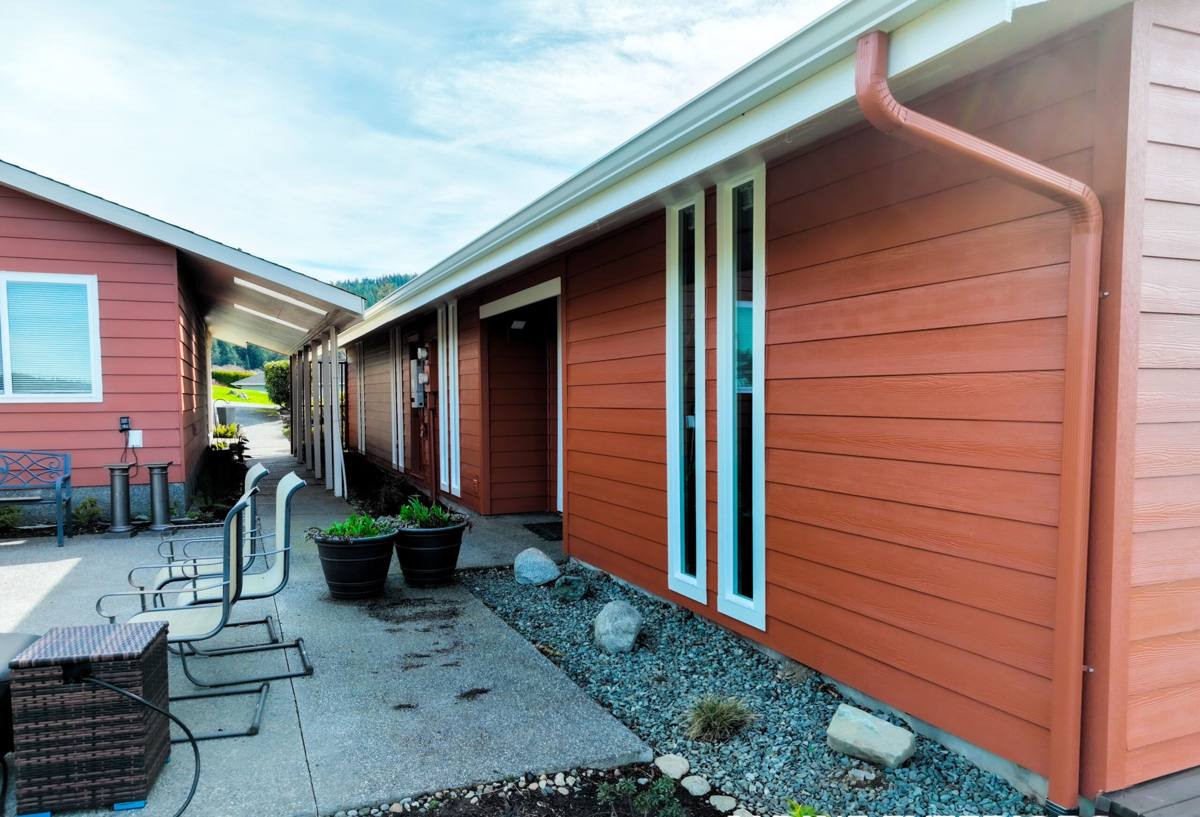
What Pinellas County Weather Does to Siding Over Time
UV and Heat
Florida sun is harder on exterior materials than most homeowners realize. Constant UV breaks down paint films, dries out caulking until it cracks and pulls away from seams, and can cause some siding materials to fade unevenly depending on sun exposure per elevation. South- and west-facing walls typically show wear years before the shadier sides of the house.
Wind-Driven Rain
Rain that falls straight down is rarely the problem. Rain that gets pushed sideways by wind — which is common during Gulf Coast storms — finds every unsealed seam, nail hole, and trim gap. Once water gets behind siding, it can sit against sheathing and framing for days without ever being visible from the outside, quietly causing rot or mold before a homeowner notices anything wrong.
Hurricane and Tropical Storm Winds
Wind doesn't just tear siding off in a named storm. Repeated flexing during lesser wind events loosens fasteners over time, works joints apart, and stresses caulk lines at corners and around penetrations. By the time a bigger storm arrives, siding that was already fatigued is far more likely to fail.
Salt Air
Being near Tampa Bay means airborne salt is a constant, low-level factor. Salt accelerates corrosion on exposed fasteners and metal flashing, and it can contribute to premature breakdown of lower-grade siding materials and coatings. Homes closer to open water typically need more frequent inspection than homes further inland.
Signs a Pinellas Park Home Needs Siding Repair
Most siding damage gives warning signs well before it becomes a serious problem. Homeowners who catch these early save money — a $300 repair now is a lot cheaper than a $3,000 repair (or a full replacement) after water has been sitting behind the wall for a year.
- Cracked, split, or missing sections of siding, especially after a storm
- Soft or spongy spots when you press on the siding near the bottom of walls or under windows
- Bubbling, peeling, or persistently chalky paint on one section of the house
- Visible gaps, warping, or buckling at seams and corners
- Cracked or missing caulk around windows, doors, and trim
- Rust streaks running down from fastener heads or metal flashing
- Musty odor or discoloration on interior walls that back up to exterior siding
- Visible daylight or drafts around penetrations (vents, hose bibs, electrical) on the exterior wall
What a Correct Siding Repair Actually Involves
A rushed repair replaces what's visible and stops there. A correct one follows a sequence:
1. Diagnose the Cause, Not Just the Symptom
Before anything gets replaced, the damaged area gets opened up enough to check what's happening underneath — house wrap condition, sheathing integrity, flashing at windows and penetrations, and whether the damage is isolated or spreading. Replacing a cracked board over rotted sheathing just hides the problem for another season.
2. Match the Repair to the Material
How a repair is done depends heavily on what's actually on the wall. Fiber cement, wood, and vinyl each fail differently and get repaired differently — which is part of why we're specific about which materials we work with, covered below.
3. Address Water Management First
Any repair that doesn't correct the underlying water path — flashing, house wrap, kick-out flashing at rooflines, proper overlap and fastening — is a temporary fix. Sealing over a moisture problem without addressing drainage just delays the next failure.
4. Finish to Match
A patch that's structurally sound but visually obvious wasn't done well. Matching profile, reveal, and finish color is part of a repair being complete, not a cosmetic afterthought.
Repairing James Hardie Fiber Cement Siding
We install and repair James Hardie fiber cement exclusively, and repair work on Hardie siding follows its own process. Because it's a rigid cement-based board rather than a flexible plastic panel, damaged sections are cut out and replaced piece by piece rather than "popped off and swapped" the way vinyl panels are.
Key things about repairing genuine James Hardie siding in this climate:
- Damaged boards are cut back to sound material at the nearest seam or stud line and replaced with matching profile and reveal
- Hardie's ColorPlus factory finish is baked on and UV-cured, so touch-up work uses Hardie's matched touch-up products rather than generic exterior paint whenever possible, to keep color and sheen consistent
- Fastening and gapping follow Hardie's published installation specs for this climate zone (proper joint gaps, correct fastener type and spacing) — repairs that ignore these specs can void the manufacturer warranty on the surrounding, undamaged siding
- Because fiber cement doesn't rot, warp, or attract wood-destroying insects, isolated damage (impact, storm debris) is usually a clean, contained repair rather than a sign of wider material failure
This is one of the practical reasons we standardized on Hardie: when a repair is needed, it tends to be a repair — not a discovery that the whole wall section is compromised.
Repairing Non-Hardie Siding: The Trade-Offs We're Honest About
We're sometimes asked to look at damage on vinyl, LP SmartSide, or older wood siding, and it's worth explaining our position plainly rather than avoiding the question. Vinyl siding can crack in impacts and becomes brittle with UV exposure over time, and exact color/profile matches get harder to source as products age out of production. LP SmartSide and other wood-based composite products are engineered to perform well when installed and maintained correctly, but they're more sensitive to sustained moisture exposure than fiber cement, and repair work has to be paired with real confidence that water intrusion has been fully stopped — otherwise the repair won't hold. Older solid wood or primed spruce siding can often be patched, but matching decades of weathering and repainting is rarely seamless.
None of that means these materials are junk — plenty of homes carry them without major issues. It means that when we repair a wall, we want confidence the repair will actually last in this climate, and that's a higher bar with some materials than others. It's the same reasoning behind why, when a repair isn't enough and a section needs to come off entirely, we recommend replacing with James Hardie rather than matching what's already there.
Repair vs. Replacement: How to Think About It
Not every damaged section needs full replacement, and not every siding problem should be treated as "just patch it." The right call depends on a handful of factors:
| Factor | Repair Usually Makes Sense | Replacement Usually Makes Sense |
|---|---|---|
| Extent of damage | Isolated to one or two boards/panels | Spread across multiple walls or elevations |
| Cause | Single event: impact, storm debris, one failed seal | Ongoing moisture intrusion or systemic installation error |
| Material condition | Surrounding siding is sound and not near end of life | Siding is brittle, delaminating, or widely faded/warped |
| Sheathing/framing behind it | Dry, solid wood confirmed on inspection | Soft, discolored, or rotted sheathing found on inspection |
| Age of existing siding | Well within expected service life | Nearing or past typical service life for the material |
Our Process for Siding Repair in Pinellas Park
Our approach on repair calls in this area follows a consistent process, whether the damage is from a recent storm or has been slowly developing:
- Inspection. We look at the damaged area and check adjacent siding, trim, flashing, and — where accessible — the condition behind the siding.
- Honest assessment. We tell you plainly whether this is a contained repair, a repair with a moisture-management fix, or a case where replacement is the better long-term answer, and why.
- Written scope. You get a clear description of what's being repaired, how, and what it will look like when finished — no vague "we'll fix it up."
- Repair and match. Damaged material is removed, the water path is corrected, and new material is installed and finished to match the surrounding wall as closely as possible.
- Final walk-through. We review the completed work with you before calling the job done.
Why a Crew That Already Works in Pinellas Park Matters
Siding repair isn't just a technical skill — it's a local one. A crew that regularly works in Pinellas Park and the surrounding St. Petersburg area already understands the wind-load expectations for this part of the Gulf Coast, has a working relationship with Pinellas County's permitting process when a repair scope requires it, and has seen firsthand how local siding ages under this specific mix of sun, humidity, storms, and salt air. That's different from a crew that primarily works inland climates and treats every Florida job as an exception.
It also matters for response time after a storm. When wind-driven rain damages siding, the gap between "small repair" and "expensive water damage" is often just how quickly the exposed area gets addressed. A contractor already established in the area is easier to reach quickly and has less excuse for delay.
Get an Honest Look at Your Siding
If you're seeing cracked, loose, or damaged siding on your Pinellas Park home, it's worth getting an honest opinion before the next storm season pushes a small problem into a bigger one. We'll take a look, tell you straight whether it's a repair or something more, and explain exactly what we'd do and why. Request a free, no-pressure estimate using the form below.