 St. Petersburg
 Siding Built for Kenneth City's Climate, Not Just Its Curb Appeal
Kenneth City sits inland enough to feel like a quiet Pinellas County neighborhood, but it's still close enough to Tampa Bay and the Gulf that the same punishing climate applies: long stretches of triple-digit heat index summers, sideways wind-driven rain during tropical systems, salt-laden air moving in off the water, and UV exposure that runs nearly year-round. Siding here isn't just cosmetic. It's the layer standing between your home's structure and a climate that works against building materials every single day.
A lot of siding sold in Florida was never designed with this climate in mind. Products that hold up fine in a drier, milder region can start failing within a few years here — swelling at seams, losing paint adhesion, taking on moisture behind the surface, or simply not standing up to a Category 1 or 2 storm's wind load. When we talk to Kenneth City homeowners about siding replacement, the conversation almost always starts with what went wrong the first time, not what they want cosmetically.
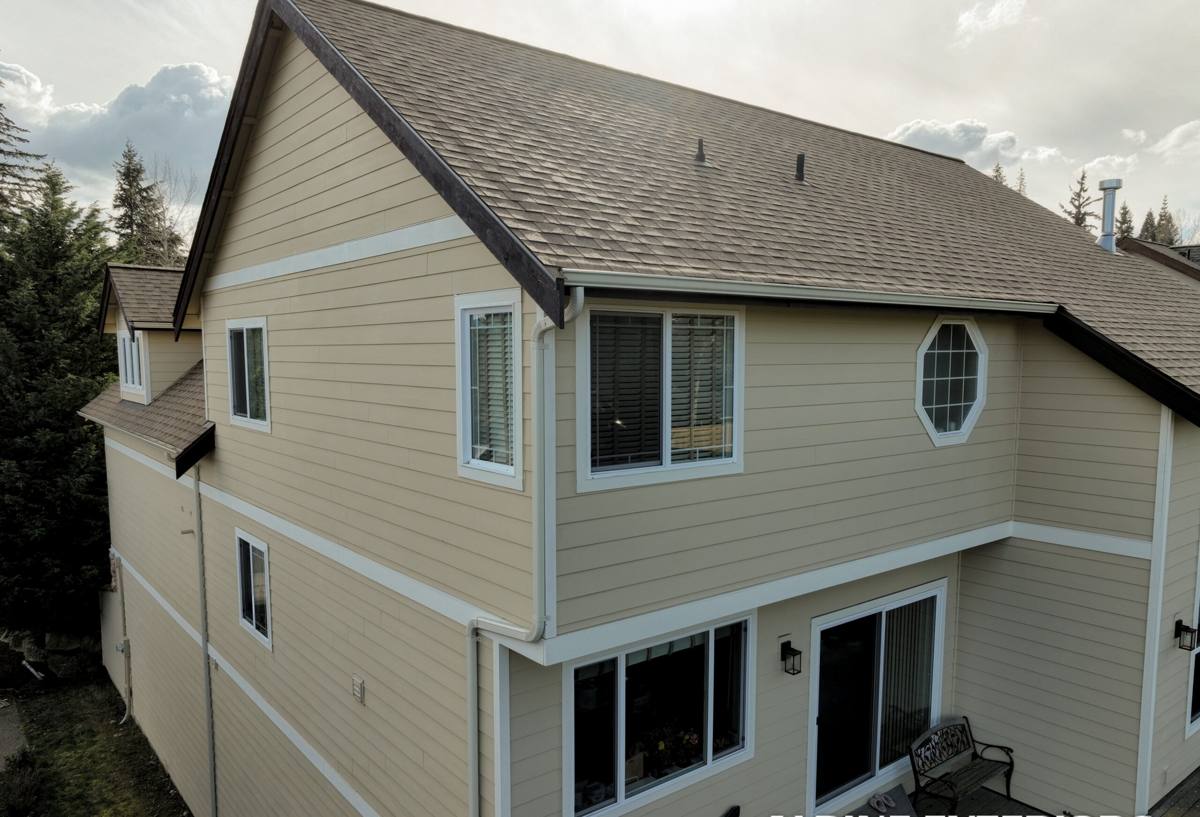
Signs a Kenneth City Home Needs Siding Replacement
Siding damage in this climate doesn't always show up as something dramatic. Often it's slow and easy to miss until it's already affecting the wall behind it. Homeowners should walk the exterior a couple of times a year and look for:
- Soft spots or visible sagging when you press on the siding, especially near the bottom edges and around windows
- Paint that's peeling, bubbling, or chalking heavily to the touch
- Warping, buckling, or panels that no longer lie flat against the wall
- Visible gaps at seams, corners, or trim where wind-driven rain can get behind the surface
- A musty smell near exterior walls, or discoloration on interior drywall near those walls
- Siding that feels swollen or spongy after a heavy rain event
- Faded or discolored panels that no longer match, especially on the west and south-facing walls that take the most direct sun
Any one of these on its own might just mean a repair. Several of them together, or damage that's spread across multiple walls, usually means the siding system itself has reached the end of its useful life and full replacement is the more honest recommendation.
Why We Only Install James Hardie Fiber Cement Siding
We get asked regularly why we don't offer vinyl, LP SmartSide, or other fiber cement brands as options. It's a fair question, and the honest answer is that we made a standard for ourselves and we stick to it on every job, including every siding replacement in Kenneth City.
Vinyl siding is inexpensive and easy to install quickly, and in milder climates it can perform reasonably well. In this climate, it's a different story. Vinyl softens and can warp under sustained heat and direct sun, becomes brittle over time from UV exposure, and simply isn't rated for the wind speeds this region can see in a serious tropical system. It also melts under contact with grills, fire pits, and reflected light from certain window coatings — a real issue on plenty of Florida homes.
Engineered wood products like LP SmartSide use wood strand technology with a resin binder, which performs well against impact but is still an organic, wood-based product at its core. In a climate with this much humidity and wind-driven rain, wood-based siding is more sensitive to moisture intrusion at cut edges, seams, and fastener points than fiber cement is — and once moisture gets behind or into the panel, the wood component is what's vulnerable.
James Hardie fiber cement is a genuinely different material: sand, cement, and cellulose fiber, engineered specifically for high-humidity, high-UV, storm-prone climates through its HZ5 product line built for this region. It doesn't burn, it doesn't rot, and it holds paint and factory finish far longer than wood-based or vinyl alternatives. That's why it's the only siding system we put our name behind.
What This Means in Practice
Standardizing on one manufacturer isn't a sales pitch — it means our crews install one system every day, know its engineering requirements cold, and don't have to relearn installation specs across five different product lines. That consistency is part of what keeps a siding replacement from turning into a callback.
What a Correct Siding Replacement Involves
Siding replacement is not just stripping old panels and nailing up new ones. Done correctly, it's a full building-envelope project, and skipping steps is exactly how homes end up with the same problems a few years later.
Tear-Off and Substrate Inspection
Once the old siding is removed, the sheathing underneath gets inspected for rot, delamination, or water damage — especially common around window and door openings and at the base of walls where water tends to collect. Any damaged sheathing gets replaced before anything new goes up. Covering over compromised substrate is one of the most common shortcuts in this industry, and it's one we don't take.
Weather-Resistive Barrier
A new weather-resistive barrier (house wrap) goes over the sheathing, properly lapped and sealed at seams and penetrations. This layer is what manages any moisture that does get past the siding surface, directing it back out rather than letting it sit against the wall assembly.
Flashing at Every Penetration
Windows, doors, hose bibs, vents, and any other wall penetration get proper flashing integrated with the weather barrier. This is one of the most failure-prone details in Florida siding work — wind-driven rain finds the smallest gaps, and flashing is what keeps it from reaching the wall cavity.
Installation to Manufacturer Spec
James Hardie publishes specific fastening patterns, clearances, and gapping requirements for a reason — it's engineered performance, not a suggestion. Correct fastener spacing and type, proper clearance from grade and roofing, and correct joint treatment all affect how the siding performs in wind and how long the finish lasts.
Trim, Caulking, and Finish Details
Corners, trim boards, and joints get sealed with the right materials in the right places — not over-caulked in a way that traps moisture, and not under-sealed in a way that lets it in.
James Hardie Product Lines We Install
James Hardie makes several distinct product lines, and the right one depends on the home's style and the specific wall or area being addressed.
| Product | Typical Use | Best For |
|---|---|---|
| HardiePlank lap siding | Primary wall cladding | Traditional lap-siding look, most common choice for full replacements |
| HardiePanel vertical siding | Board-and-batten or modern vertical look | Accent walls, gables, contemporary exteriors |
| HardieShingle siding | Staggered or straight-edge shingle profile | Coastal and cottage-style homes wanting a shingle look without wood's maintenance |
| HardieSoffit panels | Soffit and eave areas | Pairing with new siding for a fully coordinated, moisture-resistant exterior |
Every one of these lines is available with Hardie's ColorPlus factory finish, which is baked on and UV-cured rather than field-applied, giving noticeably better fade resistance than a job-site paint job in a climate that sees this much direct sun.
What Drives the Cost of a Siding Replacement
Every home is different, and we won't quote a number without seeing the property, but the factors that move the price are consistent from job to job.
| Factor | Why It Matters |
|---|---|
| Substrate condition | Rotted or water-damaged sheathing found during tear-off adds repair scope before new siding can go up |
| Home size and wall complexity | More corners, gables, and dormers mean more cutting, flashing, and labor time |
| Product line selected | Plank, panel, and shingle profiles carry different material and labor costs |
| Story height | Second-story and multi-story work requires more scaffolding, staging, and safety setup |
| Trim and accessory scope | Soffit, fascia, and trim replacement alongside siding affects total project cost |
| Color and finish | Factory ColorPlus finishes vs. field-painted options carry different pricing |
Why Local Experience in Kenneth City Matters
A siding crew that regularly works this specific area understands things a national installer or out-of-town crew won't: how the local wind exposure and lot layout in this part of Pinellas County affect a wall's real-world weathering, what permitting looks like at the county level, and what the salt and humidity load actually does to a home's exterior over a five- or ten-year span, not just on installation day.
That local track record also means accountability. A crew that plans to keep working in this community has every incentive to install correctly the first time and to stand behind the work afterward — not to disappear once the invoice is paid.
Maintenance After Installation
Fiber cement siding is low-maintenance, not no-maintenance. A simple annual routine keeps it performing the way it's engineered to:
- Rinse the exterior with a garden hose or low-pressure wash once or twice a year to remove salt residue and airborne grime
- Inspect caulk lines at trim, corners, and penetrations annually and re-caulk any that have cracked or pulled away
- Trim back landscaping so it isn't holding moisture against the siding surface
- Watch for any impact damage after storms and have it addressed before moisture can work its way in
Following this kind of routine is what lets a correctly installed Hardie system reach its full expected lifespan in a coastal Florida environment.
Get a Straight Answer About Your Siding
If your Kenneth City home is showing any of the warning signs above, or you're just planning ahead before the next storm season, we're happy to take a look and give you an honest read on what your siding actually needs. There's no pressure and no charge for the estimate — just a straightforward assessment from a crew that installs one siding system and knows it well.