 St. Petersburg
 Building Decks for Historic Old Southeast's Older Homes
Historic Old Southeast is one of St. Petersburg's established older neighborhoods, and homes here come with the character — and the quirks — of a different building era. Many of these houses were framed decades before modern Florida building code existed, which means the lot, the foundation height, the siding, and even the yard grading can all throw curveballs at a deck project that a newer subdivision simply doesn't have. A deck that looks right and performs right on a 1920s or 1950s St. Petersburg home isn't a stock design dropped onto the lot — it's built to match the house it's attached to and the ground it sits on.
What Makes This Neighborhood Different
Older homes in this part of St. Petersburg often sit closer to grade than newer construction, have narrower side yards, and were built with framing and siding materials that need a careful, non-destructive ledger attachment if the deck ties into the house. Mature trees and established landscaping are common too, which affects footing placement and drainage planning. None of this makes a deck project harder to get right — it just means the crew needs to actually look at the house before quoting a design, not hand over a template.
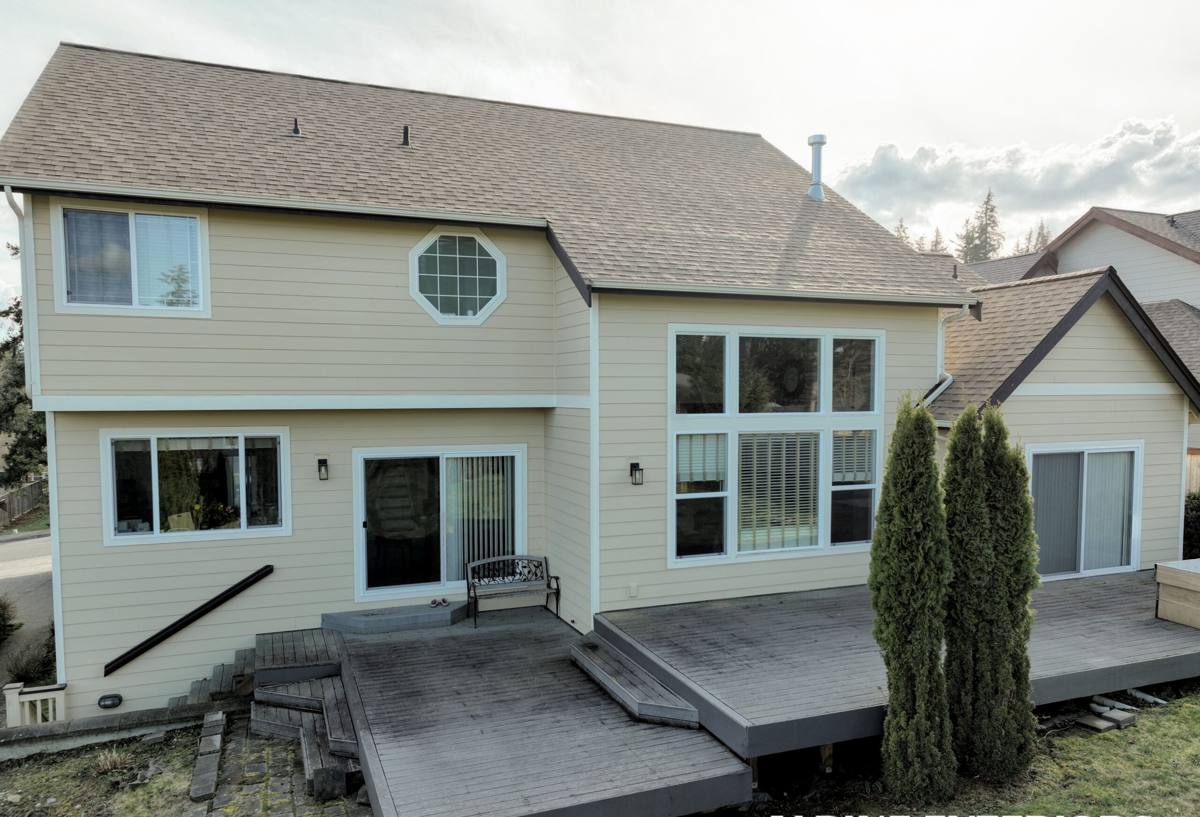
What St. Petersburg's Climate Does to a Deck
Pinellas County sits on a peninsula, and that location cuts both ways — beautiful outdoor living most of the year, but real wear and tear on anything built outside. A deck here is dealing with four things at once, year-round.
Sun and Heat
St. Petersburg gets intense, near-constant UV exposure. Wood decking grays and checks faster here than in most of the country, paint and stain break down sooner, and dark composite boards can get genuinely hot underfoot in summer. Material choice and finish matter more here than in a milder climate.
Wind-Driven Rain and Humidity
Afternoon storms and wind-driven rain get moisture into places a calm, straight-down rain never would — under railings, behind ledger boards, into end grain and fastener holes. Combined with our humidity, that's exactly the combination that causes hidden rot, mold, and corrosion if a deck isn't detailed for drainage and airflow underneath.
Salt Air and Corrosion
Even away from the immediate waterfront, St. Petersburg's air carries salt. Ordinary galvanized fasteners and hardware corrode faster here than inland, and that corrosion is often invisible until a board or railing post starts to feel loose. Every metal component on a coastal-area deck needs to be chosen with that in mind.
Hurricane-Force Wind Loads
Florida's building code sets wind-load requirements for outdoor structures, and Pinellas County enforces them closely because hurricane-force wind is a real, recurring risk here — not a hypothetical. Railings, post connections, and the ledger attachment to the house all have to be engineered to hold under uplift and lateral load, not just support foot traffic on a calm day.
Decking Material Options for This Area
There's no single "best" decking material — the right choice depends on budget, how much upkeep you want to do, and how close to the coast the home sits. Here's how the common options actually perform under St. Petersburg conditions.
| Material | Sun/Heat Performance | Moisture & Salt Air | Maintenance |
|---|---|---|---|
| Pressure-treated wood | Grays and checks with UV exposure; needs regular refinishing | Vulnerable to rot at fasteners and board ends if not sealed and maintained | Highest — annual cleaning, periodic sealing or staining |
| Composite decking | Fade-resistant caps hold color well; darker colors run hot underfoot | Resists rot well; hardware still needs to be corrosion-rated | Low — occasional washing, no staining or sealing |
| Capped PVC decking | Very stable in heat and sun; minimal fading | Fully moisture-resistant board itself; best overall for salt-air exposure | Lowest — wash as needed |
| Tropical hardwoods | Naturally dense and UV-tolerant, but still needs oiling to hold color | Naturally rot- and insect-resistant when properly finished | Moderate to high — periodic oiling to maintain appearance |
For most Historic Old Southeast projects, we walk homeowners through this trade-off honestly: wood costs less up front and can be detailed to suit a historic-style home, while composite and capped PVC cost more initially but give back that difference in avoided maintenance over the years. Neither is wrong — it depends on what you'd rather spend, time or money.
Structural Requirements That Matter Here
Footings and Framing
Footing depth and post spacing get engineered to the actual load and soil conditions on the lot, not just a rule of thumb. On older properties, we also check what's already buried near the build area — irrigation lines, old foundation debris, and root systems from mature trees are common finds in this neighborhood.
Ledger Attachment
Where a deck attaches to the house, the ledger board connection has to be flashed and fastened correctly, or it becomes the number one spot for hidden water intrusion into the home itself. On an older house, this often means working around existing siding, trim, or framing that wasn't built with a deck attachment in mind, and doing it in a way that doesn't compromise the original structure.
Hardware and Fasteners
Every bolt, bracket, and screw on a coastal Florida deck should be stainless steel or another corrosion-rated fastener — not standard galvanized. It costs more up front and it's the difference between hardware that's still solid in ten years and hardware that's rusting through in three.
Permitting and Wind Code
St. Petersburg and Pinellas County require permits for custom deck construction, and plans need to meet Florida's wind-load requirements for the structure's size and height. This isn't paperwork for its own sake — it's what keeps a deck attached to the house and standing after a serious wind event, and it's what protects you if you ever sell the home and a buyer's inspector checks for permitted work.
Design Considerations for Historic Old Southeast Homes
A deck on an older, character-driven home should look like it belongs there, not like a modern add-on bolted to a vintage house. That usually comes down to a few decisions made early in the design.
Railing Style
Railing profile and baluster spacing can be chosen to echo the home's existing trim and porch details rather than defaulting to a generic modern rail. This is one of the easiest ways to keep a new deck visually consistent with an older house.
Height and Grade
Because many homes here sit close to grade, deck height and stair layout need to be worked out carefully — sometimes a lower, multi-level design fits the lot and the house better than one tall single-level deck.
Shade and Coverage
Given how strong the sun is here, homeowners in this neighborhood frequently add a pergola, shade sail, or partial roof structure as part of the deck design so the space is actually usable in the middle of a Florida afternoon.
Our Process for a Custom Deck Build
The same process applies whether it's a straightforward rear deck or a more involved multi-level design:
- On-site visit to look at the house, the yard, drainage, and any structural quirks specific to the property
- Design and material discussion, including an honest walkthrough of the cost and maintenance trade-offs above
- Permit drawings and submission to St. Petersburg/Pinellas County, engineered to current wind-load requirements
- Construction, with corrosion-rated hardware and a properly flashed ledger attachment where the deck ties into the house
- Final inspection and walkthrough with the homeowner before we consider the job done
Maintenance in a Coastal Climate
Whatever material you choose, a little regular upkeep goes a long way in this climate. A basic seasonal checklist:
- Rinse salt and pollen residue off the deck surface and railings periodically, especially after storms
- Check fasteners and railing connections once or twice a year for looseness or early corrosion
- Keep gutters and nearby drainage clear so water isn't pooling against footings or the ledger area
- For wood decking, plan on cleaning and resealing on a regular cycle rather than waiting until it visibly fades
- After a major storm, do a quick visual check of railings and stair connections before heavy use
Why Hire a Crew That Already Works Historic Old Southeast
A deck built by a crew unfamiliar with this neighborhood tends to run into the same avoidable problems: surprises during the permit process, framing details that don't account for an older house's construction, or hardware specified for an inland climate instead of a coastal one. A crew that already works in St. Petersburg's older neighborhoods knows what Pinellas County permitting expects, knows how to attach a ledger to older framing without guesswork, and specifies materials and fasteners rated for actual Gulf Coast conditions from the start — not as an upsell after something fails.
If you're weighing a custom deck for a home in Historic Old Southeast, we're happy to walk the property, talk through material and design options honestly, and put together a free, no-pressure estimate using the form below.