 St. Petersburg
 Siding in Pinellas Park Faces a Tougher Job Than Most Products Are Built For
Pinellas Park sits in the middle of a peninsula that takes weather from two directions at once. Storms roll in off the Gulf with wind-driven rain that gets forced sideways into every seam and joint. Sun exposure here runs close to year-round, with UV intensity that breaks down cheaper coatings faster than most manufacturers' warranty language ever admits. And because the whole county sits so close to open water, salt-laden air works its way into fasteners, trim, and paint film even on homes a few miles inland. Siding that performs fine in a drier, cooler climate can start failing here within a few years if it wasn't engineered for this specific combination of stresses.
That's the backdrop for every siding decision a Pinellas Park homeowner makes. It's not just about picking a color or a plank profile — it's about picking a system that was designed to survive Florida conditions and installing it in a way that actually delivers on that design. We focus on exactly this: fiber cement siding, installed correctly, for homes in this part of Pinellas County.
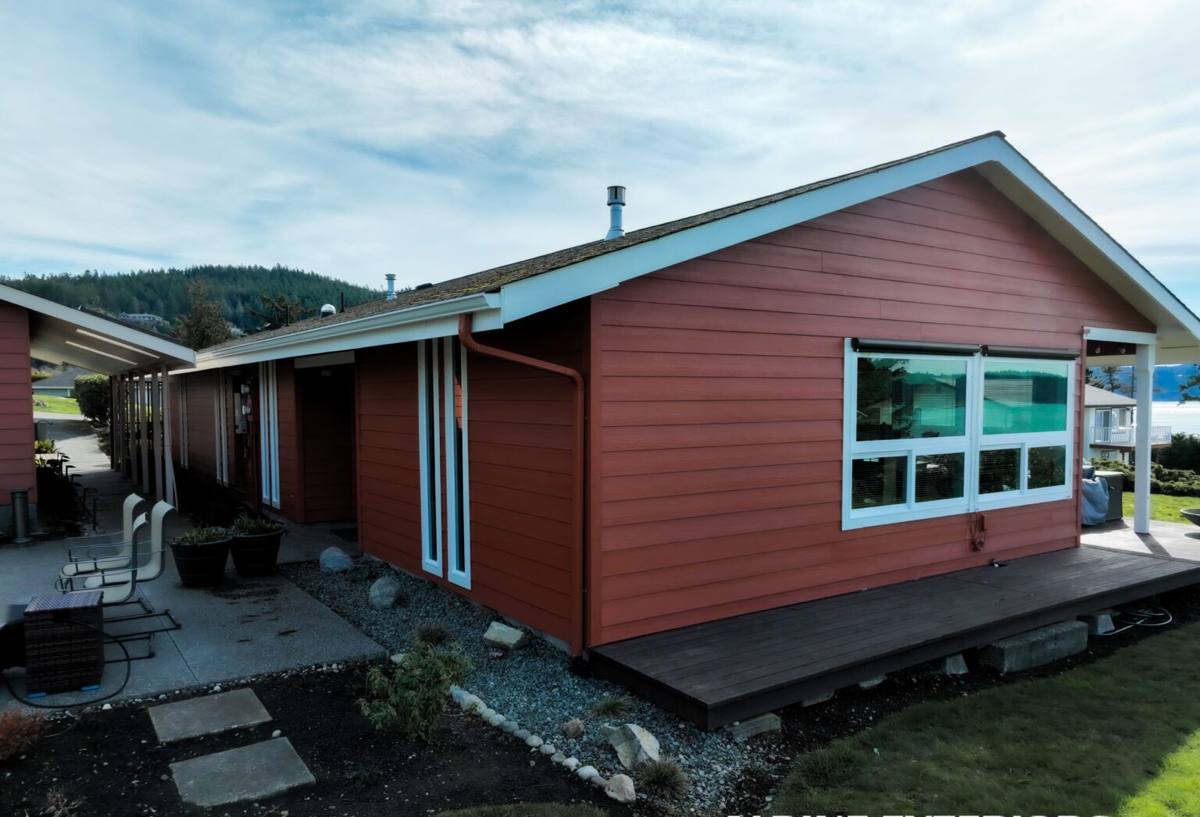
Why Fiber Cement Is the Right Category for This Climate
Fiber cement is a mix of cement, sand, and cellulose fiber, pressed and cured into a dense, dimensionally stable board. Unlike wood-based or vinyl products, it doesn't rot, it doesn't attract termites, and it doesn't soften or warp when it takes on repeated moisture from wind-driven rain. It also doesn't expand and contract with heat the way vinyl does, which matters on a house that sits in direct Florida sun for most of the day. Where fiber cement earns its keep in a hurricane-prone area is impact resistance and moisture stability — two things that matter more here than almost anywhere else in the country.
Fiber cement on its own is only half the equation, though. How it's manufactured, finished, and installed determines whether it lives up to that reputation or becomes another siding job that needs attention again in five years.
Why We Install Only James Hardie — Nothing Else
We don't install LP SmartSide, vinyl, Cemplank, Allura, or primed wood siding, and that's a deliberate standard, not a lack of options. James Hardie is the only fiber cement manufacturer we've found that consistently backs up its climate claims with product engineering specific to this region.
- HZ5 climate engineering: Hardie makes region-specific formulations, and the HZ5 line is engineered for the moisture and humidity profile of the Gulf Coast and Florida climate zones, not a generic national blend.
- Non-combustible core: fiber cement doesn't feed a fire the way vinyl or wood siding can, which matters for both safety and, in many cases, insurance considerations.
- ColorPlus factory finish: the color is baked on in a controlled factory process rather than field-painted, which gives far more even, UV-resistant color retention under Florida sun than most site-applied paint systems.
- Warranty structure: Hardie's warranty is transferable and specifically covers the product for the realistic conditions it will face here, which gives homeowners a real backstop rather than a marketing footnote.
Other products on the market aren't necessarily bad at what they do. Vinyl is inexpensive and easy to install; LP SmartSide is a wood-strand product with its own fans. But in a market with this much wind, UV, and salt exposure, we've made maintenance burden, moisture behavior, and long-term appearance the deciding factors — and Hardie is what we're willing to put our name behind.
Choosing the Right Hardie Product for a Pinellas Park Home
Not every Hardie product fits every house. Part of doing this correctly is matching the profile to the home's architecture and exposure.
| Product | Typical Use | Why It Fits Pinellas Park Homes |
|---|---|---|
| HardiePlank Lap Siding | Most single-family homes, classic and coastal styles | Traditional horizontal reveal sheds wind-driven rain effectively; widest color and texture range |
| HardiePanel Vertical Siding | Accent walls, gable ends, some Florida vernacular styles | Clean modern look; fewer horizontal seams for water to work into |
| HardieTrim Boards | Corners, window and door surrounds, fascia | Matches the siding's moisture and UV performance so trim doesn't fail faster than the field |
| HardieSoffit Panels | Under eaves and overhangs | Resists the humidity that collects in shaded, poorly ventilated soffit areas near the coast |
What Correct Installation Actually Involves
Fiber cement is only as good as the installation behind it. A huge share of the "siding problems" we get called out to inspect on other contractors' work trace back to shortcuts taken during install, not the material itself.
Flashing and Moisture Management
Every window, door, and penetration needs proper flashing and a correctly lapped weather-resistive barrier underneath the siding. In a climate where wind can drive rain nearly horizontal, gaps in this layer are where water gets behind the wall assembly — and by the time it shows up as a stain or soft spot inside, the sheathing underneath has often been wet for a long time.
Fastening for Wind Resistance
Fastener type, spacing, and embedment all matter more here than in calmer climates. Hardie publishes specific fastening schedules for high-wind regions, and following them — rather than a generic pattern — is part of what keeps siding on the wall during a tropical storm or hurricane-force wind event instead of peeling off at the edges.
Clearances and Caulking
Fiber cement needs proper clearance from rooflines, decks, and grade, and the right gap at butt joints and trim, sealed with a flexible, paintable sealant rated for exterior use. Installed too tight or caulked incorrectly, joints can trap moisture instead of shedding it — which defeats the point of choosing a moisture-stable product in the first place.
Cut Edges and Field Painting
Any factory edge that gets cut on site needs to be sealed and touched up to match the ColorPlus finish. Skipping this step is a common shortcut that leaves a raw, unprotected edge exposed to UV and rain from day one.
Our Process on a Pinellas Park Siding Project
- On-site assessment: we walk the exterior, check for existing moisture damage, and measure for material and trim needs.
- Tear-off and sheathing inspection: old siding comes off and we inspect the sheathing and framing underneath before anything new goes up — this is often where hidden problems from a prior installation surface.
- Moisture barrier and flashing: a correctly lapped weather-resistive barrier and flashing at every penetration, sized for this climate's rain exposure.
- Siding installation: Hardie boards installed to manufacturer spec for fastening, clearance, and joint treatment, matched to the wind exposure of the specific elevation.
- Trim, caulking, and touch-up: corners and trim installed, joints sealed, and any cut edges finished to protect against UV and moisture.
- Final walk-through: we inspect the finished work with the homeowner and clean up the site.
Cost Factors Worth Understanding Before You Get a Quote
Fiber cement siding pricing varies by home, but a few factors consistently move the number more than homeowners expect.
| Factor | Why It Affects Cost |
|---|---|
| Condition of existing sheathing | Water damage found during tear-off requires repair before new siding can go on — this is common on older homes with a history of leaks |
| Home shape and trim detail | More corners, dormers, and window/door surrounds mean more cutting, flashing, and trim work |
| Siding profile chosen | Wider reveals, vertical panels, and specialty trim cost more in material and labor than standard lap profiles |
| Story height and access | Two-story sections and tight lot lines require more setup time and equipment |
| Color and finish | ColorPlus factory finishes cost more up front than primed board but remove the need for a full repaint later |
We provide a written, itemized estimate after an on-site assessment rather than a rough number over the phone — siding costs are too dependent on what's actually behind the old material to quote accurately without seeing it.
Maintenance in Coastal Pinellas County Conditions
Correctly installed Hardie siding is low-maintenance, not zero-maintenance. A few simple habits keep it performing the way it's designed to in salt air and intense sun.
- Rinse the exterior periodically to clear salt residue and airborne grime, especially on homes closer to open water.
- Inspect caulk lines at trim and joints once a year and reseal if you see cracking or gaps.
- Check soffit and eave areas for signs of trapped moisture or staining after major storms.
- Keep sprinklers and irrigation from spraying directly on siding, which causes uneven mineral buildup over time.
- Have flashing and caulking reviewed after any major wind event, since that's when small gaps are most likely to open up.
Signs Your Current Siding Is Already Behind
If your home still has older wood, vinyl, or a lower-grade fiber cement product, a few warning signs suggest it's already losing the fight against Pinellas Park's climate:
- Visible warping, buckling, or gaps between boards, especially after a hot stretch or a storm
- Chalky, faded, or peeling paint that doesn't match the rest of the house anymore
- Soft spots when you press on the siding, which usually means moisture has reached the substrate
- Cracked or missing caulk at corners, trim, and window edges
- Visible rust streaking from fasteners, common on older nail patterns exposed to salt air
Why a Crew That Already Works in Pinellas Park Matters
Wind-load and building code requirements in Pinellas County reflect this region's hurricane exposure, and permitting and inspection expectations here aren't identical to inland Florida or other states. A crew that already pulls permits and passes inspections in this specific area knows what the local building department expects at flashing, fastening, and trim details before the inspector ever shows up — which avoids the delays and rework that come with a contractor learning the local requirements on your project. Familiarity with the housing stock in and around Pinellas Park also matters: knowing the common sheathing types, the typical age of homes in the area, and the moisture issues that tend to show up during tear-off means fewer surprises and a more accurate estimate up front.
Get a Straightforward Estimate for Your Home
If your siding is aging, showing damage, or you're planning ahead of the next storm season, we're happy to take a look and walk you through what your home actually needs — no pressure, no inflated scope. Use the form below to request a free estimate for James Hardie fiber cement siding on your Pinellas Park home.