 St. Petersburg
 Siding Installation in Euclid-St. Paul: What the Climate Actually Demands
Euclid-St. Paul is one of St. Petersburg's older residential pockets, with a mix of early-to-mid-century bungalow-style homes and newer infill construction sitting close together on tree-lined streets. Whatever the age or style of the house, the exterior envelope in this part of Pinellas County is working against the same set of conditions: hurricane-force wind loads during storm season, intense year-round UV exposure, wind-driven rain that gets forced sideways into wall assemblies, and salt-laden air drifting in off Tampa Bay and the Gulf. None of these are occasional stresses — they're the baseline your siding has to handle every year it's on the house.
That combination is harder on exterior cladding than most homeowners realize. UV breaks down pigments and resins over time, which is why cheaper siding fades and chalks years before it should. Wind-driven rain finds any gap in flashing or fastening and pushes water where gravity alone never would. Salt air accelerates corrosion on fasteners, trim, and hardware, and it degrades certain siding materials faster than inland installations of the same product. And when a named storm comes through, siding that wasn't fastened to the right spec becomes debris — and an open wall.
A siding installation done for a home in Euclid-St. Paul isn't the same job as one done for a house forty miles inland. The material, the fastening pattern, the flashing details, and the finish all need to account for what this specific stretch of Florida coastline does to a building over the decades.
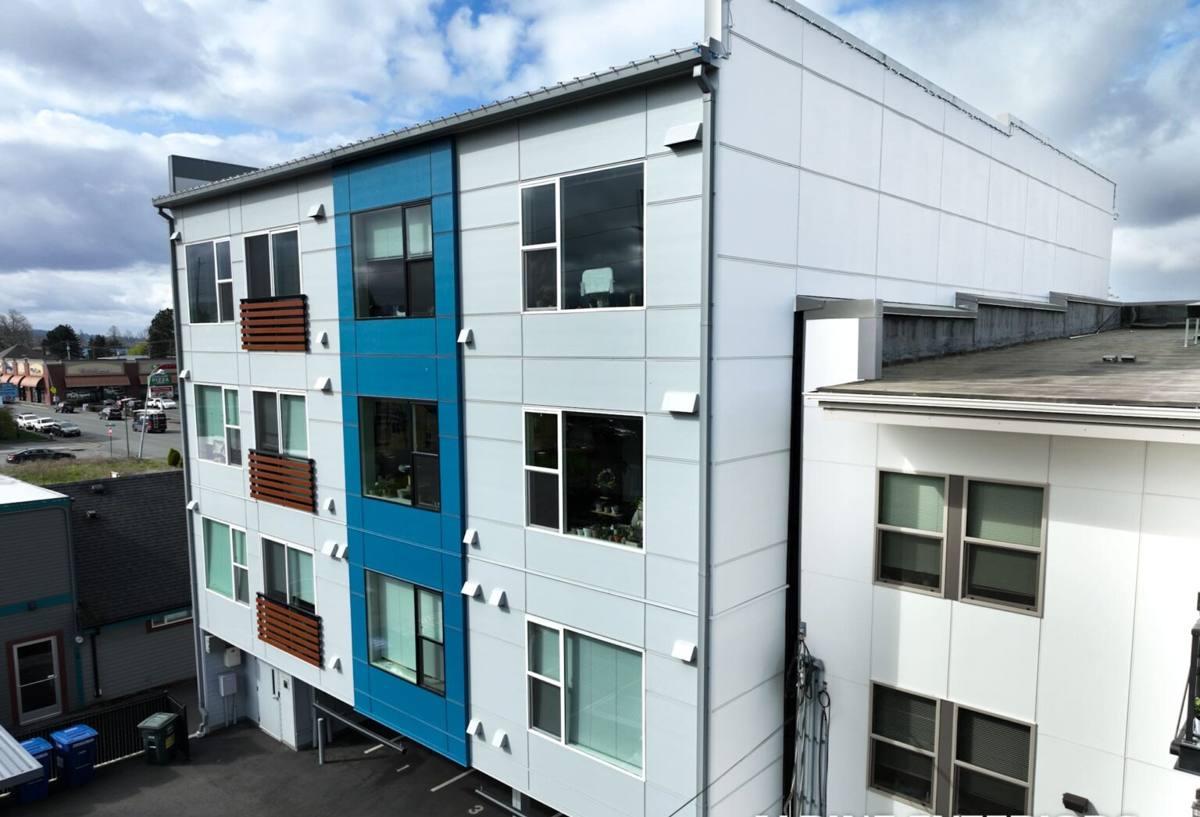
Why We Only Install James Hardie Fiber Cement
We install James Hardie fiber cement siding exclusively. We don't install vinyl, LP SmartSide, Cemplank, Allura, or primed wood siding like spruce or cedar. That's a deliberate standard, not a lack of options, and it's worth explaining why.
Fiber cement is non-combustible, which matters in a state where lightning-driven fires and close-set older homes are a real consideration. It doesn't soften or warp in direct summer heat the way vinyl can, and it doesn't rely on an engineered wood core that can swell or deteriorate if water gets past the surface, which is the failure mode that concerns us with wood-based composite products. Hardie's ColorPlus factory-applied finish is baked on under controlled conditions and holds color and film integrity far longer than field-applied paint, which matters enormously under Pinellas County's UV load. And Hardie engineers specific product lines — the HZ5 designation — for high-humidity, high-moisture climates like ours, rather than selling one generic board nationwide.
None of that means other products are without merit. Vinyl is inexpensive and low-maintenance in mild climates. Engineered wood siding has a warmer, more traditional look that some homeowners prefer. But when we weigh installation sensitivity, long-term moisture behavior, wind performance, and how a product actually holds up over 20-30 years of Gulf Coast exposure, fiber cement is what we're willing to put our name behind — and it's the only thing we install.
What This Means for Your Project
If you're comparing quotes and one includes vinyl or engineered wood at a lower price, that's a legitimate option from other contractors. We're simply not the company for that scope. We install one material, we install it correctly, and we stand behind it.
What a Correct Siding Installation Actually Involves
The material is only half the equation. A high-quality product installed with shortcuts will still fail early in a coastal wind and rain environment. Here's what we consider non-negotiable on every job.
Tear-Off and Substrate Inspection
Old siding comes off completely so we can see the sheathing underneath. This is the step that gets skipped on cheap installs, and it's the one that matters most. Rotted sheathing, hidden water damage, or old flashing failures have to be addressed before a single new board goes up — covering a problem with new siding just hides it for a few more years.
Weather-Resistant Barrier and Flashing
A correctly lapped weather barrier, properly integrated window and door flashing, and correct kick-out flashing at rooflines are what actually keep wind-driven rain out of the wall assembly. Siding itself is not fully waterproof — it's the drainage plane behind it doing the real work, and that's true whether or not the siding on top of it looks good.
Fastening for Wind Resistance
James Hardie specifies fastener type, spacing, and placement based on the wind zone and exposure category of the installation, not a one-size-fits-all pattern. In a hurricane-prone coastal county, following that spec correctly is what keeps siding attached during a real wind event rather than becoming a hazard in the yard next door.
Finish Details
Correct caulking at joints and penetrations, proper clearance between siding and grade, hardware and trim rated for coastal exposure, and touch-up paint matched to the ColorPlus formulation where field cuts expose raw edges. These details are small individually but they're what separates an installation that looks good for one season from one that performs for decades.
Our Process for Euclid-St. Paul Homeowners
The steps are the same for every home, but the specifics — wind exposure, roofline, existing substrate condition — get assessed on site, not guessed at from a photo.
- In-person estimate and visual assessment of your current siding, trim, and any visible moisture or wind damage
- Product and ColorPlus color selection, including profile choice (lap siding, board and batten, shingle-style panels)
- Permitting through the appropriate local jurisdiction, sized to your home's wind exposure and code requirements
- Tear-off, substrate inspection and repair as needed, weather barrier and flashing installation
- Siding installation to manufacturer fastening spec, followed by trim and caulking
- Final walkthrough so you can see the work up close before we consider the job done
Comparing Your Options
Homeowners in Euclid-St. Paul are often comparing several materials before deciding to replace siding. Here's an honest side-by-side of how the main options perform against this area's specific conditions.
| Material | UV / Fade Resistance | Wind-Driven Rain Behavior | Salt Air Durability | Fire Rating |
|---|---|---|---|---|
| James Hardie fiber cement (ColorPlus) | Strong — factory-cured finish | Strong when flashed and fastened correctly | Strong | Non-combustible |
| Vinyl siding | Fades and can become brittle over time | Adequate but panels can be forced loose by wind | Moderate | Combustible |
| LP SmartSide / engineered wood | Good with maintained paint film | Vulnerable if moisture reaches the wood core | Moderate | Combustible |
| Primed cedar or spruce | Requires regular repainting | Vulnerable without diligent maintenance | Weaker without upkeep | Combustible |
This isn't a claim that other products fail outright — plenty of homes around the country wear vinyl or engineered wood without issue. It's a reflection of how each material performs specifically against sustained coastal UV, wind, and salt exposure, which is the environment every Euclid-St. Paul home actually sits in.
What Drives the Cost of a Siding Installation
Every home is different, so we won't quote a number without seeing the house, but these are the variables that move the price up or down on most projects:
- Total square footage of wall area and the home's overall complexity (corners, gables, dormers)
- Condition of the existing sheathing once old siding comes off
- Siding profile chosen — standard lap siding is typically the most economical; board and batten or shingle-style panels cost more
- Trim scope — window and door casing, corner boards, and fascia work done alongside the siding
- Access and site conditions, including how much of the property is easily reachable for staging material
- Permitting requirements specific to the jurisdiction and wind exposure category of the property
We'll walk through each of these with you during the estimate so you understand exactly what you're paying for, not just a total figure.
Why a Crew That Already Works This Area Matters
Siding installation isn't just a product decision — it's a code and permitting decision too. Wind exposure requirements, fastening schedules, and permitting processes vary by jurisdiction within Pinellas County, and a crew that regularly works St. Petersburg neighborhoods like Euclid-St. Paul already knows what local plan reviewers expect and what inspection points get flagged. That familiarity means fewer surprises mid-project and fewer callbacks after.
It also means we're realistic about what siding actually goes through here. A crew that's only worked drier, inland climates doesn't have the same instinct for where wind-driven rain concentrates on a home's exposed faces, or how quickly a missed flashing detail turns into a moisture problem in a house this close to the water. Local experience isn't a marketing line — it changes the decisions made on the job site.
Maintaining Hardie Siding After Installation
One of the advantages of fiber cement with a factory finish is that it asks less of you than most alternatives, but "low-maintenance" isn't "no-maintenance," especially in a salt-air environment.
- Rinse the exterior periodically to clear salt residue and airborne grime, particularly on sides facing prevailing wind
- Inspect caulking at trim, window, and door joints annually and re-caulk any cracked or separated sections
- Check for any signs of moisture staining near ground level or at roof intersections after storm season
- Keep vegetation and sprinklers from directly and repeatedly hitting the siding surface
- Address any impact damage (chipped edges, cracked boards) promptly rather than letting it sit exposed
Signs Your Current Siding Needs Replacing
Not every siding problem is obvious from the curb. Some of the more common signs we see on homes in this area include soft or spongy spots when pressed, visible warping or buckling, persistent staining or streaking that won't clean off, caulk that's cracked or pulled away at multiple joints, and paint that's chalking heavily or peeling in sheets rather than fading evenly. Any one of these is worth a professional look before it turns into a substrate problem underneath.
If you're weighing a siding replacement for your Euclid-St. Paul home, we're happy to come take a look and give you a straightforward, no-pressure estimate — including an honest read on whether replacement is actually needed yet or whether repairs will hold you over. Use the form below to get started.