 St. Petersburg
 Why Siding Choice Matters More in Disston Heights Than in Most Places
Disston Heights sits inside St. Petersburg, in Pinellas County — a peninsula that takes weather from two directions at once. Homes here deal with direct Gulf-influenced humidity, salt-laden air moving inland, intense year-round UV exposure, and the real possibility of hurricane-force wind and wind-driven rain during storm season. That combination is harder on exterior materials than almost anywhere else in the country. Siding on a Disston Heights home isn't just a cosmetic layer — it's the first line of defense between your walls and a climate that never really gives a house a break.
That's the lens we use on every siding conversation in this neighborhood: not "what looks good," but "what will actually hold up here, year after year, without becoming a maintenance project." For most homes, the honest answer is James Hardie fiber cement, installed correctly for this climate zone.
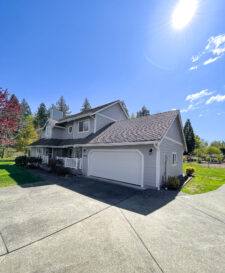
What Disston Heights Homes Are Actually Up Against
Like much of St. Petersburg, Disston Heights includes a mix of building eras — older established homes alongside newer construction and renovations. Regardless of the age of the structure, the exterior faces the same regional stress:
- Salt air: even set back from the immediate coastline, salt-bearing air corrodes fasteners, degrades cheap coatings, and accelerates wear on porous or absorbent siding materials.
- UV load: Florida's sun breaks down pigments and surface finishes faster than in northern climates, leading to fading, chalking, and premature repainting on lower-grade products.
- Wind-driven rain: during tropical storms and hurricanes, rain doesn't just fall — it's pushed sideways into wall assemblies, seeking out any gap in flashing, caulking, or panel overlap.
- Humidity and moisture cycling: constant wet-dry cycling stresses materials that swell, and creates conditions where trapped moisture behind siding leads to rot and mold if the assembly isn't detailed correctly.
None of this is unique to Disston Heights specifically, but it's the reality for every home in this part of St. Petersburg, and it's why we treat siding installation here as a system, not a product swap.
Why We Install Only James Hardie
We don't install LP SmartSide, vinyl, Cemplank, Allura, primed spruce, or cedar. That's a deliberate standard, not a lack of options. Each of those products has legitimate strengths — vinyl is inexpensive and low-maintenance in mild climates, wood has genuine curb appeal, engineered wood products are lighter and easier to handle. But every one of them carries a real trade-off in a coastal Florida environment: vinyl can warp or become brittle under sustained heat and UV, wood-based products are vulnerable to moisture intrusion and require more diligent maintenance to avoid rot, and lower-cost fiber cement alternatives don't always carry the same factory-finish warranty or engineering documentation for high-wind zones.
James Hardie fiber cement is non-combustible, dimensionally stable in humidity swings, and manufactured with a factory-applied ColorPlus finish that's built to resist UV fading better than field-applied paint. It's also engineered in specific product lines for different climate exposures — which matters directly for a neighborhood like Disston Heights.
HardieZone: Matching the Product to the Climate
James Hardie manufactures its siding in two climate configurations: HZ10 for northern freeze-thaw climates, and HZ5 for hot, humid, high-moisture regions — which includes the entire St. Petersburg area. HZ5 products are formulated with moisture and humidity resistance as a priority, which is exactly the profile Pinellas County homes need. Installing the wrong HardieZone product, or installing HZ5 material with the wrong details, is one of the more common ways a Florida siding job underperforms even when the brand on the box is right.
What a Correct James Hardie Installation Actually Involves
The material is only half the equation. Fiber cement siding fails prematurely almost exclusively due to installation mistakes, not product defects. In a wind and rain-exposed area like Disston Heights, these details are non-negotiable:
Water Management Behind the Siding
Every wall needs a correctly lapped weather-resistive barrier, properly integrated flashing at windows, doors, and penetrations, and a drainage plane that lets any incidental moisture escape rather than pool behind the panels. Siding is not the only water barrier on a house — it's the outer layer of a system that has to work together.
Fastening and Clearances
James Hardie specifies exact fastener types, spacing, and embedment depth, along with minimum clearances from roof lines, decks, and grade. Skipping these specs to save time is one of the most common corner-cutting moves in the industry, and it's invisible until years later when trim rot or panel movement shows up.
Joint and Panel Treatment
Butt joints, caulking at penetrations, and factory-primed cut edges all need to be treated according to Hardie's published details. An uncaulked or unsealed cut edge is a direct entry point for moisture, and in a climate with this much wind-driven rain, that detail matters more than it would in a drier region.
ColorPlus vs. Field Paint
ColorPlus factory finish is baked on under controlled conditions and backed by its own finish warranty. Field-painted fiber cement can still perform well, but it depends entirely on prep and paint quality — and repainting becomes the homeowner's ongoing responsibility much sooner.
Our Process on a Disston Heights Home
- On-site assessment: we walk the exterior, check existing sheathing and moisture conditions, and identify any rot, prior water intrusion, or structural issues that need addressing before new siding goes on.
- Product and line selection: we recommend the right HardieZone HZ5 product line and profile for the home's style and exposure — this isn't a one-size answer even within one neighborhood.
- Written scope and estimate: a clear breakdown of removal, prep, water management upgrades, materials, and installation — no vague allowances.
- Tear-off and substrate check: old siding comes off and the sheathing underneath gets inspected and repaired as needed before anything new goes up.
- Weather barrier and flashing installation: this is the step that determines whether the house stays dry for the next several decades — done to spec, not shortcuts.
- Hardie panel installation: fastened, spaced, and detailed to manufacturer specification and Florida building code for this wind zone.
- Final walkthrough: we go over the finished work with the homeowner and confirm everything lines up with the original scope.
Cost Factors on a Real Siding Job
Every home is different, but the price of a siding project is driven by a consistent set of factors. Below is a general guide to what moves the cost up or down — not a quote.
| Factor | Why It Matters |
|---|---|
| Home size and wall complexity | More corners, gables, and architectural detail mean more cutting, fitting, and labor time |
| Substrate condition | Rotted sheathing or hidden moisture damage found during tear-off adds repair work before new siding can go on |
| Product line and profile | Lap siding, board-and-batten, and shingle-style panels differ in material and labor cost |
| ColorPlus vs. field-painted finish | Factory finish carries a premium but reduces long-term repainting costs and comes with its own warranty |
| Existing water management | Homes needing new flashing, house wrap, or drainage details take more labor than a straightforward re-side |
| Access and site conditions | Tight lots, mature landscaping, or multi-story sections affect staging and labor time |
Maintenance: What Homeowners Should Actually Do
James Hardie siding is low-maintenance, not no-maintenance. In a salt-air, high-UV environment like St. Petersburg, a short annual routine keeps it performing as designed:
- Rinse the exterior periodically to clear salt residue and airborne grime, especially on sides facing prevailing wind.
- Inspect caulking at joints, trim, and penetrations yearly, and re-caulk any cracked or separated sections promptly.
- Check for paint or finish wear at cut edges and touch up exposed raw material to prevent moisture entry.
- Keep gutters and downspouts clear so water doesn't sheet down the siding face or pool at the base of walls.
- After any major storm, walk the exterior for loose panels, damaged trim, or debris impact damage.
Why a Crew That Already Works Disston Heights Matters
Siding installation quality depends heavily on local knowledge that doesn't show up on a spec sheet: which permitting requirements apply in St. Petersburg, how wind load requirements are enforced for this part of Pinellas County, and what water-management detailing actually holds up against a real Gulf-adjacent storm season rather than a generic installation manual. A crew that regularly works this area has already solved the logistics — permitting, inspection timing, disposal, and scheduling around Florida's weather windows — so the job moves efficiently instead of hitting avoidable delays.
Local experience also means fewer surprises. We've seen how homes in this part of St. Petersburg age, what tends to fail first, and what correct water management actually looks like once storm season tests it. That's the difference between a crew installing a product and a crew installing a system that's built to last in this specific environment.
What This Means for Your Home
If your Disston Heights home has siding that's cracking, delaminating, holding moisture, or simply past its service life, the goal isn't just to replace what's there — it's to put up something engineered for the climate you actually live in. James Hardie's HZ5 product line, installed to spec with correct water management, is what we've standardized on because it's what performs here without turning into a recurring maintenance headache.
If you'd like a straightforward look at what your home needs, we're happy to walk the property, explain what we see, and put together a clear, no-pressure estimate — no obligation, just an honest assessment from a crew that knows this neighborhood.