 St. Petersburg
 Why Disston Heights Homes Need Siding Built for This Climate
Disston Heights sits within St. Petersburg, one of the most exposed cities in Pinellas County when it comes to what the climate does to a home's exterior. The combination is relentless: hurricane-force wind events during storm season, intense UV exposure nearly every day of the year, wind-driven rain that gets pushed sideways into wall assemblies, and salt-laden air that moves inland off both Tampa Bay and the Gulf. None of that is unique to any one street or subdivision, but it is a constant for every home in this part of the city, and it is exactly the set of conditions that determines whether a siding job lasts fifteen years or forty.
A lot of the housing stock in established St. Petersburg neighborhoods like Disston Heights goes back decades, which means a large share of the siding on these homes was installed under very different building standards, using materials that were never engineered for Florida's specific combination of heat, humidity, and coastal salt exposure. When that siding starts to fail, the fix isn't just "put something new on the wall" — it's choosing a material and an installation method that actually holds up to what this climate does year after year.
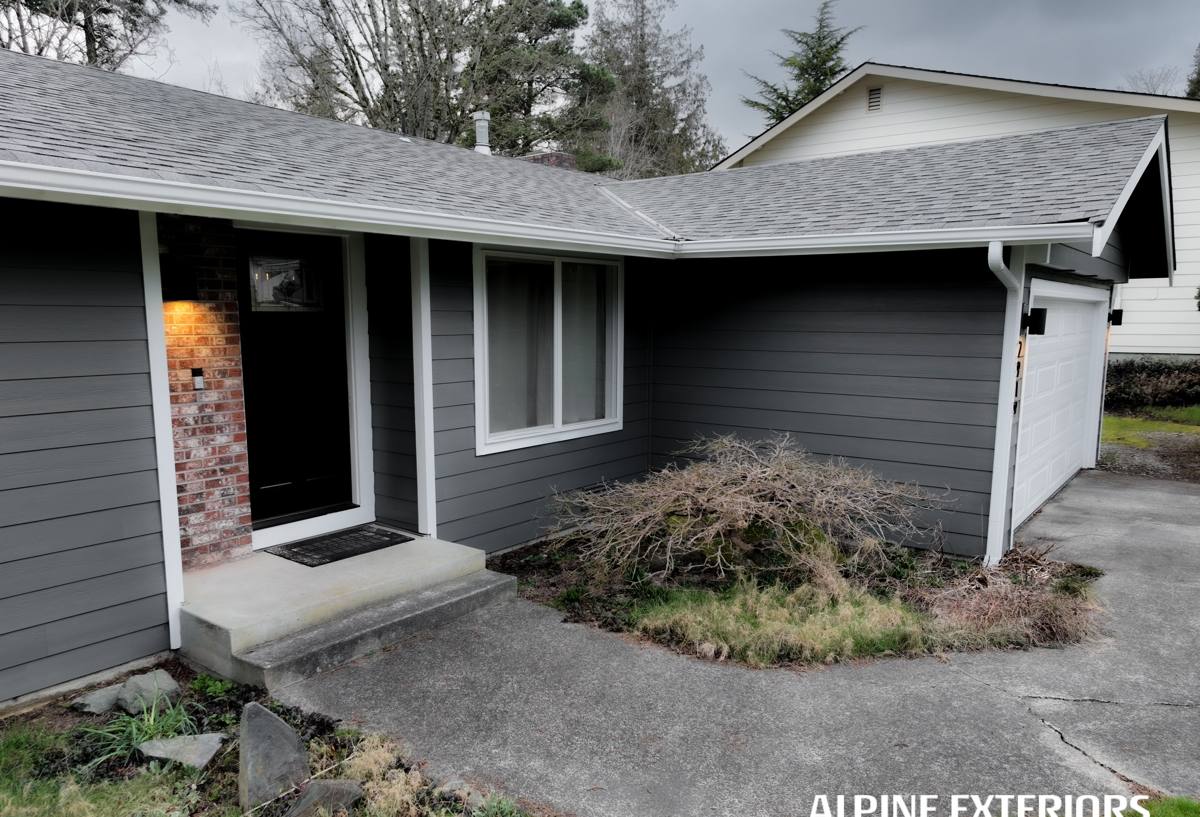
What Actually Fails on Older Disston Heights Siding
When we look at siding problems on homes in this area, the same patterns show up again and again:
- UV breakdown: Constant sun exposure fades paint, chalks surfaces, and dries out caulking and trim joints years before a homeowner expects it.
- Moisture intrusion: Wind-driven rain finds every gap in flashing, trim, and seams — especially on walls that take the brunt of storms coming off the water.
- Salt air corrosion and staining: Airborne salt accelerates the breakdown of fasteners, coatings, and untreated wood, and leaves visible residue on darker colors.
- Wood rot and delamination: Older wood-based or composite sidings that were never rated for this humidity level soften, swell, and separate at the seams.
- Pest access: Gaps created by warped or rotting boards give insects and small pests a way into wall cavities.
Most of these issues aren't cosmetic — they're signs that the wall assembly itself is losing its ability to keep water and pests out, which is a bigger problem than a faded paint job.
Why We Install Only James Hardie Fiber Cement
We don't install vinyl, LP SmartSide, Cemplank, Allura, or primed wood siding — on any home, including here in Disston Heights. That's a deliberate standard, not a sales pitch, and it's worth explaining honestly.
Vinyl is inexpensive and low-maintenance, but it's a plastic product that softens and can warp under sustained heat and direct sun, and it has real limits in high-wind events — exactly the two conditions this neighborhood deals with constantly. Engineered wood products like LP SmartSide use a wood-strand core, which performs fine in drier climates but is more sensitive to sustained moisture exposure than a cement-based product, and Florida humidity gives it plenty of moisture to be sensitive to. Other fiber cement brands (Cemplank, Allura) are legitimate cement-based products, but we've standardized on one manufacturer, one installation system, and one warranty structure so every job we do is consistent and every homeowner gets the same accountability if something goes wrong down the line.
James Hardie fiber cement is a blend of cement, sand, and cellulose fiber. It doesn't burn, it doesn't rot, it isn't attractive to termites, and it holds paint and factory-applied color far longer than wood or vinyl because it doesn't expand and contract with heat and humidity the way those materials do. That last point matters more in St. Petersburg than almost anywhere else in the country — a material that stays dimensionally stable through 90-degree summers and sudden storm fronts is a material that keeps its seals, its paint, and its shape.
The HardieZone System and Choosing the Right Product Line
James Hardie engineers its siding differently depending on the climate it's going into, through what the company calls the HardieZone system. Homes in Florida fall into the HZ10 zone, which is formulated specifically for high humidity, heavy rainfall, and higher pest pressure — as opposed to the HZ5 formulation used in drier, colder parts of the country. Installing the wrong zone product in the wrong climate is one of the more common mistakes made by crews that don't specialize in fiber cement, and it shortens the lifespan of an otherwise good product.
Within the HZ10 lineup, the right product line depends on the look and the wall assembly:
- HardiePlank lap siding — the most common choice for traditional homes, available in multiple exposure widths and textures.
- HardiePanel vertical siding — used for board-and-batten looks or accent sections.
- HardieShingle — for homes wanting a shingle-style texture without the maintenance of real wood shingles.
- HardieTrim — matching trim boards so fascia, corners, and window trim age at the same rate as the field siding.
All of these are available with ColorPlus Technology, a factory-baked finish that resists fading and chipping far better than field-applied paint — a meaningful advantage under Pinellas County's year-round sun.
What Correct Installation Actually Involves
The siding product is only half the equation. Fiber cement siding installed to spec and fiber cement siding installed carelessly age very differently, especially in a wind and rain climate like this one. A correct install includes:
- Proper house wrap or weather-resistive barrier behind the siding, installed and lapped correctly to shed water down and out.
- Flashing at every window, door, and roofline transition — the places water actually finds its way in.
- Correct fastener spacing, type, and penetration depth, following manufacturer specs rather than shortcuts.
- Proper clearance between the siding's bottom edge and grade, decks, or roofing to prevent wicking moisture.
- Caulking and sealing only where Hardie's own installation guidelines call for it — over-caulking traps moisture rather than blocking it.
- Fastening patterns and clearances that respect the wind ratings required for this part of Florida.
Skipping any one of these steps can void the manufacturer's warranty and lets water get behind the siding, which causes far more damage than sun-faded paint ever would.
Our Process From Estimate to Finished Job
For a Disston Heights fiber cement project, our process is straightforward:
- On-site assessment: We walk the exterior, check the current siding and underlying sheathing for rot or moisture damage, and identify problem areas like poorly flashed windows or trim.
- Scope and product selection: We help you choose the right HardiePlank profile, exposure width, and ColorPlus color for the home.
- Permitting: We pull the required permits through the City of St. Petersburg before work begins.
- Tear-off and prep: Old siding comes off, damaged sheathing gets addressed, and a new weather barrier goes on correctly — not just patched over the old one.
- Installation to manufacturer spec: Fastening, flashing, and clearances are done to James Hardie's published installation guidelines, not shortcuts.
- Final walkthrough: We review the finished job with you before calling it complete.
What Drives the Cost of a Fiber Cement Job
Every home is different, but the same factors move the price up or down on most Disston Heights jobs:
| Factor | Why It Matters |
|---|---|
| Total square footage and home height | More surface area and multi-story access both add labor time. |
| Condition of existing sheathing | Rotted sheathing found during tear-off needs to be replaced before new siding goes on. |
| Siding profile and exposure width | Wider planks and textured finishes can affect material cost and install time. |
| Trim and detail work | Corner boards, window trim, and accent panels add labor beyond flat wall runs. |
| Color | Factory ColorPlus finishes cost more upfront than primed-for-paint siding but eliminate a repaint cycle. |
| Access and site conditions | Tight lots, landscaping, or fencing can slow tear-off and staging. |
What to Ask Before Hiring Anyone for This Job
Fiber cement is not forgiving of a bad installer, and the mistakes don't usually show up until years later when water damage is already behind the wall. Before hiring anyone for a siding project in this neighborhood, ask:
- Are you James Hardie certified or factory-trained, and can you show it?
- Will you pull permits through the City of St. Petersburg, or expect the homeowner to?
- What weather-resistive barrier and flashing details will you use, specifically?
- What happens if you find rotted sheathing once the old siding is off?
- What does the manufacturer's warranty actually cover, and does your installation meet the requirements to keep it valid?
- Can you walk me through your fastening and clearance approach for wind-rated installation?
A contractor who can answer these clearly and without hesitation is a contractor who's done the job right before.
Why Hiring a Crew That Already Works in Disston Heights Matters
Building codes, permitting requirements, and wind-load expectations vary by jurisdiction, and a crew that regularly works in St. Petersburg and Pinellas County already knows what the City requires before the first panel goes up. That familiarity avoids the delays that come from a contractor learning local permitting on your project's clock. It also means we've already seen how this specific climate — the sun exposure, the storm patterns, the salt air moving in from the bay — treats different materials and different installation approaches over time. That's knowledge you can't get from a spec sheet alone, and it's the difference between a siding job that looks good at handoff and one that still performs correctly a decade later.
If your Disston Heights home needs new siding, or you're seeing early signs of trouble on what's already there, we're happy to take a look. Reach out for a free, no-pressure estimate using the form below.