 St. Petersburg
 Building a Deck That Can Actually Handle St. Pete Beach
St. Pete Beach sits on a barrier island, which means every deck we build here is fighting a different battle than a deck fifteen miles inland in St. Petersburg proper. The salt air off the Gulf gets into everything — metal fasteners, hardware, even the cut ends of lumber. Add in intense year-round UV, wind-driven rain that finds its way into any gap in the flashing, and the occasional hurricane-force wind event, and you have a short list of reasons decks fail early on the island: corroded fasteners, delaminated boards, rotted ledger connections, and railings that were never actually rated for the wind loads Pinellas County requires this close to the water.
A deck built the same way you'd build one in a dry inland climate will show problems within a few years out here — sometimes sooner. This page covers what a deck actually needs to hold up on St. Pete Beach, what a correct build involves from the ground up, and how we approach these projects differently because we already work this stretch of coast.
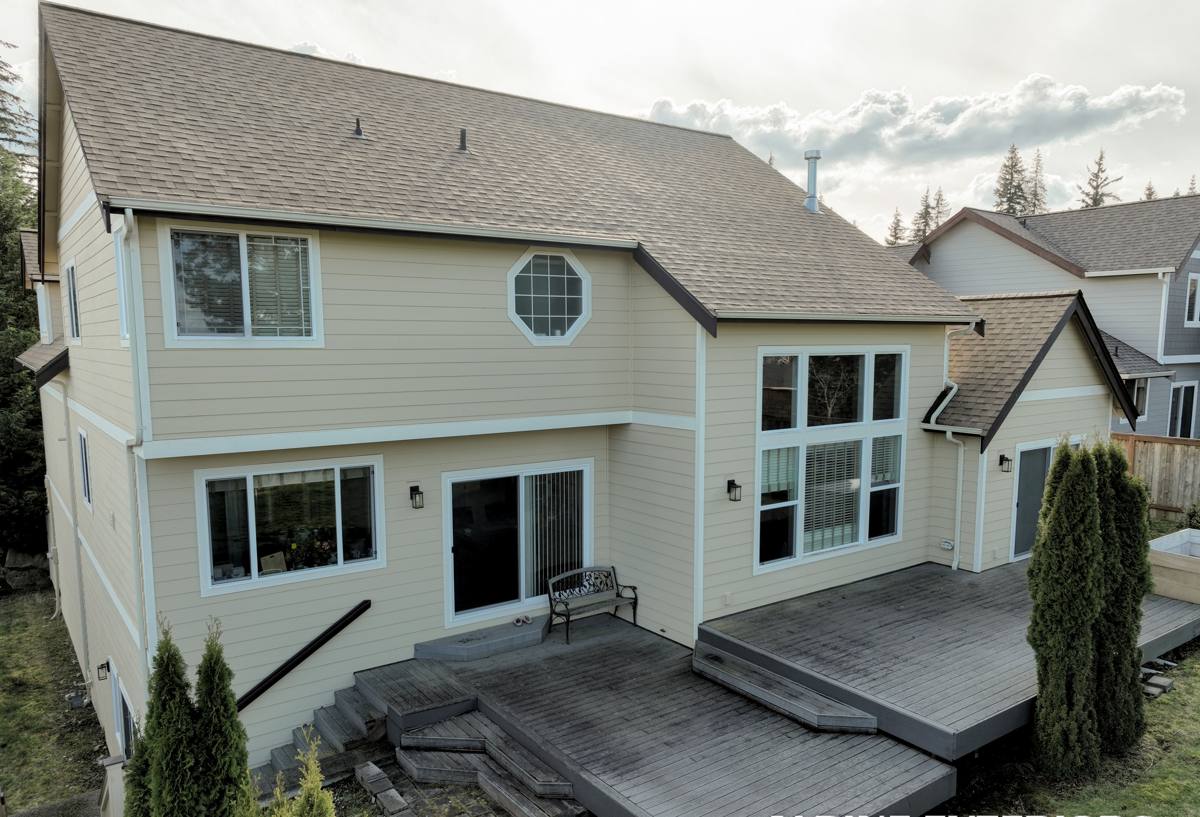
What Salt Air, UV, and Storm Wind Do to a Deck Over Time
It helps to understand the specific failure modes we're designing against, rather than treating "coastal" as a vague buzzword.
Salt air and corrosion
Airborne salt is conductive and corrosive. Standard hot-dip galvanized fasteners and connectors that are perfectly fine forty miles inland will start rusting and staining decking within a season or two on a barrier island. Once a fastener starts to corrode, it loses holding strength long before it looks obviously bad — the deck can appear fine while the connections underneath are quietly weakening.
UV exposure
Florida sun is hard on any exterior material, but a west- or south-facing deck with open sky and reflected light off the Gulf gets more direct and reflected UV than a typical shaded yard deck. Wood grays and checks faster; lower-grade composite can fade unevenly, especially where furniture or planters create shade lines.
Wind-driven rain and humidity
Rain here rarely falls straight down. Wind pushes it sideways and up under rail caps, into end grain, and behind ledger boards that aren't properly flashed. Combined with Pinellas County's humidity, that moisture doesn't dry out quickly — it sits, and that's where rot and mildew start, usually in places you can't see without pulling a board.
Wind load
St. Pete Beach falls within a high-wind coastal zone, and deck framing, railing posts, and connections all need to be sized and fastened for those loads — not just to pass inspection, but because an underbuilt railing or a ledger board that's only lag-bolted (instead of properly through-bolted and flashed) is a real safety issue in a storm.
Choosing Decking Material for a Barrier Island Home
There's no single "best" decking material — it's a trade-off between upfront cost, maintenance commitment, appearance, and how the material actually behaves in salt air and sun. Here's how the common options stack up for a St. Pete Beach project specifically:
| Material | Coastal Durability | Maintenance | Typical Trade-Offs |
|---|---|---|---|
| Pressure-treated pine | Fair — needs diligent sealing | High — annual cleaning and re-sealing | Lowest upfront cost; most prone to graying, checking, and fastener corrosion staining if hardware isn't matched to the treatment chemical |
| Cedar or tropical hardwood | Good if maintained | Moderate to high — periodic oiling | Attractive natural look; salt air still weathers it, and cost runs higher than pine |
| Capped composite | Very good | Low — occasional washing | Higher upfront cost; quality varies a lot by brand, and lower-tier composites can fade or show streaking near salt spray |
| PVC decking | Excellent | Lowest | Fully synthetic, doesn't absorb moisture, best long-term option for full Gulf exposure; highest material cost |
Our standard on St. Pete Beach jobs is to steer homeowners toward capped composite or PVC for anything with direct salt spray exposure or minimal maintenance appetite, and to be upfront about the trade-off: it costs more today to spend less time and money on it later. If a homeowner wants real wood for the look and is willing to stay on top of sealing and inspection, we'll build it — we just make sure the framing and fasteners underneath are coastal-grade regardless of what decking goes on top, because the structure is what actually keeps people safe.
Framing, Fasteners, and Hardware — Where Deck Failures Actually Start
Most deck problems we get called out to inspect on the island aren't decking-board problems — they're connection problems. The decking is the part everyone looks at; the framing and hardware are the part that matters most.
- Fasteners: we use stainless steel or coated fasteners rated for coastal/salt exposure, matched to the type of treated lumber or composite being used — mismatched metals accelerate corrosion.
- Ledger board attachment: through-bolted to the structure with proper flashing behind and above it, not just lag-screwed, so wind-driven rain can't wick into the house framing.
- Joist protection: joist tape over the top of pressure-treated framing slows moisture intrusion at the fastener line, which is one of the most common early rot points.
- Post bases and connectors: galvanized or stainless structural connectors sized for the wind loads required this close to the Gulf, not builder-grade hardware meant for inland use.
- Footings: sized and embedded to hold against uplift in high wind, not just vertical load — this is one of the areas inspectors here pay close attention to.
- Ventilation and drainage: proper gaps and drainage paths under and around the deck so trapped humidity has somewhere to go instead of sitting against framing.
None of this is visible once the deck is finished, which is exactly why it matters who builds it. A deck can look identical on day one whether the hardware underneath is coastal-rated or not — the difference shows up in year three or four, or in the first real storm.
Permits, Wind Load, and Pinellas County Requirements
Decks on St. Pete Beach generally require a permit, and the plans need to reflect the wind load requirements for the barrier island — these are stricter than a standard inland Pinellas County permit. Depending on the property, elevation, flood zone designation, and setback rules can also come into play, especially on older beach lots or homes that have been raised or renovated over the years.
We pull permits, handle the plan submittal, and coordinate inspections as part of the job — we don't hand that off to the homeowner or skip it to move faster. An unpermitted deck can become a real problem at resale, and more importantly, the permit and inspection process is what confirms the framing and connections were actually built to the load requirements the county set for this exact location.
What we typically need from the homeowner up front
- A general sense of how the deck will be used (dining, lounging, hot tub, grill station) — this affects load design
- Any known flood zone or elevation certificate info if the home has one on file
- Preferred decking material and railing style, or openness to our recommendation
- Access constraints — narrow beach lots and shared driveways sometimes affect equipment and material staging
How Our Process Works
1. On-site estimate
We walk the site, look at the existing structure if there is one, check ledger attachment points, and talk through how the deck will actually be used. This is also when we flag anything specific to the lot — elevation, drainage, sun exposure, wind exposure.
2. Design and material selection
We put together a plan with sizing, layout, and material recommendations based on exposure and budget, and walk through the trade-offs honestly rather than upselling the most expensive option by default.
3. Permitting
We prepare and submit the permit package to the county, sized to the correct wind load category for the location, and schedule inspections at the required build stages.
4. Demo and framing
If a deck needs to come out, we remove it and inspect the ledger and structural attachment points before framing new. Framing goes in with coastal-grade hardware and fasteners throughout, not just at visible connections.
5. Decking, railing, and finish work
Decking and railings go in per the selected material's installation specs — composite and PVC systems each have manufacturer-specific fastening and gapping requirements that affect the warranty if they're not followed.
6. Final walkthrough and inspection
We walk the finished deck with the homeowner, confirm final county inspection sign-off, and go over any maintenance specifics for the material chosen.
Maintenance Checklist for a Coastal Deck
Even a well-built deck needs some ongoing attention on a barrier island — this is the short list we give homeowners regardless of which material they chose:
- Rinse salt residue off the deck surface and railings periodically, especially after storms with onshore wind
- Check fastener heads and structural connectors annually for early rust or staining
- Keep gutters and downspouts near the deck clear so runoff isn't dumping extra water onto framing
- Reseal wood decking on the manufacturer's or supplier's recommended schedule — don't wait until it's visibly gray and dry
- Clear debris and leaves from between boards and under the deck to keep airflow and drainage working
- After any major storm, do a quick visual check of railing posts and stair connections before heavy use
Why Hiring a Crew That Already Works St. Pete Beach Matters
Building codes, wind load requirements, and permit expectations shift depending on exactly where a property sits — a barrier island lot is not treated the same as one a few miles inland in St. Petersburg. A crew that regularly works St. Pete Beach already knows the local permitting process, has a track record with the fastener and hardware specs this environment actually requires, and isn't learning coastal construction on your project. That translates into fewer surprises during inspection, and a deck that's actually built for the conditions it's going to sit in for the next couple of decades, not a generic build that happens to be located near the Gulf.
If you're planning a new deck or replacing one that's showing its age on St. Pete Beach, we're glad to come take a look and walk you through what your specific property needs. Reach out for a free, no-pressure estimate using the form below.