 St. Petersburg
 Building a Deck That Actually Holds Up in Seminole
Seminole sits close enough to the water that every outdoor structure on a property feels the effects of it — salt-laden air, humidity that never really lets up, and the kind of sun exposure that breaks down materials most homeowners assume are "maintenance-free." A deck built here does a different job than a deck built inland. It has to shrug off wind-driven rain, resist corrosion in every fastener and connector, and stand up to UV exposure that runs twelve months a year instead of three or four. When we design and build a custom deck for a Seminole home, we're building for that reality from the first footing, not adding weather protection as an afterthought.
This page is about one service in one area: custom deck construction for homes in Seminole and the surrounding St. Petersburg area. We'll walk through what the climate demands, what a correctly built deck involves structurally, how our process works from first visit to final walkthrough, and why hiring a crew that already works this specific area matters more than it might seem.
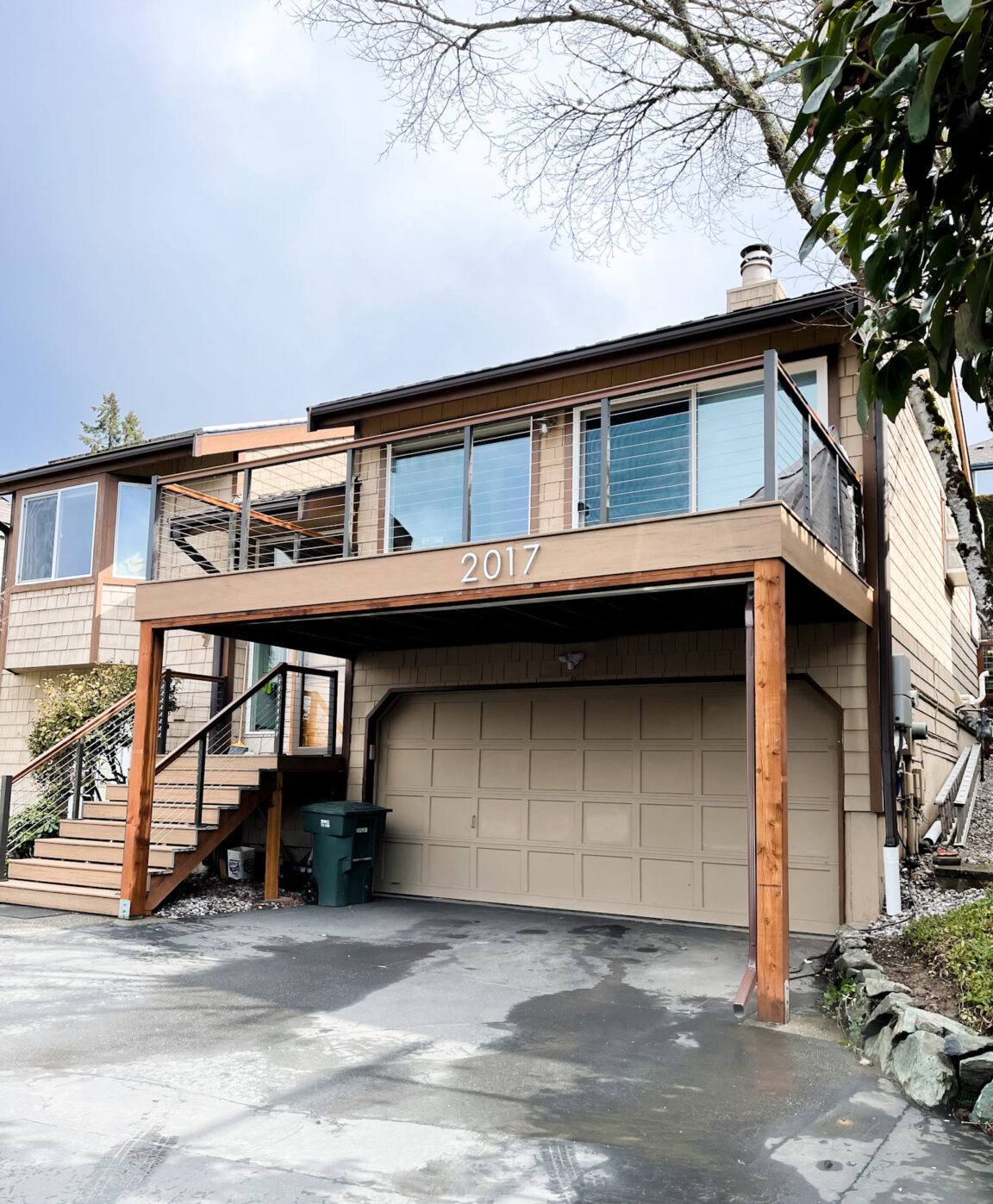
What Pinellas County's Climate Does to a Deck
Hurricane-Force Wind Loads
Seminole is subject to the same wind-load requirements as the rest of coastal Pinellas County, and for good reason. A deck isn't just a platform sitting on posts — it's a structure that has to resist uplift and lateral force during tropical storms and hurricanes. That means correctly sized footings, properly spaced and rated post connections, and joist hangers and structural screws rated for the loads involved. Undersized framing or the wrong hardware is the difference between a deck that rides out a storm and one that doesn't.
Salt Air and Corrosion
Even a few miles from the water, salt air accelerates corrosion in anything metal. Standard zinc-coated fasteners and connectors that might be fine in a landlocked state can start rusting within a couple of seasons here. Corrosion isn't cosmetic — a rusted-through joist hanger or fastener is a structural failure waiting to happen, often hidden underneath the decking where nobody looks until something gives.
Year-Round UV Exposure
Florida sun is intense and constant. UV breaks down wood fibers, fades finishes, and degrades lower-quality composite decking faster than manufacturers' marketing usually admits. Any decking material chosen for a Seminole home needs a real answer for UV exposure, not just a warranty pamphlet.
Wind-Driven Rain and Moisture
Afternoon storms here don't just fall straight down — wind pushes rain sideways, into ledger connections, under railings, and into any gap that isn't properly flashed or sealed. Add in Pinellas County's humidity and the ever-present risk of standing water underneath a deck, and moisture management becomes one of the most important parts of the build, not a finishing detail.
Ledger Attachment and Waterproofing — Where Decks Actually Fail
Most deck failures we get called out to inspect trace back to one place: the ledger board, where the deck attaches to the house. If that connection isn't flashed correctly, water works its way behind the ledger and into the house's rim joist and framing over time. In a climate with this much rain and humidity, an unflashed or poorly flashed ledger isn't a small oversight — it's a slow rot problem that often isn't discovered until the deck itself starts to sag or the interior wall shows damage.
We flash every ledger connection properly, use corrosion-resistant lag bolts or through-bolts rated for the load, and make sure water is directed away from the house rather than trapped against it. This is invisible once the deck is finished, which is exactly why it's the step that gets skipped by crews trying to save time.
Decking Material Options for a Coastal St. Petersburg Property
There's no single "best" decking material — there's a best material for a given budget, maintenance appetite, and how close the property sits to salt air. Here's how the common options actually compare for a Seminole property, honestly:
| Material | UV / Fade Resistance | Moisture Behavior | Maintenance | Typical Lifespan Here |
|---|---|---|---|---|
| Pressure-treated pine | Fades and grays without regular sealing | Absorbs water; needs sealing to resist rot | Annual cleaning/sealing recommended | 10-15 years with upkeep |
| Composite decking (capped) | Good with quality capstock; lower-grade brands fade faster | Doesn't absorb water like wood; core still needs proper drainage | Occasional cleaning, no sealing | 20-25+ years |
| PVC decking | Excellent — fully synthetic, resists fading well | Doesn't absorb moisture at all | Low — occasional washing | 25+ years |
| Tropical hardwoods (e.g., ipe) | Naturally UV and rot resistant, but will gray without oiling | Naturally dense and moisture resistant | Periodic oiling to maintain color | 25+ years structurally |
For most Seminole homeowners, capped composite or PVC decking makes the most sense — the upfront cost is higher than pressure-treated wood, but the maintenance burden and long-term performance in salt air and constant sun tip the math in their favor over a 15-20 year window. That said, plenty of homeowners still prefer the look and feel of real wood and are willing to keep up with sealing — we build both correctly and will lay out the honest trade-offs for your specific situation rather than pushing one product.
Fasteners, Framing, and Hardware — The Part You Don't See
The decking boards get all the attention, but the framing underneath is what determines whether a deck lasts. For Seminole projects, our standard is:
- Stainless steel or coated structural screws and hardware rated for coastal/corrosive environments — not standard hot-dip galvanized where salt exposure is significant
- Properly sized footings set below grade to local frost/soil requirements, engineered for the actual loads the deck will carry
- Joist hangers and post-to-beam connectors matched to the fastener manufacturer's specification, not mixed and matched
- Ledger flashing installed before any decking goes down, with the connection point sealed against wind-driven rain
- Proper joist spacing for the decking material chosen — composite and PVC products often require tighter spacing than wood
- Railing posts through-bolted into framing, not just screwed into the rim joist
- Adequate airflow and drainage underneath the deck to prevent standing water and mold growth
Permits and Code Requirements in Pinellas County
Most custom decks in St. Petersburg and unincorporated Pinellas County require a permit, particularly once the deck is attached to the house or exceeds a certain height off grade. Permitted work gets inspected at the footing stage and again after framing, which is a good thing — it's a second set of eyes confirming the structure meets wind load and connection requirements before the decking ever goes down. We handle the permitting process as part of the job, including any documentation needed for footing depth, structural connections, and railing height compliance. Skipping the permit might save a few days on the front end, but it becomes a real problem at resale, when an unpermitted structure can hold up a closing or force retroactive inspection.
Our Process, Start to Finish
1. On-Site Consultation
We walk the property, look at how the deck will attach to the house, check grade and drainage, and talk through how you actually plan to use the space — entertaining, grilling, a hot tub, shade needs. Material and layout decisions follow from that conversation, not the other way around.
2. Design and Proposal
You get a clear layout, material selection, and a written scope covering framing spec, fastener grade, decking product, and railing style, along with a straightforward cost breakdown.
3. Permitting
We pull the necessary permit and schedule required inspections so the structure is verified at the framing stage, not just at the end.
4. Construction
Footings first, then framing with corrosion-resistant hardware, ledger flashing, decking, and railing. We keep the site clean and walk you through progress at key milestones rather than disappearing until the last day.
5. Final Walkthrough
We check every connection, railing, and stair before calling the job done, and go over basic care for whatever material you chose.
A Practical Checklist Before You Sign Off on Any Deck Bid
- Does the bid specify fastener and hardware grade, or just say "structural screws"?
- Is ledger flashing explicitly included, or is it assumed?
- Does the contractor mention pulling a permit, or is that left to you?
- Is the footing depth and sizing specified, or left to "standard"?
- Does the decking material choice account for UV and salt air, or is it a generic recommendation?
- Are railing height and baluster spacing called out to meet current code?
Why a Crew That Already Works Seminole Matters
A deck built to a generic national spec is not the same as a deck built for this specific stretch of coastal St. Petersburg. Crews who work Seminole regularly already know which fastener grades hold up here, how the local permitting office wants documentation submitted, and where wind-driven rain actually causes problems on homes in this area versus inland ones. That familiarity shows up in fewer callbacks, fewer surprises during inspection, and a structure that's actually built for the conditions it will face for the next two decades, not just the conditions on a spec sheet written somewhere else.
If you're planning a new deck or replacing one that's showing its age, we're happy to come take a look and give you a straightforward, no-pressure estimate — just fill out the form below and we'll get in touch.