 St. Petersburg
 Why Pinellas Park Homes Wear Out Siding Faster Than You'd Expect
Pinellas Park sits inland enough to feel like it's sheltered, but it isn't spared from what makes siding fail across Pinellas County. Salt-laden air moves in off both Tampa Bay and the Gulf and settles on every exterior surface in the area, coastal proximity or not. Add in intense, near-constant UV exposure, summer storms that drive rain sideways into wall assemblies, and the real risk of hurricane-force wind gusts, and you've got a combination that punishes cheap materials and sloppy installation alike. Siding here isn't just cosmetic — it's the first line of defense between your framing and a climate that doesn't let up for long.
When we get called out to look at failing siding in Pinellas Park, the pattern is usually the same: moisture got behind the cladding through a gap, seam, or failed caulk joint, and nobody knew until soft spots, bubbling paint, or a musty smell gave it away. Replacement done right isn't about picking a color and nailing up panels — it's about building a wall system that can take what this climate throws at it, year after year.
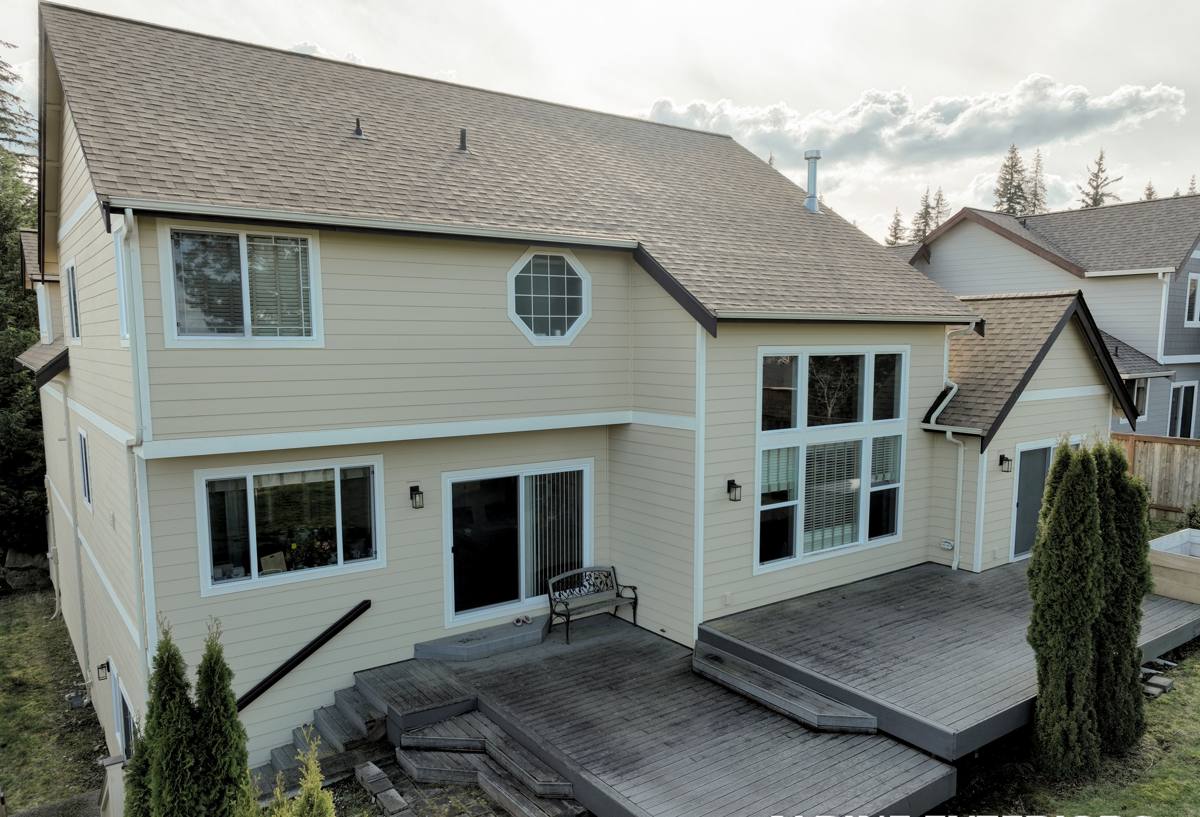
What Local Conditions Demand From Replacement Siding
Any siding product installed in Pinellas Park needs to hold up to four specific stresses, and it needs to do all four at once, not just one or two:
- Wind resistance — siding needs to stay fastened and intact through tropical storm and hurricane-force gusts without panels lifting, cracking, or becoming airborne debris.
- UV stability — Florida sun fades and degrades paint finishes far faster than it does in milder climates, so the finish matters as much as the substrate underneath it.
- Moisture tolerance — wind-driven rain will find any gap in flashing, seams, or caulk. The material behind the surface has to handle occasional wetting without swelling, rotting, or losing structural integrity.
- Salt air resistance — airborne salt accelerates corrosion of fasteners and trim, and it breaks down some finishes faster than inland weathering alone would.
This is the exact reason we standardized on James Hardie fiber cement and stopped installing other materials. It's not a marketing preference — it's what held up when we looked honestly at how different products perform under this specific combination of stresses over the long run.
Why We Only Install James Hardie Fiber Cement
Homeowners in Pinellas Park often ask why we don't offer vinyl, LP SmartSide, or other fiber cement brands. It's a fair question, and the honest answer is that we looked at how each performs under Gulf Coast conditions specifically — not in a lab, not in a mild climate, but here — and Hardie is what we're willing to warranty our workmanship on.
| Factor | James Hardie Fiber Cement | Common Alternatives |
|---|---|---|
| Combustibility | Non-combustible material | Vinyl and engineered wood are combustible |
| Moisture behavior | Engineered to resist swelling and does not support rot the way wood-based products can | Engineered wood products can swell or degrade if moisture reaches the substrate; vinyl can trap moisture behind it |
| Wind performance | Rigid, heavy panel resists flexing and lifting in high wind | Vinyl can crack, warp, or blow off in sustained high wind |
| Finish durability | Factory-applied ColorPlus finish is baked on and warranted against fading | Field-painted or thinner factory finishes tend to fade or chalk faster under intense UV |
| Climate engineering | HZ5 product line specifically engineered for humid, high-moisture regions like Florida | Generally not region-specific |
We're not going to tell you every alternative product is unusable — plenty of homes around the country wear vinyl or engineered wood siding without issue. But under Pinellas County's combination of heat, humidity, salt air, and storm exposure, we've made a professional call: we only stand behind Hardie, because it's the product we trust to perform here without surprises five or ten years down the road.
What a Correct Siding Replacement Actually Involves
Ripping off old siding and nailing up new panels is the easy part to see — it's not the part that determines whether the job lasts. The steps that actually protect the house happen underneath the visible surface.
Tear-Off and Substrate Inspection
Once the old siding is off, we inspect the sheathing and framing underneath for water damage, rot, or insect activity. This is often the first time hidden problems become visible, and it's the right moment to fix them — not after new siding is already up and covering the evidence.
Weather-Resistive Barrier
A correctly installed water-resistive barrier (house wrap) goes over the sheathing before any siding goes on. In a climate where wind-driven rain is a near-certainty at some point every year, this layer is what keeps incidental moisture from reaching the wood framing even if water gets past the siding itself.
Flashing at Every Penetration
Windows, doors, hose bibs, light fixtures, vents — every penetration in the wall is a potential entry point for water. Proper flashing detail at each one is what separates a siding job that lasts decades from one that starts leaking behind the walls within a few years.
Fastening to Manufacturer Spec
James Hardie siding has specific fastening patterns, nail types, and clearances that are engineered for wind uplift resistance and long-term panel stability. Installers who don't follow these specs can void the manufacturer warranty even if the siding itself is the right product — the installation is part of what makes the system work.
Trim, Caulking, and Paint Seams
The finish details — corner boards, trim, caulk joints, and touch-up paint at cut edges — are what keep water from wicking into cut ends of the panels. These are the details that get rushed on a bad job and are worth checking closely on a good one.
Our Process for Pinellas Park Homeowners
We approach every siding replacement in Pinellas Park the same structured way:
- On-site assessment — we walk the exterior, check for signs of existing moisture damage, and evaluate what's driving the need for replacement (age, storm damage, chronic maintenance issues).
- Honest scope and estimate — we tell you what we find, including anything that might need repair before new siding goes on, so there are no surprises mid-project.
- Product and color selection — we walk you through Hardie's HZ5 lines and ColorPlus finish options suited to the look of your home and neighborhood.
- Tear-off and substrate repair — old material comes off, and any damaged sheathing or framing gets addressed before anything new goes up.
- Barrier, flashing, and installation to spec — house wrap, flashing, and Hardie panels installed following manufacturer fastening and clearance requirements.
- Final detail work and walkthrough — trim, caulking, touch-up, and a final walkthrough with you before we consider the job done.
Why a Crew That Already Works Pinellas Park Matters
Siding installation isn't one-size-fits-all across Florida, let alone across the country. A crew that regularly works Pinellas Park and the surrounding St. Petersburg area already understands the local building department's inspection expectations, the wind-load requirements that apply in Pinellas County, and the practical realities of scheduling work around Florida's rainy season. That familiarity translates into fewer delays, fewer failed inspections, and a job that's built for the specific conditions your home actually faces — not generic assumptions about "Florida weather" that don't account for county-specific wind and moisture requirements.
There's also a simple accountability argument: a local crew has a reputation in the community to protect and is easy to reach if a question comes up after the job is done. That matters more with an exterior system that's supposed to last decades, not just a few years.
Signs Your Pinellas Park Home May Need Siding Replacement
Not every siding problem requires full replacement, but these are the signs worth having evaluated:
- Soft, spongy spots when you press on the siding surface
- Visible cracking, warping, or buckling panels
- Paint that's persistently peeling or bubbling in the same spots
- A musty smell near exterior walls, especially after rain
- Siding that's original to a home more than 20-25 years old
- Visible storm damage after high winds or heavy rain events
- Rising energy bills that may point to a compromised building envelope
What Affects the Cost of a Siding Replacement
Every home is different, but the same general factors drive cost on most Pinellas Park siding replacement projects:
| Factor | Why It Matters |
|---|---|
| Home size and wall area | More square footage means more material and labor |
| Substrate condition | Rot or water damage found during tear-off adds repair scope before new siding can go on |
| Siding profile and texture | Lap, shingle, and panel styles vary in material and labor cost |
| Trim and architectural detail | Homes with more corners, dormers, or trim work take more labor time |
| Color and finish selection | ColorPlus factory finishes vs. field-painted options affect material pricing |
| Access and site conditions | Landscaping, fencing, or tight lot lines can affect labor time |
We give a firm, itemized estimate after seeing the home in person — we don't quote sight-unseen, because the substrate condition alone can change the real scope of the job.
Ready to Talk About Your Siding?
If your Pinellas Park home is showing signs of aging or storm-worn siding, we're happy to come take a look. There's no pressure and no obligation — just a straightforward assessment and an honest estimate from a crew that installs James Hardie fiber cement siding and stands behind the work. Reach out using the form below to get started.