 St. Petersburg
 Why Decks in Pinellas Park Fail Sooner Than Homeowners Expect
Pinellas Park sits inland enough to feel like it's sheltered from the worst of the coast, but it isn't spared from what actually destroys a deck. The same salt-laden air that moves off Tampa Bay and the Gulf drifts across Pinellas County year-round, settling into fasteners, connectors, and any exposed metal on a deck structure. Combine that with Florida's relentless UV exposure — sun strong enough to bleach and embrittle wood fibers within a few seasons — and you get a structure that ages faster here than the same deck would in a drier, cooler climate.
Then there's the water. Pinellas Park gets its share of sudden, heavy downpours and wind-driven rain that doesn't just fall straight down — it gets pushed sideways into ledger boards, under flashing, and into any gap where two pieces of lumber meet. During hurricane season, gusts load a deck structure in ways a calm-weather deck was often never built to handle. A deck that looks fine on the surface can be quietly failing underneath from years of this cycle: swell, dry, bake, soak, repeat.
That's why deck replacement here isn't just a cosmetic upgrade. It's a structural reset that accounts for how this specific climate attacks a specific structure, not a generic build lifted from a colder-climate spec sheet.
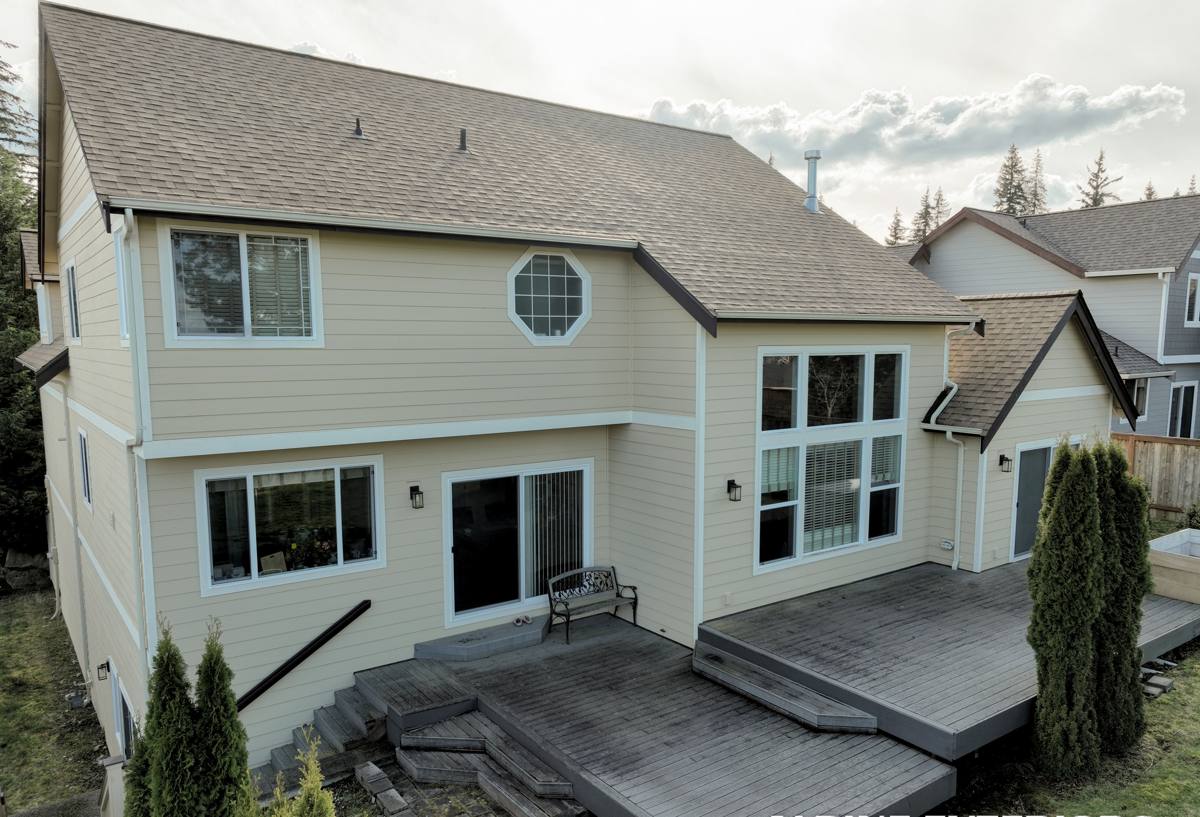
Signs a Pinellas Park Deck Needs Replacement, Not Just Repair
Not every tired-looking deck needs to come down. But there's a point where patching boards is throwing money at a structure that's already lost its integrity. Here's what tells us it's time for a full replacement rather than a repair:
- Soft, spongy, or bouncy spots in the decking or framing when you walk across it
- Visible rot or crumbling wood at the ledger board (where the deck attaches to the house)
- Rusted, corroded, or missing joist hangers, bolts, or connectors
- Posts that wobble, lean, or show rot at the base near ground contact
- Railings that flex or feel loose when pushed
- A deck built before current code that was never permitted or inspected
- Repeated past repairs that keep failing in the same spots
If you're only seeing surface graying or a few worn boards, a repair or resurfacing might genuinely be the smarter move — we'll tell you that honestly rather than upselling a full rebuild you don't need. But once the framing or connections are compromised, patchwork just delays a problem that gets more expensive the longer it sits.
Why Underlying Structure Matters More Than the Decking Boards
Homeowners often focus on how the decking surface looks, but the boards are the least critical part of a deck's safety. The framing, footings, ledger attachment, and fasteners are what actually hold the structure up and keep it attached to the house. A deck can have brand-new composite boards on top of rotten joists — it'll look great and still be unsafe. Any legitimate replacement starts by evaluating what's underneath, not just what you can see from the yard.
What a Correct Deck Replacement Actually Involves
A proper deck replacement in this climate is built in layers, and each layer matters:
Footings and Posts
Footings need to be sized and set to local frost-free depth requirements and soil conditions, with posts rated for ground contact and set with proper post bases that keep wood from sitting directly in standing water. In Pinellas County's sandy soil and high water table, footing depth and drainage around the post base are not places to cut corners.
Ledger Attachment
The ledger board — where the deck ties into the house — is the single most common point of catastrophic failure nationwide, and it's worse in humid coastal climates where trapped moisture behind the ledger causes hidden rot. A correct install uses proper flashing, ledger screws or bolts (not just nails), and flashing tape that sheds water away from the house structure instead of trapping it.
Framing and Fasteners
Joists, beams, and hangers all need to be rated for the loads and, in a salt-air environment, corrosion-resistant. Standard galvanized fasteners can corrode faster near the coast than inland; stainless steel or heavy-duty coated hardware is worth the modest upcharge on a structure meant to last.
Decking and Railings
Whatever surface material you choose, it needs to be fastened, gapped, and ventilated correctly underneath so airflow can dry the structure out between rain events. Railings need to meet current height and spacing code, not just match what was there before — older decks are frequently out of compliance with current guardrail and baluster spacing requirements.
Material Options for Pinellas Park's Climate
There's no single "best" decking material — there's a best fit for your budget, maintenance appetite, and how much sun and rain that specific spot in your yard actually gets. Here's how the common options hold up under Gulf Coast conditions:
| Material | Sun/UV Resistance | Moisture Behavior | Maintenance | Typical Lifespan Here |
|---|---|---|---|---|
| Pressure-treated pine | Fades and can check/split under intense UV | Absorbs and releases moisture; prone to warping if not sealed | Needs sealing/staining every 1-2 years | 10-15 years |
| Composite decking | Strong UV stability, minimal fading with quality brands | Doesn't absorb water like wood; resists rot | Occasional cleaning, no sealing/staining | 25-30+ years |
| Tropical hardwoods | Naturally dense, holds up well but can still gray | Very moisture-resistant when properly sourced and installed | Periodic oiling to maintain color | 20-25 years |
| PVC decking | Excellent UV resistance | Fully waterproof, won't rot or absorb moisture | Low — occasional washing | 25-30+ years |
We install pressure-treated wood when a homeowner wants the lowest upfront cost and is committed to maintaining it, and composite or PVC when the priority is spending less time and money on upkeep over the life of the deck. What we steer people away from is any product with a maintenance schedule or moisture warranty that doesn't hold up realistically to this specific climate — we'll walk you through the honest trade-offs rather than just selling whatever's cheapest to install.
Permits, Wind Load, and Pinellas County Code
Deck replacement in Pinellas Park almost always requires a permit, and for good reason — this is hurricane country, and the building code here reflects that. Footing depth, post spacing, joist span tables, ledger attachment methods, and guardrail requirements are all governed by code that accounts for regional wind loads, not a national default. A deck that's technically standing but wasn't built to current wind-load and attachment standards is a liability in a storm, both for the structure and for whatever it's attached to — your house.
We pull permits and build to current code as a matter of course, not as an add-on. If a previous deck on your property was never permitted, replacing it correctly also brings your property back into compliance, which matters if you ever sell the home or need to file an insurance claim involving that structure.
Our Deck Replacement Process
- On-site assessment: We inspect the existing deck's framing, footings, and ledger attachment to determine what's actually failing and confirm replacement is the right call.
- Design and material selection: We walk through decking, railing, and fastener options based on your budget, sun exposure, and how much maintenance you want to take on.
- Permitting: We handle the permit application and coordinate required inspections with the local building department.
- Demolition: We remove the old structure and haul away debris, checking the ledger area and framing beneath for any hidden rot or moisture damage once it's exposed.
- Rebuild: Footings, framing, ledger flashing, decking, and railings go in to current code, with corrosion-resistant fasteners appropriate for coastal air.
- Final walkthrough: We inspect the finished deck with you, cover basic care for your specific material, and pass final inspection.
Timeline Expectations
Most standard residential deck replacements in Pinellas Park run from about a week to a few weeks depending on size, material lead times, and permit turnaround. Composite and PVC materials are generally in stock and move faster; certain hardwood or custom railing orders can add time. We'll give you a realistic schedule before work starts, not an optimistic one that slips.
Cost Factors Homeowners Should Understand
Deck replacement costs vary widely based on size, material, and structural condition, so we won't quote a number without seeing the site — but here's what actually drives the price up or down:
- Size and footprint — square footage is the biggest single driver of material and labor cost
- Height and grade change — elevated decks need more substantial framing, footings, and stairs than ground-level ones
- Material choice — pressure-treated wood costs less upfront; composite and PVC cost more upfront but far less over the deck's life
- Railing style — cable, glass, or custom railing systems cost more than standard baluster railing
- Structural surprises — hidden rot at the ledger or posts found during demolition can add scope once the old deck is opened up
- Permit and inspection fees — set by the local jurisdiction, not by us
Be cautious of any bid that's dramatically lower than others for the same footprint and material — it usually means something's being skipped, whether that's proper footings, code-compliant fasteners, or a permit altogether.
Protecting Your New Deck After Installation
Whatever material you choose, a little seasonal attention goes a long way in this climate. Rinse off salt residue and debris periodically, especially after storms. Keep gutters and downspouts near the deck clear so runoff isn't dumping extra water onto or under the structure. If you went with wood, stick to the resealing schedule — UV damage compounds quickly once a sealant coat starts to break down. For composite or PVC, occasional washing is really all that's needed. Check railings and stair connections once or twice a year for looseness, especially after any significant storm.
Why a Crew That Already Works Pinellas Park Makes a Difference
A deck built by a crew that hasn't worked this specific climate before often looks fine at handoff and starts showing problems within a couple of seasons — because generic framing details, standard fasteners, or a ledger detail that works fine in a drier climate simply doesn't hold up against Pinellas County's combination of salt air, UV, and storm-driven rain. A contractor already working in Pinellas Park and greater St. Petersburg knows the local permitting process, the inspectors, the soil conditions, and which material and fastener choices actually last here versus which ones look good on a spec sheet and fail early.
That local experience shows up in details a homeowner might never think to ask about — flashing details at the ledger, fastener grade, footing depth for sandy soil, and framing that's genuinely rated for hurricane-force wind loads rather than just meeting a national minimum. It's the difference between a deck that needs attention again in five years and one that's still solid in twenty.
If your Pinellas Park deck is showing its age or you're just not sure whether it needs repair or full replacement, we're happy to take a look and give you a straight answer. Reach out for a free, no-pressure estimate using the form below.