 St. Petersburg
 Old Northeast Decks Face a Different Set of Problems
Old Northeast is one of St. Petersburg's older, established neighborhoods, and that shows up in the decks we get called out to inspect. Many homes here were built well before today's coastal building codes existed, and the decks attached to them have often been patched, re-decked, or partially rebuilt more than once over the decades. Add mature tree canopy, older framing that was never designed for today's fastener and connection standards, and a waterfront-adjacent climate, and you get decks that look fine from a distance but are quietly failing underneath.
Replacing a deck in this neighborhood isn't the same job as replacing one in a newer subdivision a few miles inland. The house is older, the structure it attaches to may have its own quirks, and the environmental load on the wood is more aggressive. A deck replacement here needs to account for all of that, not just swap out old boards for new ones.
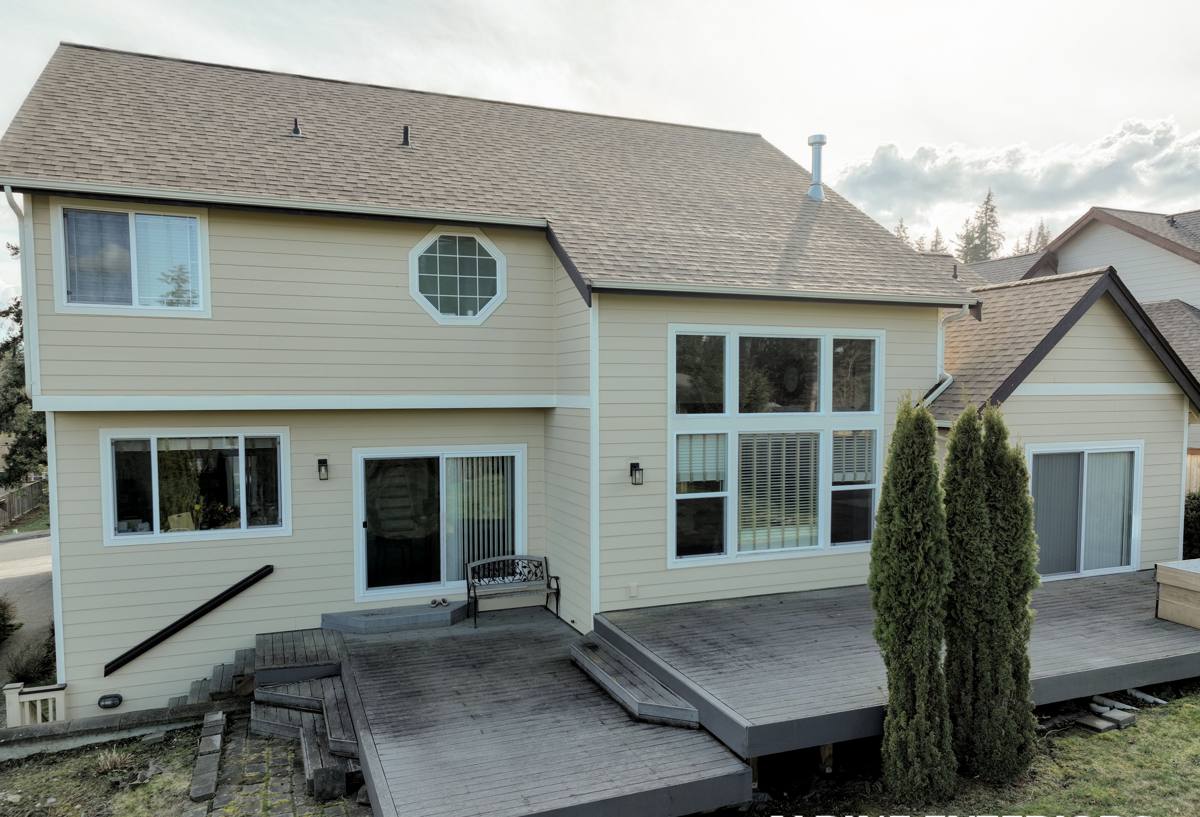
What Pinellas County's Climate Actually Does to a Deck
St. Petersburg sits on a peninsula between Tampa Bay and the Gulf, and Old Northeast is close enough to the water that salt air is a constant factor. Combine that with intense year-round UV, wind-driven rain, and the real possibility of hurricane-force winds, and a deck is under attack from multiple directions at once.
UV and Heat
Florida sun breaks down the lignin that holds wood fibers together, which is why untreated or poorly maintained deck boards gray, splinter, and cup faster here than almost anywhere else in the country. UV also degrades the plasticizers in lower-grade composite boards over time, which is part of why not all composite products perform the same in this climate.
Salt Air and Corrosion
Salt-laden air accelerates corrosion in fasteners, joist hangers, and structural screws. A deck built with standard interior-grade hardware may look fine for a year or two, then start failing from the inside as connectors rust and lose holding strength — long before the wood itself looks bad.
Wind-Driven Rain and Moisture
Storms here don't just drop rain straight down; wind pushes it sideways and up under boards, into ledger connections, and around post bases. Decks that don't drain and dry properly hold moisture against end grain and fasteners, which is where rot typically starts.
Hurricane-Force Wind Loads
Deck structures have to resist uplift and lateral loads during tropical storms and hurricanes, not just support foot traffic. Ledger attachment, post-to-beam connections, and guard/railing anchoring all matter more here than in a low-wind region.
Signs an Old Northeast Deck Needs Replacement, Not Repair
Not every deck problem means a full tear-off. But in this neighborhood, we see homeowners spend money on cosmetic repairs when the structure underneath is already compromised. A few warning signs that point toward replacement:
- Soft, spongy, or bouncy decking, especially near the house or around posts
- Rust streaking from fasteners or visibly corroded joist hangers
- Gaps opening up at the ledger board where the deck meets the house
- Wood that's gray, splintering, and dry despite regular sealing
- Posts or footings that shift, wobble, or sit in standing water after rain
- A railing that flexes noticeably when leaned on
- A deck older than 15-20 years that has never had its structural framing inspected
If you're only seeing surface-level graying with a solid, tight structure underneath, a repair or refinish may genuinely be enough. We'll tell you that honestly rather than sell a full replacement you don't need.
Material Options for This Climate
There's no single "right" decking material for every home in Old Northeast — it depends on budget, how the deck is used, and how much maintenance you're willing to do. Here's how the common options actually compare under local conditions.
| Material | How It Handles Salt Air & UV | Maintenance | Typical Lifespan Here |
|---|---|---|---|
| Pressure-treated pine | Needs sealing to resist moisture and UV breakdown | Annual cleaning and re-sealing recommended | 10-15 years with upkeep |
| Hardwood (e.g., ipe-class) | Naturally dense and rot-resistant, handles UV well when oiled | Periodic oiling to maintain color and moisture resistance | 20+ years |
| Capped composite | Strong UV and moisture resistance, minimal fading | Occasional washing, no sealing or staining | 25-30 years |
| Uncapped composite | More prone to moisture absorption and surface wear near salt air | Low, but can mold or stain over time | 15-20 years |
The framing underneath matters as much as the surface material. We consistently spec pressure-treated structural lumber with corrosion-resistant, coastal-rated (typically stainless or heavy hot-dip galvanized) fasteners and connectors, regardless of what decking product sits on top. That's the part of the deck that actually determines whether it survives the next decade of storms.
What a Correct Deck Replacement Actually Involves
A deck replacement is a structural project, not a cosmetic one, even though the decking boards are what homeowners notice most. Doing it right in this neighborhood means:
Ledger and House Connection
The ledger board — where the deck attaches to your house — is the single most important structural connection on the entire deck. It needs proper flashing to keep water out of your home's framing, and lag bolts or through-bolts sized and spaced for the loads involved, not just nails or undersized screws.
Footings and Posts
Footings need to be sized and set to local frost-free, load-bearing standards and positioned to avoid standing water. On older Old Northeast lots, we often find original footings that are undersized, shallow, or shifted, which is one reason a "simple" re-deck sometimes turns into a full rebuild once we open things up.
Framing and Fasteners
Joists, beams, and posts should be pressure-treated for ground or moisture contact where applicable, connected with corrosion-resistant hardware rated for coastal exposure. This is where cutting corners costs homeowners the most a few years down the road — the failure happens out of sight.
Railings and Guards
Railings need to meet current height and baluster spacing requirements and be anchored to resist real lateral force, not just look sturdy. This matters for safety and for passing inspection.
Decking and Drainage
Board spacing, ventilation underneath the deck, and proper slope all affect how fast the structure dries out after Florida's frequent, heavy rain. A deck that traps moisture ages years faster than one that's built to shed and dry.
Our Process for an Old Northeast Deck Replacement
- On-site inspection: We assess the existing deck's framing, footings, ledger connection, and any signs of rot or corrosion — not just the visible boards.
- Honest scope decision: We tell you plainly whether this is a repair, a partial rebuild, or a full replacement, and why.
- Material and design discussion: We walk through decking, railing, and structural options based on your budget, how you use the space, and how much maintenance you want going forward.
- Permitting: Deck replacements in St. Petersburg typically require a permit and inspection through the city or Pinellas County, depending on scope. We handle that process.
- Demolition and disposal: Old decking, framing, and hardware are removed and hauled off responsibly.
- Structural rebuild: New footings, framing, ledger flashing, and coastal-rated fasteners installed to code.
- Decking, railing, and finish work: Final surface installed with proper spacing and sealed or capped as the material requires.
- Final walkthrough: We review the finished deck with you and make sure everything is inspected and signed off.
Permitting and Code in St. Petersburg and Pinellas County
Deck work here isn't a handshake project. St. Petersburg and Pinellas County have permitting requirements for deck construction and replacement, particularly when structural framing, footings, or railings are involved. Permits exist for good reason in a hurricane-exposed coastal area — they're the mechanism that ensures footings are sized correctly and structural connections can actually hold up in a storm. We pull the necessary permits and schedule required inspections as part of the job, so you're not left holding an unpermitted structure that could complicate a future home sale or insurance claim.
Why Local Experience in Old Northeast Matters
Old Northeast has its own logistical realities that a crew unfamiliar with the neighborhood can underestimate. Mature oak canopy means root systems and overhanging limbs often factor into footing placement and site access. Many lots have narrower side yards and older utility layouts than newer construction, which affects how equipment and materials move in and out. Homes here also tend to have their own architectural character, and a deck that looks bolted-on rather than designed to match the house sticks out in a neighborhood where curb appeal and consistency matter to homeowners.
A crew that already works in this part of St. Petersburg has usually already worked around these specifics on other jobs nearby — coordinating with tree canopy, navigating tighter access, and building to the coastal wind and moisture standards Pinellas County construction actually demands. That translates into fewer surprises mid-project and a deck built to actually last in this environment, not just one that looks good on installation day.
Maintaining Your New Deck
Whatever material you choose, a few habits extend the life of a deck in this climate significantly:
- Rinse salt residue and debris off the surface periodically, especially after storms
- Keep gutters and downspouts clear so runoff isn't dumping extra water onto the deck
- Reseal wood decking on the schedule your material calls for — don't wait until it's already graying badly
- Check railings and stair connections annually for looseness
- Trim back overhanging branches that keep the deck surface damp and shaded
If your deck is showing its age, feels less solid than it used to, or you're simply ready to replace it with something built for how St. Petersburg's climate actually treats a deck, we're happy to take a look. Estimates are free and there's no pressure — just an honest assessment of what your deck needs, using the form below.