 St. Petersburg
 New-Construction Windows: What the Term Actually Means
"New-construction windows" is a specific term in the trade, and it's worth understanding before you start a project in Historic Kenwood. A new-construction window has a nailing fin (also called a flange) around its perimeter and is installed into a framed opening before exterior finishes go on — siding, stucco, or brick veneer. That's different from a replacement or "pocket" window, which is sized to slide into an existing frame without disturbing the surrounding wall finish.
In Historic Kenwood, new-construction windows come up in a few real situations: a ground-up new home built on an infill lot, a rear or side addition, a garage or accessory structure conversion, or a full gut-and-rebuild where exterior walls are opened back to the studs. Each of those gives you the chance to install windows correctly from the framing stage forward — full flashing, proper sill pans, correct fastening — instead of working around decades of prior repairs.
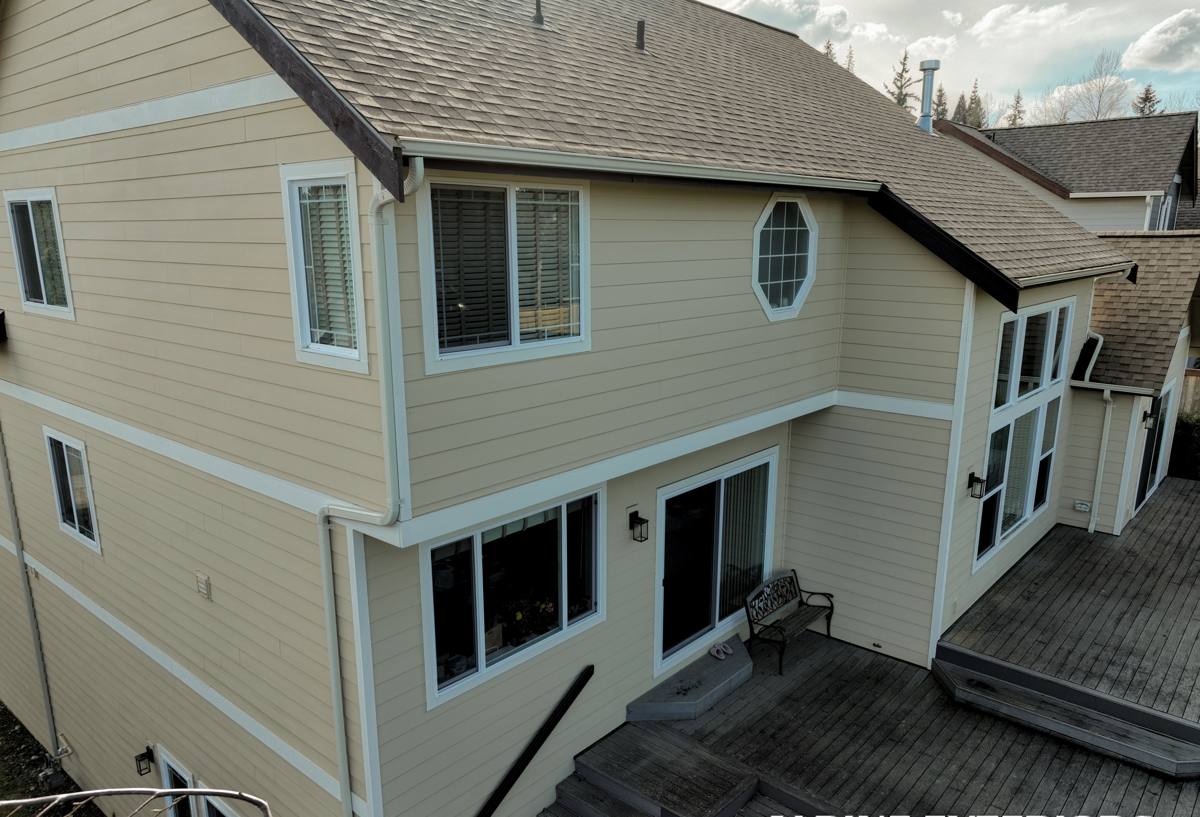
What St. Petersburg's Climate Demands From a New Window
Pinellas County sits on a peninsula, and Kenwood is inland enough to avoid direct storm surge exposure but still fully inside the wind and moisture load that defines Tampa Bay construction. Four things drive every decision on a new-construction window here:
- Hurricane-force wind: Florida Building Code requires windows in this region to meet specific design pressure (DP) ratings, and most of St. Petersburg falls in a wind-borne debris region requiring impact-rated glass or approved shutters at every opening.
- Year-round UV: Florida's sun degrades vinyl, seals, and low-E coatings faster than in milder climates. Cheap glazing packages show yellowing, seal fog, and frame chalking well before their rated lifespan.
- Wind-driven rain: Afternoon thunderstorms and tropical systems push water sideways, not straight down. A window that only sheds water vertically will leak in a Florida storm even if it's brand new.
- Salt air: Kenwood isn't beachfront, but Tampa Bay's salt-laden air still reaches inland neighborhoods and accelerates corrosion on hardware, screws, and untreated metal components over years, not decades.
A window that isn't specified and installed with all four of these in mind will underperform here, regardless of brand name on the label.
Building in a Historic District: Code Compliance Meets Character
Kenwood carries historic designation, and homes here — largely bungalow-era construction from the early 20th century — often sit under some form of architectural review when exterior changes are visible from the street. That typically means window proportions, muntin patterns, sightlines, and sometimes even frame material or color can be subject to a review process before a permit is finalized, in addition to standard building code review.
This isn't a reason to avoid new-construction windows in Kenwood — it's a reason to plan for two approval tracks instead of one. We coordinate submittal materials so the structural and impact-code side (Florida Building Code, wind pressure ratings, egress requirements) and the appearance side (matching sash proportions, grille patterns, and general period massing) get handled together instead of bouncing a project back and forth. If your property is inside a locally designated historic district, confirm current design guidelines with the City of St. Petersburg's planning staff before finalizing window selections — those requirements can be specific and are worth verifying directly rather than assuming.
What This Means in Practice
Modern impact windows can be built with true or simulated divided lites, narrow sightlines, and frame profiles that read as appropriate to a 1920s bungalow from the street, while meeting current wind and impact code inside the frame. You don't have to choose between code compliance and keeping the house looking like it belongs on its block.
What a Correct New-Construction Installation Involves
The window unit itself is only part of the job. Most leaks and failures we get called to diagnose in this climate trace back to installation details, not the product. A correct new-construction install includes:
- Sill pan flashing — a sloped, sealed pan under the opening that directs any water that gets past the window back outside instead of into the wall cavity.
- Weather-resistive barrier integration — the housewrap or building paper is lapped and taped in the correct shingle-style order around the nailing fin so water sheds downward and outward at every layer.
- Correct fastening pattern — nailing fins fastened per the manufacturer's schedule, not "close enough," which matters directly for the window's tested wind rating.
- Sealant at the right layer, not every layer — sealing everything solid can trap water inside the wall. Weep paths and drainage planes need to stay functional.
- Interior and exterior trim and sealant — finished correctly so the assembly performs as a system, not just as a window sitting in a hole.
Skipping or rushing any one of these steps is the difference between a window that performs for decades and one that starts showing staining, soft trim, or drafts within a few storm seasons.
Choosing a Frame Material for This Climate
There's no single "best" window brand — there's a right choice for the exposure, the budget, and (in Kenwood specifically) the appearance requirements. Here's how the common frame materials compare for a Pinellas County coastal-adjacent, historic-adjacent project:
| Frame Material | UV / Sun Performance | Salt Air Resistance | Historic Appearance Fit |
|---|---|---|---|
| Vinyl (impact-rated) | Good with quality compounding; lower-grade vinyl can chalk or warp | Very good — won't corrode | Fair — thicker sightlines unless a high-end profile is used |
| Aluminum | Excellent, doesn't degrade from UV | Needs marine-grade coating/anodizing to resist salt corrosion long-term | Good — narrow sightlines match older sash proportions |
| Fiberglass | Excellent — very stable, minimal expansion/contraction | Excellent | Good — paintable, narrow profiles available |
| Wood / wood-clad | Interior wood needs protection from UV and humidity swings | Requires diligent maintenance near salt air | Excellent — closest match to original bungalow sash, but highest upkeep |
We'll walk through this trade-off with you directly rather than push one material by default. For most Kenwood new-construction and addition projects, we lean toward fiberglass or a quality aluminum-clad option because they hold up to sun and salt with less long-term maintenance than raw wood, while still being available in narrow profiles that respect the neighborhood's architecture.
Our Process for a Kenwood New-Construction Window Job
- On-site assessment and measure — we review the framed openings, wall assembly, and any historic review documentation already in hand.
- Product and DP-rating selection — we spec windows to the wind pressure requirements for your specific lot and elevation, not a generic "hurricane window" catalog pick.
- Permit and design-review coordination — we prepare the documentation needed for both code and, where applicable, historic design review.
- Installation — sill pan, flashing, fastening, and sealant done in the correct order, by the same crew from start to finish on each opening.
- Final inspection and walk-through — we check operation, seals, and trim before we consider the job done, and we're available if anything needs adjustment after the house settles.
What Drives the Cost
Every project is different, but these are the factors that actually move the number on a new-construction window job in this area:
| Factor | Why It Matters |
|---|---|
| Impact rating / DP rating required | Higher wind-pressure zones and impact-rated glass cost more than standard glazing |
| Number and size of openings | Larger openings and more units mean more material and labor per project |
| Frame material | Vinyl is typically the most budget-friendly; wood and high-end aluminum-clad run higher |
| Historic design requirements | Custom grille patterns or matching proportions can add cost over stock configurations |
| Wall and framing condition | Openings that need extra flashing detail or structural correction take more labor |
We give a firm, itemized quote before work starts — no vague allowances that turn into change orders mid-project.
A Checklist Before You Sign Off on Window Selections
- Confirm the required design pressure (DP) rating for your specific address and elevation, not a countywide average.
- Verify impact rating requirements — impact glass versus code-approved shutters — and pick one approach for the whole house.
- If your property is in a locally designated historic district, confirm window appearance requirements with St. Petersburg planning staff before ordering.
- Ask what sill pan and flashing method will be used, and get it in writing.
- Compare frame material trade-offs against your maintenance tolerance, not just upfront price.
- Confirm who pulls the permit and who's responsible for scheduling inspections.
- Get manufacturer warranty terms and installer workmanship warranty as separate, written items.
Why Local Kenwood Experience Matters
New-construction window work in a historic Pinellas County neighborhood isn't the same job as a suburban tract-home install. It means understanding how St. Petersburg's permitting and historic review process actually moves, knowing which window profiles read correctly against 1920s bungalow proportions, and building every opening to hold up against hurricane wind, relentless UV, wind-driven rain, and salt air — not just pass inspection on day one. A crew that has already worked through that combination in Kenwood specifically will move your project through design review, permitting, and installation with far fewer surprises than a crew learning the neighborhood's requirements for the first time on your house.
If you're planning new construction, an addition, or a rebuild in Historic Kenwood, we're glad to walk the site, talk through window options for your specific openings, and give you a free, no-pressure estimate — with no obligation to move forward until you're ready.