 St. Petersburg
 Siding in Gulfport Has to Answer to the Water
Gulfport sits on a peninsula between Boca Ciega Bay and open water, which means almost every home here deals with some combination of salt-laden air, direct sun off the water, and wind that doesn't have much to slow it down before it hits a wall. That combination is harder on exterior siding than most inland Pinellas County neighborhoods ever see. A product that performs fine in a shaded, inland subdivision can fail years early a few miles away in Gulfport, simply because the air itself is more corrosive and the sun is more intense for more months of the year.
This page is about one thing: installing James Hardie fiber cement siding correctly on a Gulfport home. We don't install vinyl, LP SmartSide, or other fiber cement brands — we'll explain why briefly, but the focus here is what a correct Hardie installation looks like in this specific setting and what it takes to get it right.
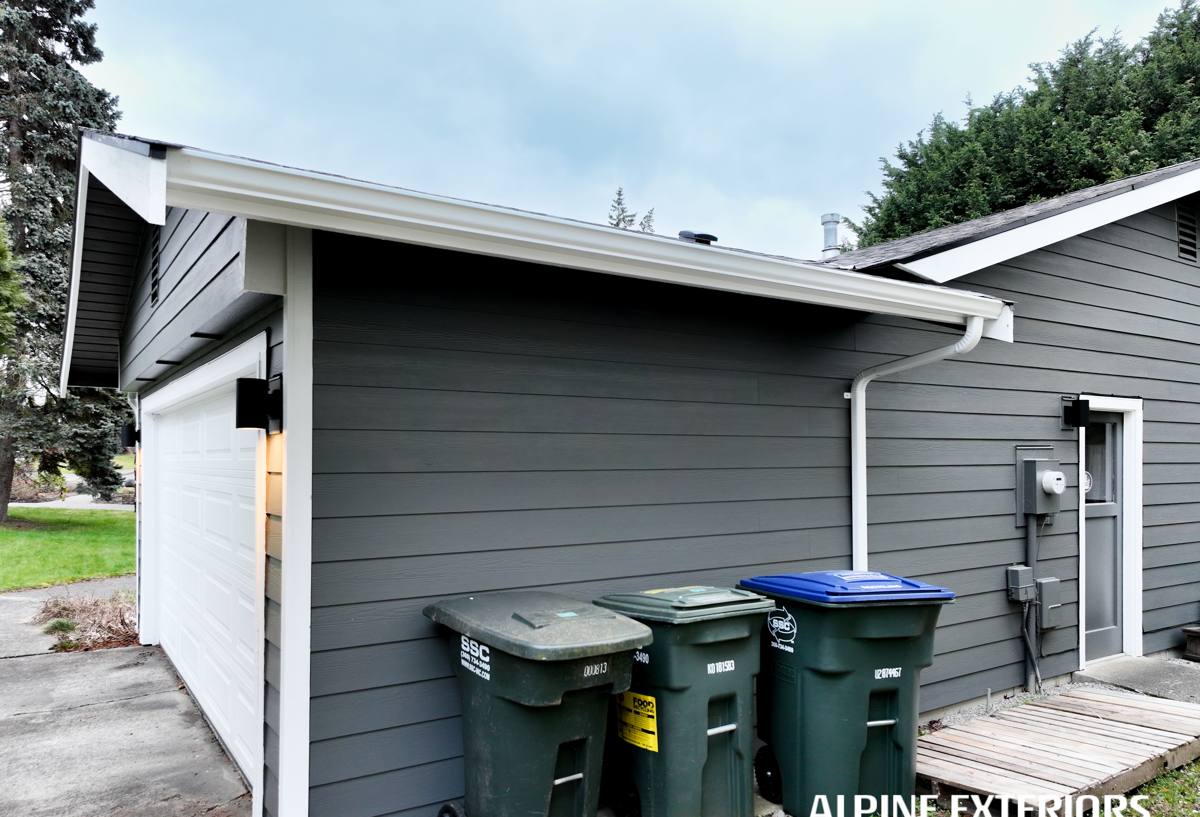
What the Local Climate Actually Does to Siding
It helps to be specific about the stresses involved, because "hurricane zone" gets used as a vague catch-all. In Gulfport, siding is dealing with several distinct mechanisms at once:
- Wind-driven rain: Storms here don't just drop rain straight down — sustained onshore wind pushes water sideways and up under laps, trim, and penetrations that would stay dry in a calmer climate.
- Salt air corrosion: Airborne salt accelerates corrosion of fasteners, flashing, and any metal trim components. It also breaks down some paint and coating systems faster than inland exposure would.
- Sustained hurricane-force wind loads: Beyond the occasional named storm, Gulfport homes face routine seasonal gusts that stress fastening patterns and butt joints over time, not just during the worst events.
- Intense, near year-round UV: Florida's sun angle and clear-sky days mean siding finishes are under nearly constant UV load, which is what drives fading, chalking, and finish breakdown on lower-grade products.
None of these are exotic problems — they're the normal, everyday conditions a Gulfport exterior lives in. The question isn't whether siding will be tested by them, it's whether the product and the installation were built to handle it.
Why We Standardized on James Hardie
We used to get asked about vinyl, LP SmartSide, and other fiber cement brands, and we still get those questions. Here's the honest version of why we stopped installing anything but James Hardie:
Vinyl's problem is heat and wind, not workmanship
Vinyl siding is inexpensive and easy to install, and it's not a bad product everywhere. But it's a petroleum-based material that softens in high heat and becomes brittle with age and UV exposure — both conditions Gulfport has in abundance. It also has lower wind-load ratings than fiber cement in most panel configurations, which matters directly in a hurricane-exposed coastal neighborhood. It's non-combustible in name only compared to Hardie's true fiber cement composition.
LP SmartSide and wood-based products carry moisture risk
LP SmartSide and similar engineered-wood siding products have improved a lot over the years, and treated correctly they can perform well in drier climates. But they're wood-based at their core, which means any sustained moisture intrusion — the kind wind-driven rain is very good at causing — carries a swelling and rot risk that fiber cement simply doesn't have. In a climate where wind-driven rain is a routine event rather than a rare one, we don't think that trade-off is worth it.
Other fiber cement brands vs. James Hardie
Products like Cemplank and Allura are also fiber cement, and fiber cement as a category is the right material family for this climate. Where we draw the line is the finish system and the manufacturer support behind it. Hardie's ColorPlus factory-applied finish is baked on and warranted separately from the substrate, which matters enormously under constant Gulf-side UV. Hardie also engineers specific product lines — its HZ5 line, for example — for high-humidity, high-moisture climates, and backs installations with a strong transferable warranty when installed by a certified contractor to spec. We'd rather install one product system thoroughly and correctly than offer a menu of options we can't stand behind equally.
What a Correct Installation Involves
Fiber cement siding is only as good as the installation underneath it. Most siding failures we're called out to inspect in this area aren't a materials problem — they're a water-management or fastening problem. A correct Gulfport installation includes:
- Weather-resistive barrier and rain screen detailing that gives incidental moisture a way to drain and dry, rather than trapping it against the sheathing.
- Proper flashing at every penetration — windows, doors, hose bibs, vents, and roof-to-wall transitions — since these are where wind-driven rain actually gets in.
- Correct fastener type, spacing, and embedment per Hardie's published installation instructions, sized for the local wind zone rather than a generic minimum.
- Proper clearances from grade, roofing, and decks, so the siding isn't sitting in standing water or wicking moisture from below.
- Factory-cut edges sealed or primed at any field cuts, since exposed raw fiber cement edges are the first place moisture and UV find a weak point.
- Butt joints and seams treated per spec rather than caulked and left — caulk alone is not a long-term water management strategy in this climate.
Skipping any one of these doesn't usually cause an immediate problem. It shows up two, five, or ten years later as a soft spot, a stain, or a section that's failed at the seams — right around the time a homeowner assumed the siding was maintenance-free.
Fiber Cement vs. the Alternatives, Side by Side
| Factor | Vinyl | LP SmartSide | James Hardie Fiber Cement |
|---|---|---|---|
| Core material | PVC (petroleum-based) | Engineered wood | Cement, sand, cellulose fiber |
| Moisture/rot risk | Low rot risk, but can warp | Vulnerable if moisture penetrates coating | Non-combustible, does not rot |
| UV/fade resistance | Fades and chalks over time | Finish wears with UV exposure | ColorPlus factory finish warranted for fade resistance |
| Wind performance | Lower wind-load ratings | Moderate, installation-dependent | High wind-load ratings when installed to spec |
| Salt air behavior | Can become brittle faster near the coast | Coating breakdown risk near salt air | Engineered HZ lines for humid, coastal climates |
| Warranty structure | Varies by manufacturer | Varies by manufacturer | Strong transferable warranty when certified-installed |
Our Process for a Gulfport Project
Every home is different, but the sequence of a proper Hardie installation here follows the same shape:
1. Assessment and measurement
We walk the exterior, check the current siding and sheathing condition, note problem areas — corners, penetrations, low clearances — and measure for material.
2. Removal and substrate check
Old siding comes off and we inspect the sheathing underneath for hidden moisture damage before anything new goes on. This is the step that gets skipped by crews trying to move fast, and it's the one that determines whether the new siding lasts.
3. Weather barrier and flashing
House wrap or building paper goes on correctly lapped, and flashing is installed at every window, door, and penetration before a single piece of siding is hung.
4. Hardie installation to manufacturer spec
Panels or planks are fastened per Hardie's published spacing and embedment requirements, with attention to the local wind zone and coastal fastener corrosion resistance.
5. Trim, caulking, and finish detail
Trim is installed, joints are sealed per spec, and cut edges are treated so no raw fiber cement is left exposed to weather.
6. Final walkthrough
We walk the finished exterior with the homeowner and point out how the water management details work, so there's a clear understanding of what's under the surface.
Why Local Experience in Gulfport Matters
Gulfport isn't a generic St. Petersburg subdivision, and a crew that hasn't worked this specific stretch of the Pinellas County coastline is guessing at things a locally experienced crew already knows — how exposed a given lot is to wind off the water, where wind-driven rain tends to concentrate on a given orientation, and how much UV load a south- or west-facing wall actually takes over a year. That local pattern recognition doesn't replace following Hardie's installation spec, but it does mean fewer surprises and a tighter, more deliberate installation on a home that's genuinely exposed to coastal conditions rather than a textbook "hurricane zone" in the abstract.
What Homeowners Should Check Before Hiring Anyone
- Ask whether the contractor is a certified James Hardie installer, and ask what that certification actually required.
- Ask them to walk through their flashing and water-barrier detailing specifically — not just "we install to code."
- Ask about fastener type and corrosion resistance for a coastal, salt-air environment.
- Ask how they handle field-cut edges and butt joints, since these are the most common long-term failure points.
- Get the warranty terms in writing, including what voids them — improper installation is the most common warranty voider on fiber cement.
If you're weighing siding options for a Gulfport home, we're glad to take a look and talk through what your specific exposure and orientation call for. There's no pressure and no obligation — just a straightforward assessment and an honest recommendation, using the form below to get started.