 St. Petersburg
 Roof Replacement for Coquina Key Homes
Coquina Key sits on filled, canal-laced land on the south side of St. Petersburg, and that setting shapes what a roof out here actually has to survive. Homes along the water get salt-laden air moving across them nearly every day, on top of the same hurricane-season wind loads and relentless UV that every Pinellas County roof deals with. A roof replacement here isn't just "put new shingles on an old house" — it's a chance to correct whatever the original roof got wrong for this specific environment and set the house up for the next 20-30 years.
This page is about roof replacement specifically for Coquina Key properties — what the climate demands, what a correct tear-off and install looks like, and how our process runs from first look to final inspection.
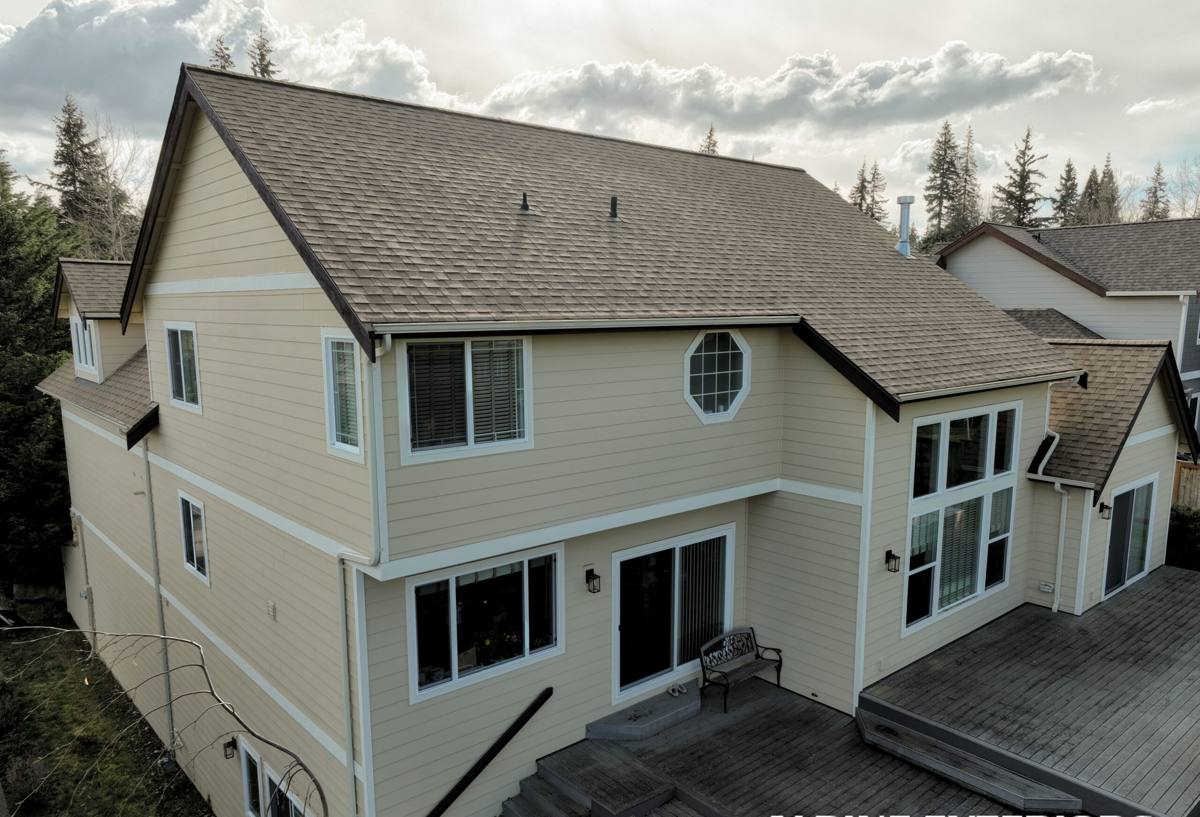
What Makes Coquina Key Roofs Wear Differently
We see a consistent pattern on roofs in and around Coquina Key that doesn't show up the same way further inland:
- Salt air corrosion — exposed metal fasteners, flashing, and vent stacks corrode faster near the water. Roofs with cheap or under-spec metal components fail there first, well before the shingles or membrane are done.
- Wind-driven rain intrusion — Gulf-fed storms don't just drop rain straight down; wind pushes it sideways and up under laps, edges, and penetrations. Underlayment and flashing details matter more here than the shingle brand does.
- UV cycling — Florida sun bakes asphalt shingles and ages sealants year-round, not just in summer. Roofs on south- and west-facing slopes typically show granule loss and brittleness earlier than the north side of the same house.
- Ponding and drainage stress — low-pitch sections common on ranch-style homes in this neighborhood need attention to slope and drainage detail, since standing water accelerates every other problem on this list.
None of this means a roof in Coquina Key is doomed — it means the install has to account for these conditions from the start, not patch around them later.
Roof Replacement vs. Repair: How We Make the Call
We don't push a full replacement when a repair will genuinely hold. But there's a point where repeated repairs cost more than a new roof over a few years, and a point where the roof deck or structure underneath is compromised enough that patching the surface is a waste of money. Signs that usually point to replacement rather than another repair:
- Shingles that are curling, cupping, or missing granules across large areas, not just one storm-damaged section
- Soft spots or visible sagging in the decking when walked, which points to underlying rot
- Repeated leaks in different spots each season, meaning the underlayment system has failed broadly
- A roof at or past the manufacturer's expected service life for this climate — asphalt shingle roofs in coastal Pinellas County often run shorter than their rated life due to UV and salt exposure
- Visible metal corrosion at flashing, valleys, or vent boots
- Interior ceiling stains, especially ones that reappear after "fixing" the same leak more than once
We'll tell you honestly if a repair makes more sense — that's a better long-term relationship with a homeowner than selling a roof that isn't needed yet.
Insurance and Age Considerations
Florida homeowners insurers increasingly factor roof age and material into premiums and renewal decisions. If your Coquina Key roof is approaching or past 15-20 years, a documented replacement with proper permits and a wind-mitigation-eligible install can factor into your insurance standing going forward. We're happy to talk through what documentation you'll want for your carrier, though the coverage decision itself is between you and your insurance agent.
Material Options for a Coastal St. Petersburg Roof
There's no single "right" roofing material for every house — it depends on budget, roof pitch, HOA or aesthetic preferences, and how long you plan to own the home. Here's how the common options stack up for a canal-front, salt-air environment like Coquina Key:
| Material | Typical Lifespan Here | Coastal/Salt Air Notes | Wind Performance |
|---|---|---|---|
| Architectural asphalt shingle | 15-22 years | Good value; UV-rated products and proper ventilation extend life | Good with rated shingle + correct nailing pattern |
| Standing seam metal | 30-50 years | Excellent if fasteners/flashings are coastal-grade; poor-grade metal corrodes fast near salt air | Excellent |
| Tile (concrete or clay) | 30-50 years | Tile itself handles salt air well; underlayment and battens are what fail first | Good when properly fastened; heavy — structure must support it |
| Flat/low-slope membrane (TPO, modified bitumen) | 15-25 years | Common on additions and porches; seam quality is everything near driving rain | Good with correct fastening and edge detail |
We'll walk you through which of these fits your house's structure, pitch, and budget rather than pushing one product across every job.
What a Correct Replacement Involves
A roof replacement is really a system, not a single layer. Skipping or cheapening any one part of the system is where most premature failures near the water start.
1. Tear-Off and Deck Inspection
We remove the old roofing down to the deck and inspect every sheet of plywood or OSB underneath. Any soft, rotted, or delaminated decking gets replaced before anything new goes down — covering over bad decking is one of the most common shortcuts we see on older Coquina Key roofs, and it guarantees an early failure.
2. Underlayment
Given the wind-driven rain this area sees, we use a synthetic or self-adhering underlayment system rated for the exposure, with special attention to laps, valleys, and roof-to-wall transitions.
3. Flashing and Metal Components
All flashing, drip edge, and vent boots get replaced with corrosion-resistant materials — reusing old, salt-pitted metal to save a few dollars is exactly how leaks come back within a year or two on waterfront property.
4. Field Material Installation
Shingles, tile, metal panels, or membrane go down per manufacturer spec and Florida Building Code fastening requirements, not a generic nailing pattern.
5. Ventilation
Proper intake and exhaust ventilation keeps the attic from cooking the underside of the new roof and helps control moisture — both accelerated by year-round Florida heat.
6. Final Inspection and Cleanup
We walk the finished roof, confirm everything meets code, and clear the property of debris and nails before we call the job done.
Permits, Wind Mitigation, and Local Code
Roof replacements in St. Petersburg require a permit through the City of St. Petersburg, and the work has to meet current Florida Building Code wind-resistance requirements for Pinellas County. We pull the permit, schedule the required inspections, and handle the paperwork so you're not chasing city hall in the middle of a roof project.
If you want to pursue a wind mitigation inspection after the new roof is in — which can affect your insurance premium — we install with that documentation in mind (proper nailing patterns, secondary water barrier, approved fastening) so the roof is ready to qualify rather than needing rework later.
Cost Factors for Coquina Key Roof Replacement
We won't quote a number on a page — every roof is different — but these are the factors that actually move the price on a Coquina Key job:
| Factor | Why It Matters |
|---|---|
| Roof size and pitch | More square footage and steeper pitches mean more material and labor time |
| Number of layers being removed | Tear-off of multiple old layers costs more than a single-layer removal |
| Deck condition | Rotted decking discovered during tear-off adds material and labor to replace it properly |
| Material choice | Asphalt shingle, metal, and tile carry very different material and labor costs |
| Roof complexity | Valleys, dormers, skylights, and multiple penetrations add flashing work |
| Access | Waterfront lots with limited driveway or yard access can affect staging and dumpster placement |
We give a written, itemized estimate after an on-site inspection so you know exactly what you're paying for and why — not a vague lump sum.
Preparing for a Roof Replacement: A Homeowner's Checklist
- Move vehicles out of the driveway and clear the area directly around the house
- Take down or secure anything hanging on exterior walls near the roofline (lights, decorations, hose reels)
- Let us know about pool covers or screen enclosures nearby so we can protect them from falling debris
- Plan for noise and foot traffic overhead for the duration of the tear-off and install
- Ask about attic access if you have stored items directly under the roof deck — vibration can shift things
- Confirm with us in advance if you have solar panels, satellite dishes, or other roof-mounted equipment that needs to come off and go back on
Why a Crew That Already Works Coquina Key Matters
A roofing crew that regularly works this neighborhood already knows the drainage patterns on these lots, the corrosion pace on salt-exposed metal, and which flashing and underlayment specs actually hold up on a canal-front house versus one a mile inland. That's not something you get from a general contractor working St. Petersburg as one stop among many spread-out jobs. It shows up in fewer callbacks, fewer surprises during tear-off, and a roof that's built for the conditions it's actually going to face — not a generic spec sheet.
It also means faster response if a storm does damage a roof we installed. A local crew with a track record in this specific area isn't scrambling to find you after a named storm passes through Pinellas County.
Get a Free Estimate
If your Coquina Key roof is showing its age, took storm damage, or you just want an honest read on where it stands, we'll come take a look and give you a straight answer — replacement, repair, or "you've got a few more years." Fill out the form below for a free, no-pressure estimate.