 St. Petersburg
 Why Shore Acres Decks Take More Punishment Than Most
Shore Acres is a waterfront, canal-laced neighborhood in northeast St. Petersburg, and that location is exactly what makes deck repair here different from a typical inland job. Homes along the canals sit in a near-constant flow of brackish, salt-laden air moving off the water. That salt settles into every board, every screw head, and every joint in a deck's frame, and it never really stops working on the material.
Layer on top of that the rest of the Pinellas County climate: hurricane-force wind gusts during storm season that rack deck framing and pry at fasteners, wind-driven rain that gets forced sideways into board gaps and ledger connections most decks were never detailed to handle, and intense, nearly year-round UV that bakes the surface of wood and composite alike. Individually, any one of these would age a deck. Together, in a canal-front setting, they compound. A deck that might get twenty years of quiet service in a drier, inland climate can develop real structural problems in half that time here if it was built or maintained without that combination in mind.
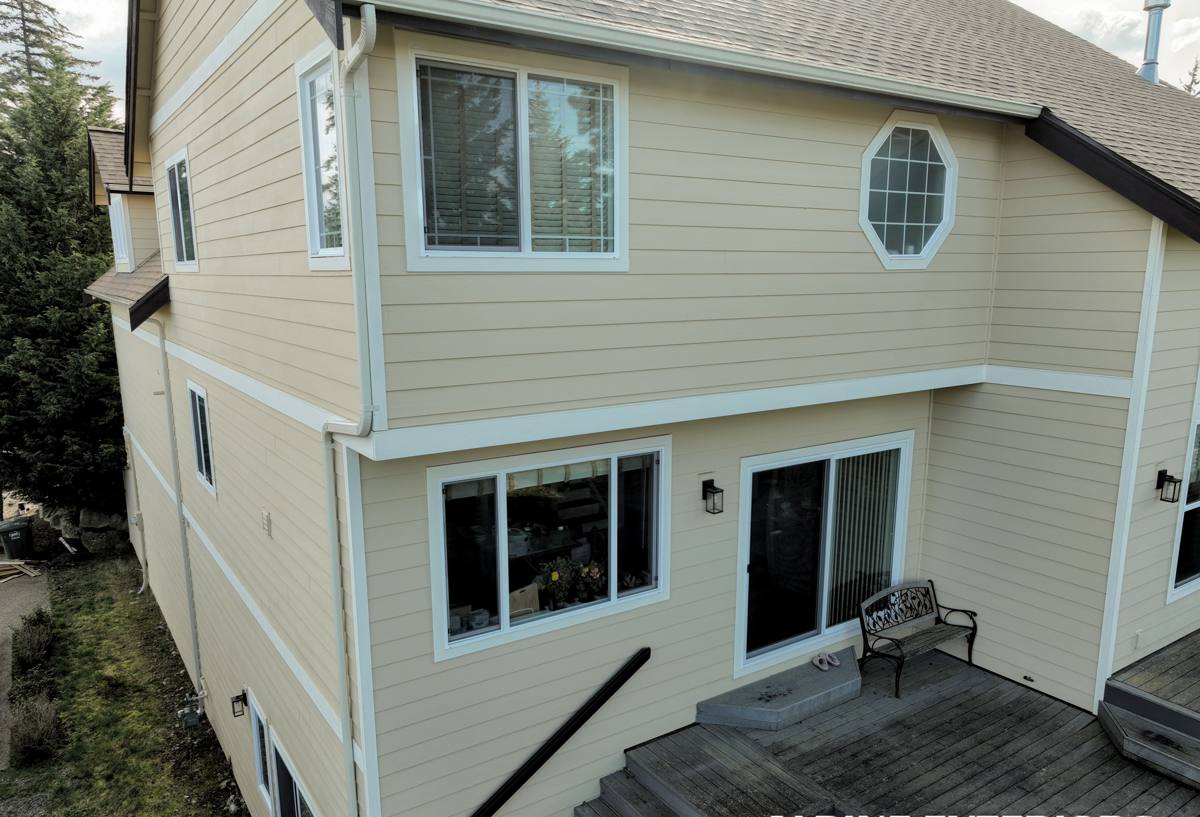
Signs a Shore Acres Deck Needs Repair, Not Just a Cleaning
Pressure washing and re-staining make an old deck look better, but they don't fix what's happening underneath. Before any cosmetic work, we look for the signs that the structure or hardware is actually failing:
- Boards that feel soft, spongy, or bounce underfoot
- Gaps between deck boards that have widened noticeably since installation
- Fastener heads that are rusted, popped up, or stripped out of the wood
- A railing or post that wiggles more than a firm push should allow
- Visible separation, staining, or gapping where the deck's ledger board meets the house
- Stairs that flex or feel different from step to step
- Dark staining, soft wood, or crumbling concrete at the base of support posts
- Boards that have cupped, crowned, or split along the grain
Any one of these can be a minor fix caught early. Left alone in this climate, most of them get worse quickly rather than staying stable.
What a Correct Deck Repair Actually Involves
Structure Comes Before Surface
A repair that only replaces the boards you can see and ignores the framing underneath is a cosmetic fix, not a real repair. Every job should start below the decking, at the joists, beams, and posts, because that's where salt air and moisture do their quiet damage while the top surface still looks presentable.
The Ledger Board and House Connection
The ledger board — where the deck attaches to the house — is the single most important structural connection on most decks, and it's also the one most exposed to wind-driven rain forced against the house during storms. Repairs here need proper flashing, correct fastener spacing, and a hard look at any wood that's been sitting wet against the siding or foundation.
Posts, Footings, and Hardware
In a canal-front, salt-air environment, standard zinc-coated fasteners and hardware corrode faster than they would a few miles inland. A proper repair uses stainless steel or hot-dip galvanized connectors rated for coastal exposure, not whatever matches the existing hardware if that hardware is part of why the repair is needed in the first place.
The Decking Surface
Once the frame and connections are sound, replacing or resurfacing the boards themselves is the most visible — but least complicated — part of the job.
Wood vs. Composite: What It Means for a Repair
What your deck is built from changes both what fails first and what a repair should look like. Here's how the two most common materials in this area typically hold up and repair:
| Factor | Wood Decking | Composite Decking |
|---|---|---|
| Most common failure in salt air | Fastener corrosion, checking, rot at connections | Fastener/board interface wear, fading of capstock |
| UV impact | Graying, surface drying, splitting if unsealed | Gradual fading; better UV resistance overall |
| Repair approach | Board-by-board replacement, sanding, re-sealing | Board replacement matched to existing color run |
| Maintenance after repair | Periodic sealing/staining needed | Cleaning only; no sealing required |
| Underlying frame risk | Frame is also wood — same exposure as decking | Frame is typically still wood — same exposure as decking |
That last row matters more than most homeowners expect: even an all-composite deck surface is almost always built on a wood substructure, so the framing conversation above applies regardless of what the top boards are made of.
Our Deck Repair Process
- On-site inspection. We get underneath the deck, not just look at the surface — checking joists, the ledger connection, post bases, and fastener condition.
- Written assessment. We tell you plainly what's structural and needs attention, what's cosmetic and can wait, and what's borderline.
- Repair plan with real options. Where more than one reasonable approach exists, we explain the trade-offs rather than picking for you.
- Permit check. If the scope involves structural framing, footings, or railings, we confirm what the City of St. Petersburg or Pinellas County requires before work starts.
- Repair execution. Framing and hardware first, decking surface second, done in the correct order so nothing gets covered up before it's verified sound.
- Final check and finishing. Fasteners torqued and inspected, surface sealed or finished as appropriate, and a walkthrough so you know what you're looking at and what to watch for going forward.
Repair or Replace: How We Help You Decide
Not every aging deck needs to come out. But a deck with widespread frame failure is often more expensive to patch piecemeal than to rebuild correctly once. We weigh a few honest factors with you:
| Consider Repair When | Consider Replacement When |
|---|---|
| Damage is isolated to a few boards or one section | Rot or corrosion shows up in multiple structural areas |
| The frame underneath tests solid | Joists, beams, or the ledger connection are compromised |
| The deck is under 10-15 years old | The deck is well past typical service life for its material |
| You want to extend the deck's life a few more years | You're ready to upgrade material or layout anyway |
We won't push a full rebuild when a targeted repair genuinely solves the problem, and we won't recommend patching a deck whose frame is no longer trustworthy.
Permits and Codes That Apply in Shore Acres
Structural deck work — new framing, footings, railing changes, or anything altering the deck's load path — generally requires a permit through the City of St. Petersburg, and inspections follow Florida's coastal wind-load building code requirements. For canal-front and waterfront lots like many in Shore Acres, flood zone designation and elevation requirements can also factor into how a deck or its supports are rebuilt. We handle checking what applies to your specific property before work begins rather than leaving that discovery for after the fact.
Why a Crew That Already Works Shore Acres Matters
Deck repair in a coastal, canal-front neighborhood isn't the same trade as deck repair in a dry inland subdivision, even within the same city. A crew that regularly works Shore Acres has already seen how salt air chews through standard hardware, how wind-driven rain finds its way into a ledger connection that looked fine on the surface, and how quickly untreated wood breaks down in this specific combination of heat, humidity, and salt exposure. That experience shows up in the fastener grades we choose, where we look first during an inspection, and how we sequence a repair so it actually holds up to another storm season rather than needing to be redone in a few years.
Getting More Life Out of a Repaired Deck
A good repair is only half the equation — a little regular attention afterward goes a long way in this climate:
- Rinse salt residue off decking and hardware periodically, especially after storms
- Re-seal or re-stain wood decking on a regular schedule rather than waiting until it looks dry and gray
- Check railings and stair connections for looseness at least once a year
- Keep gutters and downspouts directing water away from the deck's ledger and posts
- Have the underside inspected periodically, since that's where problems start before they're visible from above
If your Shore Acres deck has soft spots, loose railings, rust stains, or you're just not sure what condition it's really in underneath, we're happy to take a look. The estimate is free, there's no pressure to move forward, and you'll get a straight answer about what your deck actually needs — use the form below to get started.