 St. Petersburg
 Roser Park's Older Homes Face a Tougher Climate Test Than Most
Roser Park is one of St. Petersburg's oldest residential neighborhoods, and that history shows up in the housing stock: bungalow and craftsman-style homes with real wood siding underneath decades of paint, patch jobs, and prior repairs. That older construction was never engineered for the climate load Pinellas County puts on exterior walls today. Between the intense year-round UV, the wind-driven rain that comes off the Gulf and Tampa Bay, salt-laden air, and the real risk of hurricane-force wind events, siding on a home like this is doing more work than siding almost anywhere else in the country.
When we go out to Roser Park for a siding estimate, we're not just looking at faded paint. We're looking at how the existing wall assembly has handled thirty, fifty, or more years of that climate, and what it will take to give the next owner of that home a siding system that actually holds up rather than one that just looks good on install day.
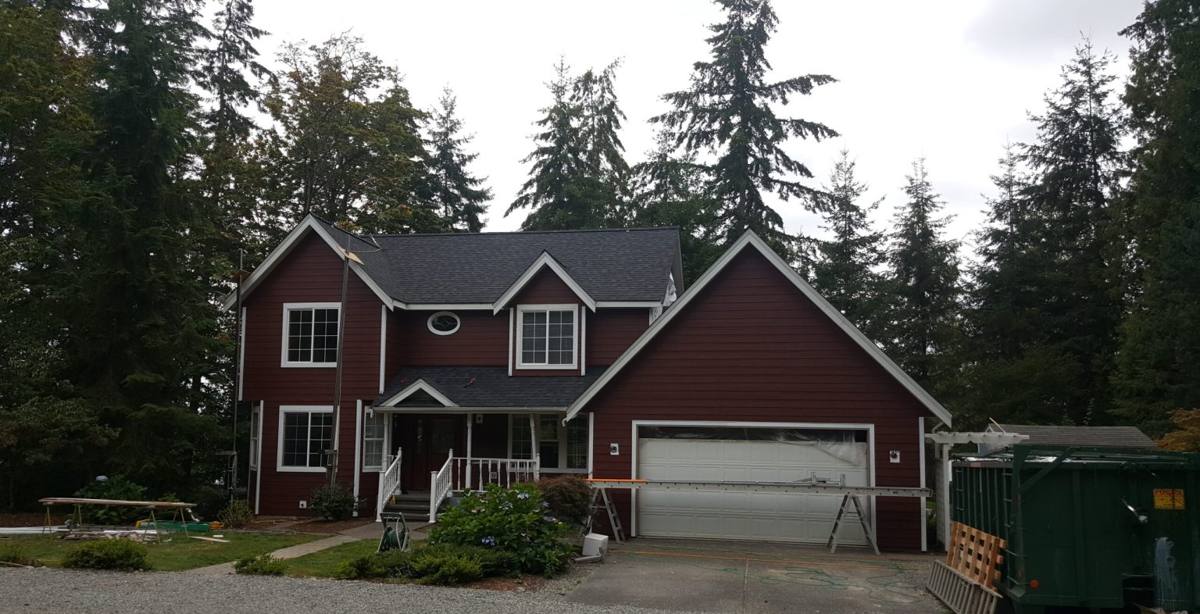
What Florida's Coastal Climate Actually Does to Siding
UV and Heat
St. Petersburg gets some of the most consistent sun exposure of any city in the country. On old wood siding, that UV load bakes out oils and breaks down paint film faster than it does almost anywhere up north, which is why repainting cycles here run shorter and peeling shows up sooner. Any replacement material has to be engineered to hold color and finish integrity under that kind of sustained exposure, not just tolerate an occasional hot summer.
Wind-Driven Rain
Rain in this region rarely falls straight down. Storms push in off the water at an angle, which means rain gets driven sideways into laps, seams, and fastener penetrations — the exact spots where a poorly installed siding system fails first. It's not the material alone that determines whether a wall stays dry; it's whether the water-resistive barrier, flashing, and lap spacing were done correctly underneath it.
Salt Air
Being close to the water means airborne salt settles on exterior surfaces continuously, not just during storms. Salt accelerates corrosion on fasteners and trim hardware and degrades some finishes over time. Materials and fastener specs that work fine inland don't always hold up the same way this close to the coast.
Hurricane Wind Load
Pinellas County sits in an active hurricane corridor, and siding is one of the first things wind gets a grip on during a storm. Fastening pattern, nail penetration depth, and whether the manufacturer's high-wind installation instructions were actually followed matter more here than in almost any other part of the country.
Why We Only Install James Hardie on Homes Like These
James Hardie fiber cement is engineered specifically for climates like ours through its HZ5 product line, which is built for hot, humid, storm-prone regions. It's non-combustible, it doesn't rot or absorb moisture the way wood-based products can, and it holds its factory-applied ColorPlus finish far longer under direct UV exposure than field-applied paint on wood or engineered wood siding. For a historic-character neighborhood like Roser Park, Hardie also comes in lap profiles and trim details that read as traditional wood siding from the street, so homeowners don't have to trade the home's character for durability.
We've made James Hardie the only fiber cement siding we install — not LP SmartSide, not vinyl, not Cemplank or Allura, not primed spruce or cedar. Each of those products has legitimate uses, but for this climate we've settled on one system we trust completely rather than juggling multiple product lines with different moisture behaviors, warranty structures, and installation tolerances. That consistency is also what lets our crews get faster and more precise with every job — they're not relearning a new manufacturer's spec sheet every week.
What a Correct James Hardie Installation Involves
Fiber cement siding is only as good as the assembly behind it. A rushed or generic install can leave a beautiful-looking wall that traps moisture or fails in the first serious wind event. On a Roser Park home, correct installation typically means:
- Removing old siding down to the sheathing to assess for hidden rot or moisture damage before anything new goes up
- Installing a code-compliant water-resistive barrier, lapped and taped correctly at every seam and penetration
- Flashing every window, door, and roof intersection so wind-driven rain can't get behind the cladding
- Following James Hardie's fastening schedule for our wind zone — not a generic pattern from a lower-wind region
- Maintaining correct lap overlap and clearance from grade, decking, and roof lines so water sheds instead of wicking upward
- Caulking and sealing only where the manufacturer specifies, since over-caulking can trap moisture instead of shedding it
- Field-cutting and painting cut edges with the correct sealant so the factory finish isn't compromised at every joint
Every one of those steps is spelled out in James Hardie's published installation instructions, and skipping any of them is what voids a warranty or shortens the real service life of the product — regardless of how good the siding itself is.
Comparing What's Actually on the Table
Homeowners in Roser Park considering a siding replacement usually have a handful of materials in front of them. Here's an honest look at how they compare for this climate:
| Material | Moisture Behavior | UV/Color Retention | Wind Performance | Long-Term Upkeep |
|---|---|---|---|---|
| Vinyl siding | Doesn't rot, but can warp or buckle in extreme heat | Fades and chalks over time | Can crack or blow off in high winds if under-fastened | Low, but not repairable — panels get replaced |
| LP SmartSide / engineered wood | Wood-based core is more moisture-sensitive if seals fail | Relies on field or factory paint; needs maintenance | Good when installed to spec | Moderate — edge sealing and paint upkeep matter |
| Primed spruce / cedar | Natural wood; most vulnerable to rot and pest damage | Needs repainting on a regular cycle | Good if fastened properly, but the material itself is softer | Highest — this is a maintenance-intensive material |
| James Hardie fiber cement | Non-combustible, engineered for moisture resistance, doesn't rot | Factory ColorPlus finish holds up under sustained UV | HZ5 line engineered for high-wind, storm-prone regions | Low — no repainting cycle needed with ColorPlus |
None of these products are "bad." The differences show up over years, not on install day, and that's exactly the timeframe that matters for a home you plan to keep.
How We Approach a Roser Park Project
Every home in this neighborhood has its own quirks — some sit on sloped lots given the area's rolling terrain, some have additions or repairs from different decades, and many have architectural trim details worth preserving. Our process starts with an on-site walkthrough where we look at the existing siding, sheathing condition, trim, and any moisture entry points before we ever quote a number. From there:
- We document existing damage and moisture issues, including anything hidden behind the current siding
- We put together a scope that matches Hardie profiles and trim to the home's existing architectural character
- We handle removal, sheathing repair where needed, and correct water-resistive barrier installation before a single Hardie board goes up
- We install to James Hardie's published spec for our wind zone, not a shortcut version
- We do a final walkthrough with the homeowner before calling the job complete
Because we've worked in St. Petersburg and the surrounding Pinellas County area for a while, we're familiar with the permitting expectations and inspection process for this jurisdiction, which keeps projects moving instead of stalling on paperwork.
What to Ask Before You Hire Anyone for This Job
Siding work is easy to get wrong in ways that don't show up until the next big storm or a few summers of sun exposure. Before hiring a crew for a Roser Park siding job, it's worth asking:
- Are you a certified James Hardie installer, and can you show me the fastening schedule you'll use for this wind zone?
- Will you remove the old siding down to the sheathing, or install over what's already there?
- What water-resistive barrier and flashing details will you use around windows and doors?
- Is the warranty backed by the manufacturer, or just a workmanship guarantee from the crew?
- Can you show me examples of similar older-home siding work you've completed in this area?
If a contractor can't answer these clearly, that's a sign the installation may not hold up the way the product is capable of.
Why Local, Hardie-Focused Experience Matters Here
A crew that already works in Roser Park and the surrounding St. Petersburg neighborhoods knows what this housing stock tends to hide behind the siding, how the local permitting process runs, and how to install to the wind and moisture standards this part of Pinellas County actually requires. Combine that with a crew that installs one product exclusively, and you get a level of consistency and accountability that's hard to match when a company is juggling five different siding brands with five different installation specs.
If you're considering a siding replacement for a home in Roser Park, we're glad to walk the property with you and give you a straightforward, no-pressure estimate — just fill out the form below to get started.