 St. Petersburg
 Metal Roofing Built for Pinellas Point's Exposure
Pinellas Point sits on a peninsula at the southern edge of St. Petersburg, with water on multiple sides and very little standing between these homes and whatever comes off Tampa Bay. That location is part of what makes the neighborhood desirable, and it's also exactly why the roof overhead has to work harder than a roof ten miles inland. Wind exposure is higher here. Salt-laden air moves through constantly, even on calm days. And Florida sun beats down on these roofs 300-plus days a year. Metal roofing, installed correctly, is one of the few systems built to stand up to all three at once — but "installed correctly" is doing a lot of work in that sentence, and it's where most of the difference between a 40-year roof and a 15-year roof gets decided.
This page is specifically about metal roofing for Pinellas Point homes — not a generic overview of metal roofing everywhere. The wind load, fastener detailing, and metal selection that make sense here are shaped by this exact location.
What Pinellas Point's Climate Actually Does to a Roof
Wind
Homes this close to open water see higher sustained wind and sharper gusts than roofs farther inland, both during tropical systems and during the everyday afternoon storms that roll through St. Petersburg all summer. Wind doesn't just push down on a roof — it creates uplift at edges, corners, and ridges, which is exactly where a poorly fastened metal panel or loose piece of trim starts to fail first.
Salt Air
Proximity to the bay means airborne salt is a constant, low-grade factor even without a storm in the forecast. Salt accelerates corrosion on exposed fasteners, cut edges, and any metal or coating that isn't rated for a marine-adjacent environment. It's a slow process, which is exactly why it gets overlooked — the damage shows up years after the install, not the week after.
UV and Heat
Pinellas County gets intense, nearly year-round sun. UV breaks down coatings and sealants over time and drives significant thermal expansion and contraction in metal panels. A roof system that doesn't account for that movement — through proper panel fastening method and trim detailing — will eventually show it in loosened seams, oil-canning, or fastener backout.
Wind-Driven Rain
The bigger risk with any coastal storm usually isn't the wind alone, it's wind-driven rain finding its way in through valleys, penetrations, and edge details that weren't sealed with that scenario in mind. A metal roof can be wind-rated and still leak if the underlayment and flashing weren't installed to handle water moving sideways, not just down.
Choosing a Metal Roofing System for This Neighborhood
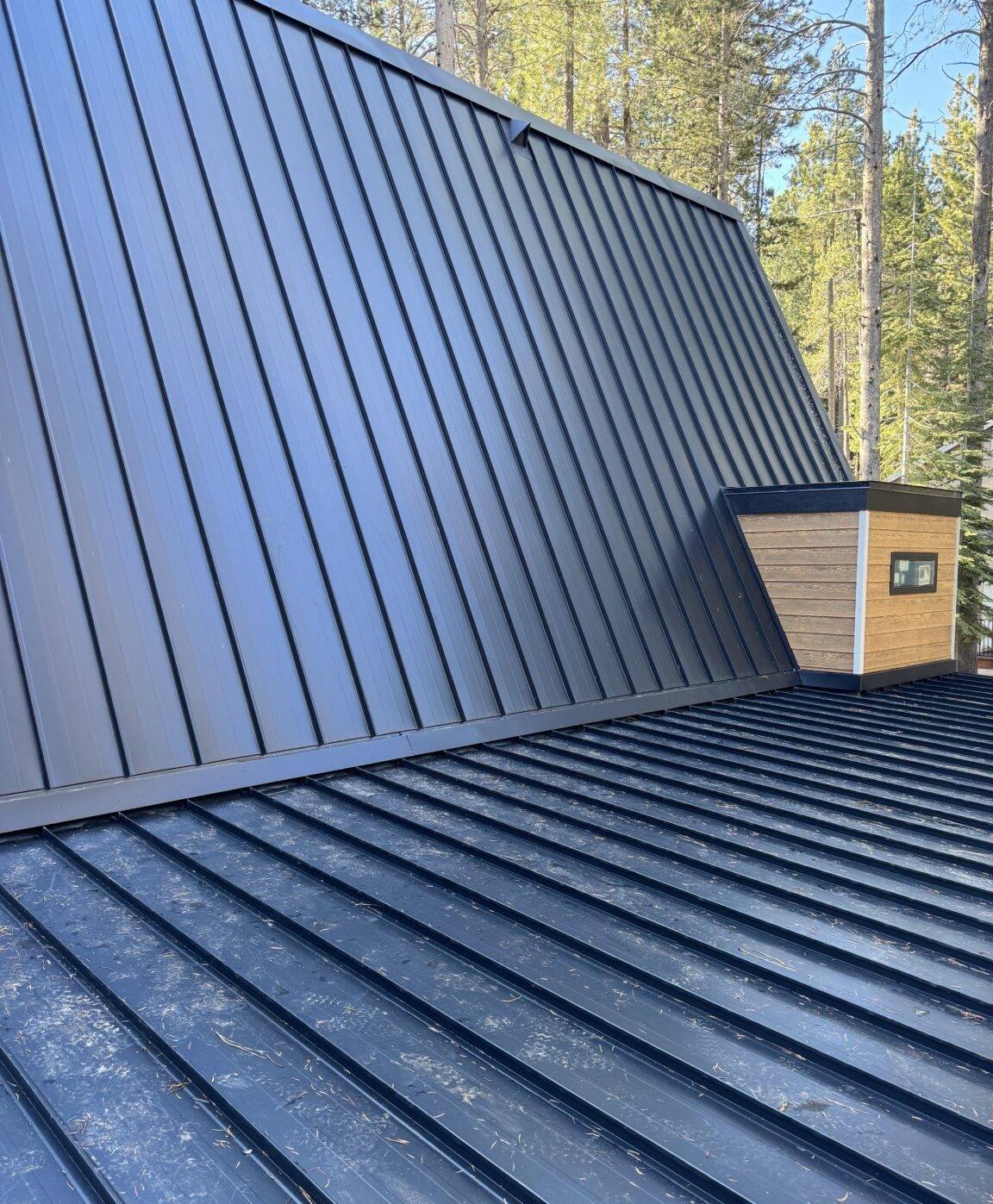
Not every metal roofing product is a good fit for a home exposed to bay-adjacent wind and salt air. We steer Pinellas Point homeowners toward systems and detailing that hold up specifically in this environment, not just metal roofing in general.
| Factor | Standing Seam | Exposed-Fastener Panel |
|---|---|---|
| Fastener exposure | Concealed clips, no exposed penetrations | Fasteners penetrate the panel face |
| Best fit for this area | Strong choice near the bay — fewer points for salt and water intrusion | Workable option, but fastener maintenance matters more here |
| Wind performance | Excellent when clips and seams are correctly installed | Good, but relies on gasketed screws staying tight and sealed |
| Typical upfront cost | Higher material and labor cost | More budget-friendly upfront |
| Long-term maintenance | Lower — fewer exposed components to inspect | Higher — exposed fasteners need periodic checking and occasional replacement |
We don't push one system on every home. A well-installed exposed-fastener roof can perform well in Pinellas Point for years if the homeowner keeps up with fastener inspections. Standing seam simply removes that maintenance item from the list, which matters more on a home taking direct salt exposure than it does further inland.
What a Correct Metal Roof Installation Actually Involves
The panels themselves get most of the attention, but the parts of the job that determine whether the roof survives a Gulf hurricane season are mostly things you'll never see once it's finished.
- Deck inspection and repair before anything goes down — soft or delaminated decking gets replaced, not covered over
- A full underlayment system rated for the fastening method being used, not just a basic felt layer
- Correct fastener type, spacing, and torque for the specific panel profile and the wind zone this home sits in
- Properly lapped and sealed flashing at every valley, wall transition, chimney, and roof penetration
- Edge metal and trim detailed to resist uplift at eaves, rakes, and ridges — the first places wind gets underneath a roof
- Sealants and closures rated for UV and salt exposure, not generic caulk
- Attention to thermal movement — panels fastened in a way that allows expansion and contraction without stressing seams
Skip any one of these and the roof can still look right from the ground for a year or two. The failures that follow — a lifted panel edge, a leak that only shows up during wind-driven rain, rust starting at a fastener head — trace back almost every time to one of these steps being rushed.
How We Approach a Pinellas Point Metal Roofing Project
Inspection and Scope
We start on the roof, not with a sales pitch. That means checking the deck condition, current flashing, ventilation, and any past repair work, and being straight with the homeowner about what the roof actually needs versus what it doesn't.
Material Selection
We walk through panel profile, gauge, and coating options against the home's specific exposure — a roof facing open water gets a different recommendation than one tucked behind other structures, even within the same neighborhood.
Tear-Off and Deck Prep
In almost all cases we recommend a full tear-off rather than installing over an existing roof. It lets us actually see and address deck condition, which matters more here than in drier inland climates where moisture intrusion is less of a risk.
Installation
Underlayment, flashing, and panels go down in that order, with fastener spacing and edge detailing set for local wind requirements — not a one-size-fits-all install method used everywhere else in the state.
Final Walkthrough
We review the finished roof with the homeowner, cover basic maintenance expectations, and make sure any warranty documentation is in hand before we consider the job done.
Permitting and Wind Requirements in Pinellas County
Roofing work in St. Petersburg and Pinellas County is governed by the Florida Building Code's wind and roofing provisions, and a proper metal roof installation here is permitted, inspected, and installed to meet those wind-load requirements — not just "up to code" in a loose sense. This isn't paperwork for its own sake: a roof that's actually fastened and flashed to the standard the permit requires is the same roof that's still on the house after the next named storm rolls through the bay. We handle the permitting process as part of the job, so homeowners aren't left navigating that on their own.
Maintenance That Actually Matters Near the Water
Metal roofing is low-maintenance compared to shingles, but "low" isn't "none," especially this close to Tampa Bay. A short list of habits goes a long way toward hitting the full lifespan of the system:
- Rinse accumulated salt residue off the roof periodically, especially after long dry spells without rain to do it naturally
- Keep gutters and valleys clear so wind-driven rain has a clean path off the roof
- Have exposed fasteners checked every few years if you have an exposed-fastener panel system
- Watch for any coating wear or scratches after tree trimming or other work near the roof, and address bare metal promptly
- After any major wind event, do a visual check for lifted edges, loose trim, or displaced flashing
What Drives the Cost of a Metal Roof in This Area
| Cost Factor | Why It Matters Here |
|---|---|
| Panel system | Standing seam costs more upfront but reduces long-term maintenance in salt air |
| Roof complexity | Valleys, dormers, and multiple pitches add flashing detail and labor time |
| Deck condition | Older homes near the water sometimes need deck repair discovered at tear-off |
| Coating and gauge | Heavier gauge and marine-grade coatings cost more but resist salt corrosion longer |
| Tear-off vs. recover | Full tear-off costs more but is usually the right call for long-term performance |
We give homeowners a real number for their actual roof, not a ballpark that assumes ideal conditions. Every Pinellas Point home is a little different once you're standing on the deck.
Why a Crew That Already Works Pinellas Point Makes a Difference
A metal roof is only as good as the installer's understanding of what the roof will actually face. A crew that already works this part of St. Petersburg knows what bay-adjacent exposure does to fasteners and coatings over time, has already navigated Pinellas County's permitting process for this type of work, and isn't guessing at wind detailing based on a spec sheet written for a different climate. That familiarity shows up in the details you can't see once the roof is finished — the ones that decide whether it's still performing correctly after five hurricane seasons instead of one.
If you're weighing a metal roof for your Pinellas Point home, we're happy to take a look and walk you through what your specific roof needs — no pressure, no hard sell. Use the form below to request a free estimate.