 St. Petersburg
 Kenneth City's Climate Is Hard on Siding — Here's What That Means for Your Home
Kenneth City sits inland from Tampa Bay but still lives under the same Pinellas County weather load as the rest of the St. Petersburg area: long, humid summers, intense UV exposure nearly every day of the year, sudden wind-driven downpours, and the corrosive edge of salt air that reaches well past the immediate coastline on prevailing winds. Add hurricane season, and siding here is doing real structural work, not just cosmetic work. It's the layer standing between your framing and repeated cycles of heat, moisture, and wind pressure.
A lot of siding failure isn't dramatic. It's slow. UV breaks down surface coatings and lets moisture creep behind seams. Humidity keeps wall cavities damp longer after a storm than homeowners realize. Wind uplift finds every fastener that wasn't seated to spec. None of that shows up the first year. It shows up in year six or eight, as buckling, soft spots, or paint that won't hold anymore. Choosing the right material and installing it correctly the first time is what actually prevents that timeline.
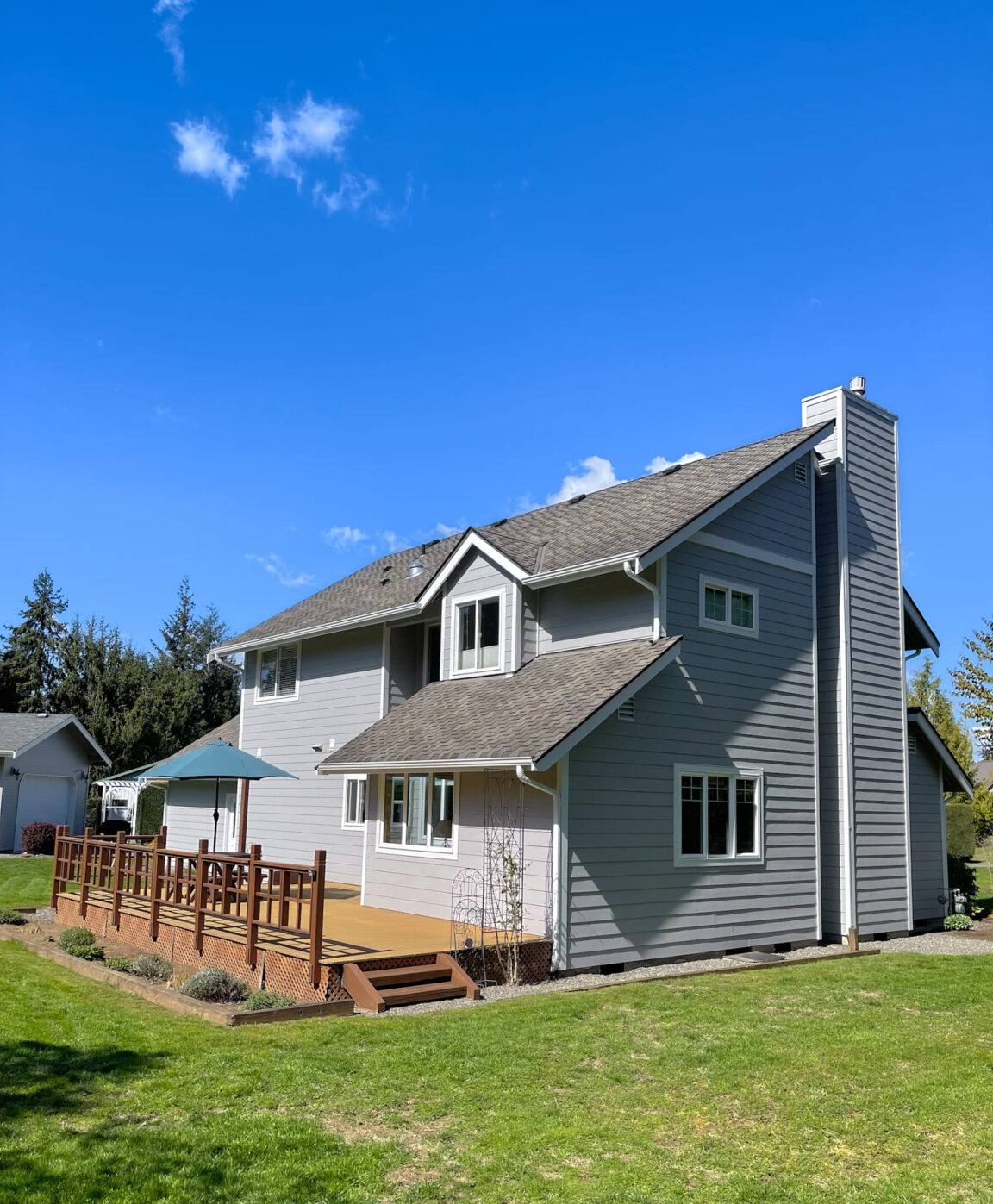
Why We Install Only James Hardie Fiber Cement
We standardized on James Hardie siding because fiber cement handles this specific climate better than the alternatives we used to install. It's non-combustible, which matters in a state where dry lightning season and wildfire risk are real considerations for insurers. It doesn't rot, and it isn't a food source for termites or moisture-loving pests the way wood or wood-based composite products can be. And it's engineered, not just manufactured — Hardie builds regional formulations specifically for humid, storm-prone climates.
HardieZone HZ5: Built for This Region
James Hardie sells different formulations for different climate zones, and Pinellas County falls into their HZ5 engineering zone — the category built for high-humidity, high-moisture-cycling regions like Florida and the Gulf Coast. The HZ5 formulation is designed to resist moisture-related expansion and hold up under the freeze-free but humidity-heavy conditions we get here. It's a meaningfully different product than the HZ10 boards sold in drier northern climates, and installing the wrong zone product is one of the quieter mistakes that shortens a siding job's life.
We don't install LP SmartSide, vinyl, Cemplank, Allura, or primed wood siding. Each of those has legitimate use cases somewhere, but for Kenneth City's combination of UV load, wind-driven rain, and salt air, we've found the trade-offs — moisture sensitivity, field-paint maintenance cycles, impact and fade performance — aren't ones we're willing to put our name behind. Fiber cement, installed correctly, is what we believe holds up best here.
What a Correct James Hardie Installation Actually Involves
Fiber cement siding is only as good as the installation underneath it. The board itself is durable, but Hardie's own warranty and published installation guidelines are specific about water management details that are easy to skip and impossible to see once the siding is up. This is where most of the difference between a job that lasts decades and one that fails early actually happens.
The Details That Matter
- A code-compliant water-resistive barrier installed behind the siding, not reused or patched from a prior layer
- Correct flashing at every window, door, and roofline penetration so wind-driven rain has nowhere to collect
- Proper fastener type, spacing, and depth — over-driven or under-driven nails are one of the most common causes of early Hardie failures
- Manufacturer-specified clearances from the roofline, decks, and grade to keep the bottom edge of the siding from sitting in standing moisture
- Correctly sized and sealed joints and butt seams, caulked with a product rated for the movement fiber cement undergoes with humidity swings
- Confirmation that the HZ5 regional product was actually delivered and installed, not a mismatched zone formulation
Every one of those items is invisible once the job is finished and the paint looks good. That's exactly why they matter — a rushed or unfamiliar crew can hide a lot of shortcuts behind a clean-looking wall.
Common Installation Mistakes vs. Correct Practice
| Detail | Common Shortcut | Correct Approach |
|---|---|---|
| Fastening | Nail gun set too hot, blowing through the board face | Hand-driven or pressure-calibrated fastening to Hardie spec |
| Clearance to grade/roof | Siding installed tight to decks or roofing to save a cut | Manufacturer-required gap maintained on every edge |
| Flashing | Reusing old flashing or skipping kick-out flashing at rooflines | New flashing at every penetration and roof-wall intersection |
| Caulking/joints | General-purpose caulk, inconsistent joint gaps | Manufacturer-rated sealant sized to allow for board movement |
| Product match | Whatever's in stock, regardless of climate zone | HZ5 formulation confirmed for this region |
How Our Process Works
We start with an on-site assessment of the existing siding, sheathing, and any signs of moisture intrusion — that's the only way to know whether we're dealing with a straightforward re-side or whether there's underlying rot or damaged sheathing that needs to be addressed before new siding goes up. Covering a moisture problem with new siding just delays the discovery, it doesn't fix it.
From there we walk through board profile (lap, shingle-style, or panel), color and ColorPlus finish options, and trim details so the finished look matches what you actually want, not just what's easiest to install. Once materials are confirmed and ordered, we handle removal of the old siding, inspection and repair of the sheathing underneath, installation of a new water-resistive barrier, and then the Hardie siding itself — following the flashing, fastening, and clearance details above at every step. We close out with a walkthrough so you can see the finished work and ask questions before we consider the job done.
ColorPlus Factory Finish vs. Field-Applied Paint
One of the most practical advantages of James Hardie siding is the ColorPlus finishing option — a coating baked onto the board at the factory under controlled conditions, rather than painted on-site after installation. In a climate with this much UV exposure, that matters. Factory-applied finishes are more consistent and more UV- and fade-resistant than most field-applied paint jobs, and they come backed by their own finish warranty separate from the substrate warranty. Field painting still has its place for custom colors or touch-ups, but for most Kenneth City homeowners, ColorPlus is the lower-maintenance, longer-lasting choice.
What Drives the Cost of a Hardie Siding Project
Every home is different, so we won't quote a number without seeing the house, but these are the factors that actually move the price up or down:
| Factor | Why It Matters |
|---|---|
| Home size and wall complexity | More corners, dormers, and trim details mean more labor and cut waste |
| Board profile chosen | Lap siding, shingle-style, and panel systems price differently |
| Sheathing condition | Rot or moisture damage found during tear-off adds repair scope before new siding goes up |
| Finish option | ColorPlus factory finish vs. field-primed and painted boards |
| Removal and disposal | Full tear-off of existing siding adds labor and haul-away costs |
| Access and site conditions | Multi-story sections, tight lot lines, and landscaping protection affect labor time |
We'll walk you through where your specific project lands on each of these during the estimate, so you know what you're paying for and why.
Maintaining Hardie Siding in a Salt-Air, High-UV Climate
Fiber cement is low-maintenance compared to wood or vinyl, but "low-maintenance" isn't "no-maintenance," especially this close to the Gulf. A little seasonal attention goes a long way toward getting the full lifespan out of the material and keeping any warranty coverage intact.
- Rinse siding periodically to clear salt residue and airborne grime, especially on sides of the home facing prevailing wind
- Inspect caulking at joints, windows, and trim annually and re-caulk any cracked or shrinking sealant before wet season
- Keep gutters clear so overflow doesn't run down the face of the siding or pool at the base
- Trim back landscaping and irrigation so sprinklers and plant growth aren't keeping siding constantly damp
- After any major windstorm, walk the exterior and check for loose boards, damaged trim, or fresh gaps at flashing points
- Address any paint chipping or color fading early — small finish issues are easy to touch up, exposed substrate isn't
Why Hiring a Crew That Already Works Kenneth City Matters
Siding installation isn't one-size-fits-all, even within Pinellas County. A crew that regularly works Kenneth City and the surrounding St. Petersburg area already knows the practical realities: the wind exposure patterns specific to this part of the county, how humidity affects cure times and scheduling, and what local permitting and inspection expects for exterior work. That familiarity shows up in fewer surprises mid-project and a finished job that's actually built for what this specific climate throws at it — not a generic install pulled from a manual written for a different region.
It also matters for accountability. A crew that plans to keep working in this community has every reason to install it right the first time and stand behind the work afterward, rather than treating your home as a one-off job.
Warranty Protection That Transfers With the Home
James Hardie backs its fiber cement products with a strong, transferable limited warranty when the siding is installed to their specifications — which is exactly why the installation details above aren't optional extras, they're what keeps that warranty valid. A transferable warranty is also a real selling point if you list your home down the road; it tells a future buyer the siding was installed correctly and is still under manufacturer protection, not just "new-looking."
Get a Straightforward Look at Your Options
If your Kenneth City home's siding is aging, showing wear from sun and salt exposure, or you're planning ahead of hurricane season, we're happy to take a look and give you an honest read on condition, options, and cost — no pressure, no sales script. Fill out the form below to schedule a free estimate.