 St. Petersburg
 Euclid-St. Paul's Homes Face a Tougher Climate Than the Siding on Them Was Built For
Euclid-St. Paul is one of St. Petersburg's older, more established residential pockets, and a lot of the exterior cladding on these homes was never engineered for what Pinellas County weather actually delivers year after year. Between hurricane-force wind events, intense year-round UV exposure, wind-driven rain that gets forced sideways into wall assemblies, and the steady presence of salt air this close to Tampa Bay, siding here does real work. It's not just an appearance choice — it's the layer standing between your home's structure and a coastal climate that doesn't let up.
Older siding materials common on homes in this neighborhood — original wood clapboard, aging aluminum, or vinyl installed during a past remodel — tend to show their age the same way: cracking, warping, fading, or letting moisture behind the wall where it can't easily get out. When we go out on estimates in Euclid-St. Paul, we're usually looking at one of those three problems, sometimes all at once. The fix isn't just replacing what's there with something similar. It's putting up a product system actually engineered for this exposure.
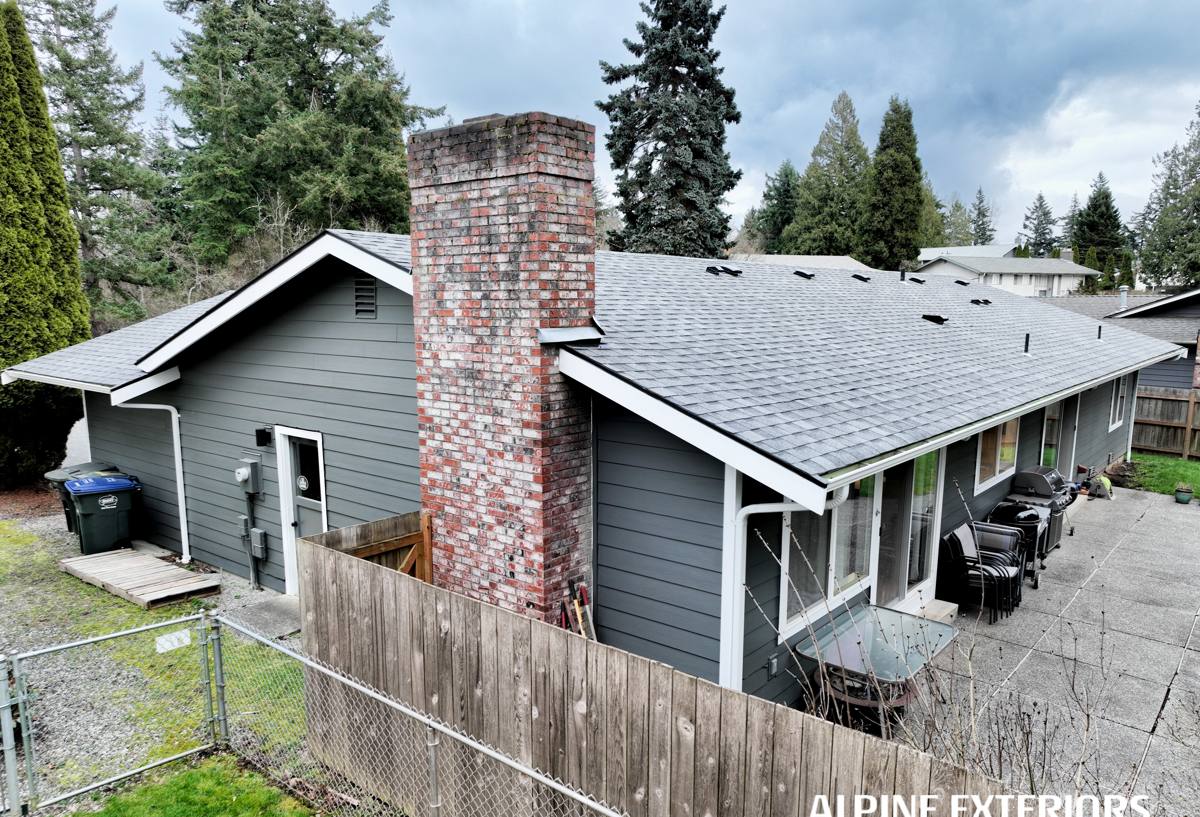
Why We Install Only James Hardie Fiber Cement Siding
We don't install LP SmartSide, vinyl, Cemplank, Allura, primed spruce, or cedar. That's not a marketing position — it's a standard we hold because of what we've seen happen to those products in Gulf Coast conditions over time, and because James Hardie's fiber cement system solves problems the alternatives don't.
Built for Heat, UV, and Moisture
James Hardie fiber cement is a blend of cement, sand, and cellulose fiber, engineered specifically to hold up in high-humidity, high-UV climates. It doesn't warp in heat, it won't rot when it gets wet, and it's non-combustible — a meaningful advantage over wood or engineered wood products that can be vulnerable to moisture intrusion and pest damage over the long run. In a neighborhood where afternoon storms are routine and summer sun is relentless, that stability matters more than it does in a milder climate.
Climate-Engineered Product Lines
James Hardie makes region-specific versions of its siding, and homes in St. Petersburg fall into their HZ5 climate zone engineering — formulated for high-moisture, humid environments like ours, as opposed to the HZ10 formulation built for colder, freeze-thaw regions. That distinction isn't marketing language; the moisture-management performance of the board is tuned to the climate it's installed in, which is exactly why we spec HZ5 product on every Pinellas County job.
ColorPlus Factory Finish
Most Hardie siding we install carries the ColorPlus finish — a baked-on, multi-coat color process applied in a factory-controlled setting rather than a field-painted finish rolled on after installation. It resists fading from constant UV exposure far better than standard field paint, and it comes backed by its own finish warranty separate from the product warranty. For a neighborhood that gets full Florida sun for most of the year, that's the difference between siding that still looks sharp in a decade and siding that needs repainting in three or four years.
What a Correct James Hardie Installation Actually Involves
Fiber cement siding is only as good as the installation behind it. A rushed or improperly detailed job — even with the right material — can trap moisture, void the warranty, or fail at the fastener points during the next big wind event. Here's what we do on every job, not just the parts that show:
- Full removal of old siding and inspection of the sheathing and framing underneath for hidden rot, moisture damage, or pest issues before anything new goes up
- Installation of a code-compliant weather-resistive barrier to manage bulk water and vapor behind the cladding
- Correct fastener type, spacing, and penetration depth per James Hardie's published installation specs — under-driven or over-driven nails are one of the most common causes of premature failure
- Proper clearances at grade, roofline, decks, and other siding-to-trim transitions so water has somewhere to go instead of sitting against the board
- Flashing and sealing at every window, door, and penetration point, since these are the spots where wind-driven rain finds its way in first
- Factory-caulked and touched-up seams using manufacturer-approved sealant compatible with the ColorPlus finish
Skipping any one of these steps doesn't just shorten the lifespan of the siding — it can void the James Hardie product warranty outright, which is supposed to be one of the main reasons a homeowner chooses this system in the first place.
How Hardie Compares to Other Siding Options Homeowners Consider
| Factor | James Hardie Fiber Cement | Vinyl Siding | LP SmartSide / Engineered Wood |
|---|---|---|---|
| Wind resistance | Rated for high-wind installation when installed to spec | Can crack, deform, or blow off in sustained high winds | Adequate but panel edges are more vulnerable to wind-driven moisture |
| UV/fade resistance | ColorPlus finish resists fading for years in direct sun | Fades and can become brittle under prolonged UV exposure | Painted finish fades and needs more frequent repainting |
| Moisture behavior | Non-combustible, engineered for humid/coastal exposure | Doesn't rot, but traps moisture behind it if installed poorly | Wood-based core is vulnerable to swelling and rot if the finish is breached |
| Salt air exposure | Cement composition holds up well near the coast | Can become chalky or discolored over time near salt air | More prone to edge swelling in humid, salt-air conditions |
| Fire performance | Non-combustible material | Combustible, can melt or warp near heat sources | Combustible, wood-based composition |
We're not going to tell you vinyl or engineered wood are bad products in every context — they have a place. But we're not willing to put our name behind an installation in Pinellas County using a material that we think is more likely to give a homeowner problems ten or fifteen years down the road, especially this close to the water.
Our Process, Start to Finish
Every job we run in Euclid-St. Paul follows the same sequence, because consistency is what keeps a fiber cement installation performing the way it's supposed to:
- On-site estimate — we walk the exterior, check current siding condition, look at trim, flashing, and any signs of past moisture intrusion, and give you a straightforward assessment.
- Product and color selection — we go through the relevant James Hardie lines and ColorPlus color options, factoring in your home's style and the neighborhood's general look.
- Tear-off and substrate check — old siding comes off, and we inspect sheathing before anything new is installed. If we find rot or damage, we address it before covering it back up.
- Weather barrier and flashing — the moisture-management layer goes in correctly the first time, since it's invisible once the siding is up.
- Hardie installation — panels or planks go up to manufacturer spec: fastening, clearances, and seams all done per the installation guide, not shortcuts.
- Final detailing and walkthrough — caulking, touch-up, and a final walkthrough with you before we call the job done.
Why It Matters That We Already Work in This Neighborhood
Homes in Euclid-St. Paul share a lot of the same underlying conditions — similar age ranges, similar exposure to storm patterns off the bay, similar sun angles depending on lot orientation. A crew that's already worked multiple jobs in this specific area has a practical head start: we've already dealt with the kind of substrate issues that show up under older siding here, we know what wind and moisture exposure typically looks like on these lots, and we're not guessing at how the neighborhood's older construction responds to a modern fiber cement retrofit.
That familiarity translates into fewer surprises mid-project, more accurate estimates up front, and a finished installation that's actually suited to the house it's on rather than a one-size-fits-all approach.
What Affects the Cost of a James Hardie Job in This Area
| Cost Factor | Why It Matters |
|---|---|
| Home size and wall complexity | More square footage, corners, and trim detail means more material and labor time |
| Current siding condition | Hidden rot or sheathing damage found during tear-off adds repair work before installation can proceed |
| Siding profile selected | Lap siding, shingle-style panels, and board-and-batten each have different material and labor requirements |
| ColorPlus vs. field-painted finish | Factory-applied ColorPlus costs more upfront but reduces repainting needs for years |
| Trim and accessory work | Corner boards, window trim, and fascia work are often bundled with siding replacement for a finished look |
We give real numbers during the on-site estimate rather than a phone quote, because every one of these factors changes based on what we actually find on your specific house.
Keeping Hardie Siding Performing Long-Term
James Hardie siding is low-maintenance compared to wood or vinyl, but "low-maintenance" doesn't mean "no maintenance," especially in a climate that's this hard on exterior surfaces. A few habits go a long way:
- Rinse siding periodically to clear salt residue, pollen, and general grime buildup
- Inspect caulking at windows, doors, and trim joints annually and re-seal if it's cracking or pulling away
- Trim back landscaping that holds moisture against the siding or shades it enough to encourage mildew growth
- Have flashing and butt joints checked after any major storm event, since that's when wind-driven rain finds weaknesses
- Keep an eye on paint or ColorPlus finish condition near ground level, where splashback and sprinklers cause the most wear
If you're in Euclid-St. Paul and dealing with siding that's cracking, fading, or letting water where it shouldn't, we're happy to come take a look and walk you through what a proper James Hardie installation would involve for your specific home. The estimate is free, there's no pressure, and you'll get a straight answer about what your house actually needs.