 St. Petersburg
 Why St. Pete Beach Decks Wear Out Faster Than You'd Expect
A deck a few blocks from the Gulf ages differently than one twenty miles inland, and most homeowners don't realize how much of that difference comes down to location rather than build quality. Salt-laden air corrodes fasteners and hardware from the inside out, often years before the surface boards show real damage. Add in the intense, near-constant Florida UV exposure, wind-driven rain that gets pushed sideways under railings and into ledger connections, and the occasional hurricane-force gust load on a structure that was never engineered for it, and you get a deck that can look fine on top while the framing underneath is quietly failing.
We work in and around St. Petersburg and Pinellas County regularly, and the pattern is consistent: decks near the barrier islands and open water fail at the connection points first — ledger boards, joist hangers, post bases, and railing posts — long before the decking itself is unusable. That's the part a homeowner can't easily see from a lawn chair, and it's exactly why "the boards still look okay" isn't a reliable test for whether a deck is safe.
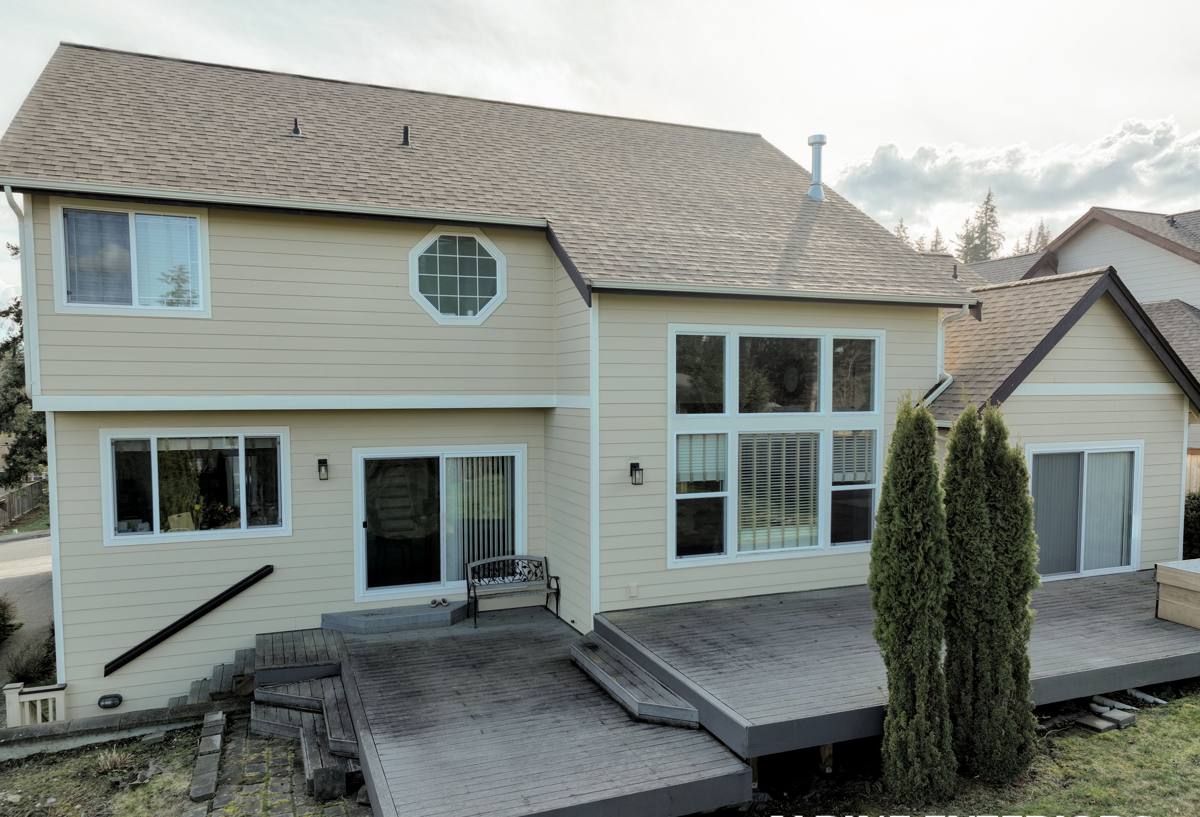
Signs a St. Pete Beach Deck Needs Full Replacement, Not Just Repair
Repair makes sense when the damage is isolated. Replacement makes sense when the problems are systemic — meaning the same failure shows up in multiple places because the whole structure has been exposed to the same conditions for the same number of years. Some signs point clearly toward replacement:
- Rust streaking around multiple fastener heads or joist hangers, not just one or two spots
- Soft, spongy, or springy sections of decking in more than one area
- Visible gaps, splitting, or movement where the ledger board meets the house
- Railing posts that wiggle at the base — often a sign the post anchoring has corroded or rotted
- A deck built before current wind-load and connector requirements, especially older wood-frame decks that predate stricter post-storm code updates
- Persistent cupping, graying, or splintering across most of the decking surface despite regular upkeep
If only one or two boards are affected and the frame underneath tests solid, targeted repair is the honest recommendation — we're not going to sell a full tear-off when it isn't needed. But when the fasteners, framing, and surface are all showing age together, patch repairs just delay a bigger problem and keep costing money along the way.
What a Correct Deck Replacement Actually Involves
Starting Below the Surface
The visible decking is the easy part. A replacement done right starts with the substructure: footings, posts, beams, joists, and the ledger connection to the house. In a coastal environment, every one of those components needs to be sized and fastened for both structural load and long-term corrosion resistance — not just whichever hardware happens to be on the shelf.
Fasteners and Hardware
This is where a lot of premature deck failure in Pinellas County actually starts. Standard galvanized hardware can corrode faster than expected within a mile or two of the water. We spec stainless steel or heavy-duty coated fasteners and connectors rated for coastal exposure on every replacement, because replacing a $4 joist hanger later means tearing into finished decking to get at it — it's far cheaper to get it right the first time.
Ledger Attachment
The ledger board — where the deck ties into the house — is the single most common failure point in deck collapses nationally, and wind-driven rain in this region makes proper flashing at that connection non-negotiable. Correct flashing keeps water from tracking behind the ledger and rotting the rim joist it's bolted to.
Wind and Uplift Considerations
Railings, post bases, and joist connections all need hardware rated to resist uplift and lateral load, not just vertical weight. This matters more here than in most of the country, and it's a detail that's easy to skip if a crew is used to building for a calmer climate.
Comparing Decking Materials for a Coastal Pinellas Home
There's no single "best" decking material — the right choice depends on budget, how close the home is to open water, and how much maintenance the homeowner actually wants to do. Here's how the common options hold up under St. Pete Beach conditions specifically:
| Material | Salt Air / UV Resistance | Maintenance | Typical Lifespan Here |
|---|---|---|---|
| Pressure-treated wood | Moderate — needs consistent sealing to hold up | Annual cleaning and resealing | 10-15 years with upkeep |
| Composite decking | Good — resists rot and salt corrosion well | Periodic washing, no sealing/staining | 20-25+ years |
| PVC/capped decking | Very good — fully synthetic, no wood fibers to absorb moisture | Low — occasional washing | 25+ years |
| Tropical hardwoods (e.g., ipe) | Good if maintained — naturally dense | Oiling every 1-2 years to prevent graying/checking | 20-30 years with upkeep |
We'll walk through the real trade-offs for your specific situation rather than steering everyone toward the same product. Wood costs less up front but asks for more of your time over the years. Composite and PVC cost more initially but largely remove maintenance from the equation, which matters if the property is a rental, a second home, or simply not something you want to spend weekends sealing.
Our Process, Start to Finish
- On-site assessment: We inspect the existing structure, note fastener and framing condition, and check for any rot or corrosion that isn't visible from the surface.
- Honest scope and estimate: You get a written estimate that separates structural work from surface finish work, so you can see exactly what you're paying for.
- Permitting: We handle the permit application and coordinate required inspections with the applicable local building department.
- Demolition and disposal: Old decking and framing are removed and hauled off — we don't leave debris behind for the homeowner to deal with.
- Framing and structural rebuild: New footings, posts, beams, and joists go in to current code, with coastal-rated hardware throughout.
- Decking, railing, and stairs: Surface material is installed per manufacturer spec, including proper spacing for drainage and expansion.
- Final inspection and walkthrough: We confirm the work passes inspection and walk the finished deck with you before calling the job done.
Permits and Code Requirements in Pinellas County
Deck replacement in St. Petersburg and throughout Pinellas County generally requires a permit, since it involves structural work and often affects setbacks, railing height, and stair geometry. Skipping the permit process might feel faster, but it creates real problems later — unpermitted structural work can complicate a home sale, void insurance claims after storm damage, and in some cases require the deck to be torn out and redone to pass inspection retroactively. We pull permits as a standard part of every replacement, not an upsell, because it protects you as the homeowner as much as it protects us.
Coastal construction here also means accounting for flood zone requirements where applicable, since parts of St. Pete Beach and the surrounding barrier islands fall within designated flood zones that can affect how a deck is anchored and elevated relative to grade.
Maintaining a New Deck in a Salt-Air Environment
Even the best-built deck benefits from a little seasonal attention, especially this close to the Gulf. A simple maintenance routine goes a long way toward hitting the full expected lifespan of whatever material you choose:
- Rinse salt residue off decking and railings periodically, especially after storms or high-wind days
- Check fastener heads and hardware annually for early rust or corrosion signs
- Keep gutters and downspouts clear so runoff doesn't pool against ledger or post connections
- Reseal or oil wood and hardwood decking on the manufacturer-recommended schedule — don't wait until it looks gray
- Inspect railing posts for looseness before hosting anyone on the deck, particularly before hurricane season
- Trim back vegetation that traps moisture against framing or the underside of the deck
None of this takes much time, but skipping it is exactly how a well-built deck ends up needing early repairs anyway.
Why a Crew That Already Works St. Pete Beach Matters
Building a deck for this specific stretch of coastline isn't the same job as building one in a subdivision thirty miles from the water. A crew that regularly works St. Pete Beach and the surrounding barrier islands already knows which fastener grades hold up, which ledger details keep wind-driven rain out, and which local permitting requirements apply without having to learn it on your project. That familiarity shows up in fewer callbacks and a structure that's actually built for the environment it's sitting in, not a generic spec sheet.
It also means we're not guessing at flood zone or setback questions specific to the barrier islands — we've already been through that process with other homes nearby, and we bring that experience to your estimate and your build.
Get a Straight Answer on Your Deck
If your deck is showing its age, or you're just not sure whether repair or full replacement makes more sense, we're happy to come take a look. There's no pressure and no sales script — just an honest assessment and a written estimate you can think over. Fill out the form below to schedule a free, no-obligation estimate for your St. Pete Beach property.