 St. Petersburg
 Building Decks for Snell Isle's Waterfront Conditions
Snell Isle sits close to the water, and that proximity shapes almost every decision that goes into a deck built to last there. Homes on or near the canals and open water in this part of St. Petersburg deal with a different set of stresses than a deck built ten miles inland: salt-laden air that accelerates corrosion, direct sun exposure with little tree cover on many waterfront lots, wind-driven rain that gets pushed sideways into structures, and the periodic threat of hurricane-force wind loads. A deck built with generic, big-box specifications might look fine for a season or two, but the combination of salt, sun, and storms in this Pinellas County neighborhood tends to expose weak points fast — corroding hardware, cupping boards, and soft framing.
This page covers what actually goes into building or replacing a deck for a Snell Isle property: the materials that hold up, the structural details that matter most near the water, the permitting realities in St. Petersburg, and what our process looks like from first visit to final walkthrough.
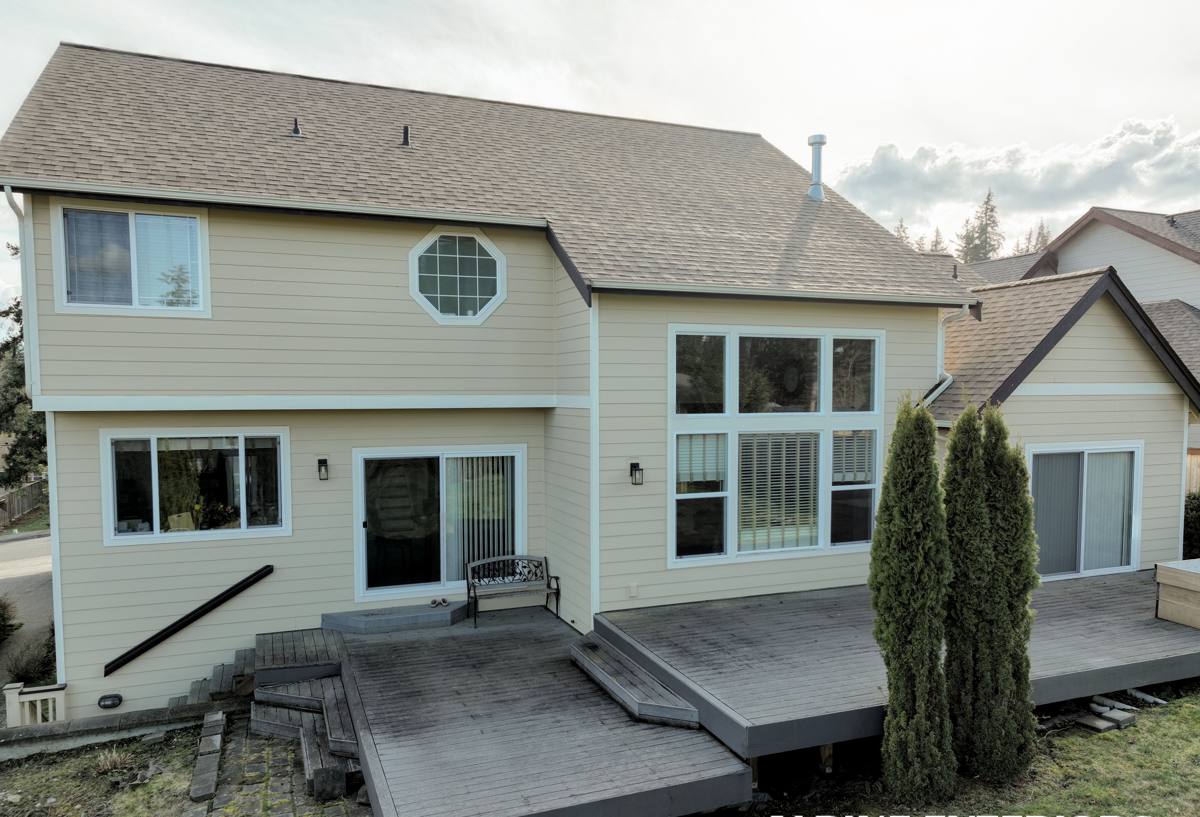
What Waterfront Living Does to a Deck
Salt Air and Fastener Corrosion
Salt air doesn't just affect decks built right on a seawall — it travels inland and settles on any exposed surface, including deck fasteners, brackets, and connectors. Standard galvanized hardware can start showing rust streaks within a couple of years in this environment. Once a fastener corrodes, it loses holding strength long before it looks obviously bad, which is why the hardware spec matters as much as the decking material itself.
Sun Exposure and Board Movement
Florida sun is intense year-round, and waterfront lots often have less shade than inland properties. Constant UV exposure dries out wood fibers, fades color unevenly, and accelerates the expansion-and-contraction cycle that loosens fasteners over time. Composite and PVC products handle UV better than wood, but even those need the right formulation and installation gaps to avoid warping in sustained heat.
Wind-Driven Rain and Substructure Rot
Rain in this area rarely falls straight down — wind pushes it sideways and up under railings, through gaps, and against ledger boards. If flashing, fasteners, and framing aren't detailed correctly, water finds its way into the substructure where it causes rot that's invisible from the top of the deck until boards start to feel soft or spongy.
Choosing the Right Decking Material for a Snell Isle Home
There's no single "best" decking material — the right choice depends on budget, maintenance tolerance, and how close the home sits to open water. Here's an honest comparison of the main options we install:
| Material | Salt Air Resistance | Maintenance | Relative Cost |
|---|---|---|---|
| Pressure-treated wood | Fair — needs sealing to slow corrosion of fasteners and moisture uptake | Annual cleaning and resealing | $ |
| Tropical hardwood (e.g., ipe) | Good — naturally dense and rot-resistant | Periodic oiling to maintain color; low structural upkeep | $$$ |
| Composite decking | Very good — doesn't rot or corrode itself, but hardware still needs to be rated for coastal use | Low — occasional washing | $$ |
| PVC decking | Excellent — fully synthetic, no organic material to break down | Very low — washing only | $$$ |
We don't push one product line over another as a matter of policy. Instead, we walk through the trade-offs honestly: wood costs less upfront but demands consistent maintenance to hold up in salt air; composite and PVC cost more initially but reduce the recurring labor and material costs of sealing and staining. For a home that sits directly on the water, we generally steer clients away from lower-grade pressure-treated lumber as a primary decking surface, not because it's a bad product in general, but because the maintenance schedule required to keep it performing near open water is more demanding than most owners want to keep up with.
Railings and Fasteners Matter as Much as the Boards
A deck is only as good as the hardware holding it together. For Snell Isle projects we specify stainless steel or coated fasteners rated for coastal/marine exposure, not standard interior-grade hardware. The same goes for railing systems — aluminum and certain composite railing systems tend to outperform painted wood railings in salt air, since painted wood requires repainting on a cycle to keep corrosion and rot from starting at scratches and joints.
Framing and Structural Considerations Near the Water
Footings and Elevation
Soil conditions and groundwater levels near the water can affect how footings are sized and set. We evaluate the specific lot rather than assuming a one-size-fits-all footing depth, since properties closer to canals or open water sometimes need different footing approaches than a similar deck built further inland.
Ledger Attachment
The ledger board — where the deck attaches to the house — is one of the most common failure points on any deck, and it's especially critical here because wind-driven rain constantly tests the flashing and seal at that joint. We flash and fasten ledger connections to shed water away from the house structure, not just meet a minimum code requirement.
Wind Load and Bracing
Given the hurricane-force wind exposure that comes with living in this part of Florida, we brace and connect deck framing with wind uplift in mind — proper joist hangers, hurricane ties where appropriate, and lateral bracing sized for the structure, not just whatever the minimum lumber count would technically pass inspection.
Permitting and Code Requirements in St. Petersburg
Deck construction in St. Petersburg and unincorporated Pinellas County generally requires a building permit, and waterfront or near-waterfront properties can carry additional review depending on flood zone designation and setback rules. Permit requirements and flood zone maps are set by the City of St. Petersburg and Pinellas County, and they can vary lot to lot even within the same neighborhood, so we pull the specifics for each property rather than assuming what applied to a neighboring house also applies to yours.
Skipping the permit process might seem like a shortcut, but an unpermitted deck can create real problems at resale, with insurance claims, or if the structure is ever damaged in a storm and needs to be rebuilt. We handle the permit application and inspection scheduling as part of the job, not as an optional add-on.
Our Deck Building Process
- Site visit and assessment — we look at the existing structure (if replacing a deck), soil and drainage conditions, sun exposure, and proximity to water.
- Design and material selection — we walk through decking, railing, and hardware options with honest cost and maintenance trade-offs for your specific lot.
- Permitting — we prepare and submit the permit application with the City of St. Petersburg or Pinellas County as applicable, and schedule required inspections.
- Construction — framing, ledger attachment, footings, decking, and railing installed in sequence, with coastal-rated fasteners and hardware throughout.
- Final walkthrough — we go over the finished deck with you, including a maintenance schedule specific to the materials you chose.
Maintenance That Actually Matters in This Climate
Every deck, regardless of material, needs some level of upkeep near the water. The schedule differs by material, but a few habits apply across the board:
- Rinse salt residue and debris off the deck surface periodically, especially after storms with onshore wind.
- Check railing posts and fastener heads for early rust spotting — it's easier to address a handful of fasteners early than to replace a section of railing later.
- Keep gaps between boards clear of leaves and debris so water can drain instead of pooling.
- Reseal or oil wood decking on the schedule recommended for the specific product — don't wait until graying or cracking is visible.
- Inspect under-deck framing and ledger flashing once a year for signs of moisture intrusion.
- After any major storm, walk the deck and check fastener tightness and footing stability before resuming normal use.
Why Hire a Crew That Already Works in Snell Isle
Building a deck that holds up near the water in Pinellas County isn't the same job as building one in a landlocked subdivision. A crew that already works in Snell Isle has seen firsthand how salt air corrodes the wrong hardware, how wind-driven rain finds gaps in a poorly detailed ledger, and how intense year-round UV changes which decking products are actually worth the extra cost. That familiarity shows up in the small decisions — which fasteners to spec, how deep to set footings, how to detail flashing — that don't show up on a spec sheet but determine whether a deck is still solid in ten years or needs major repairs in three.
We're not interested in cutting corners to hit a lower bid, and we're upfront when a cheaper material or shortcut isn't going to hold up in this environment. If you're planning a new deck or need to replace one that's showing its age, we're happy to take a look and put together a straightforward, no-pressure estimate — just fill out the form below.