 St. Petersburg
 Composite Decking Built for Bartlett Park's Coastal Climate
Bartlett Park is one of St. Petersburg's older, close-in neighborhoods, and like most of the city's established residential streets, it sees the full range of what a Gulf Coast climate can do to an outdoor structure. Intense UV exposure runs almost year-round here. Afternoon storms bring heavy, wind-driven rain for months at a stretch. Hurricane season adds sustained high winds and gusts that test every fastener and connection point on a deck. And because we're only a few miles from Tampa Bay, salt-laden air is a constant, low-grade corrosive force on anything metal. None of that is unique to Bartlett Park, but it's exactly the combination that determines whether a deck lasts eight years or twenty-five.
Composite decking has become the default choice for homeowners in this part of Pinellas County for good reason — it's engineered to resist the specific stresses this climate throws at it. But "composite" isn't one product, and installing it well isn't optional. This page covers what a Bartlett Park home actually needs from a composite deck, what goes into doing the job correctly, and how we approach the work from first estimate to final walkthrough.
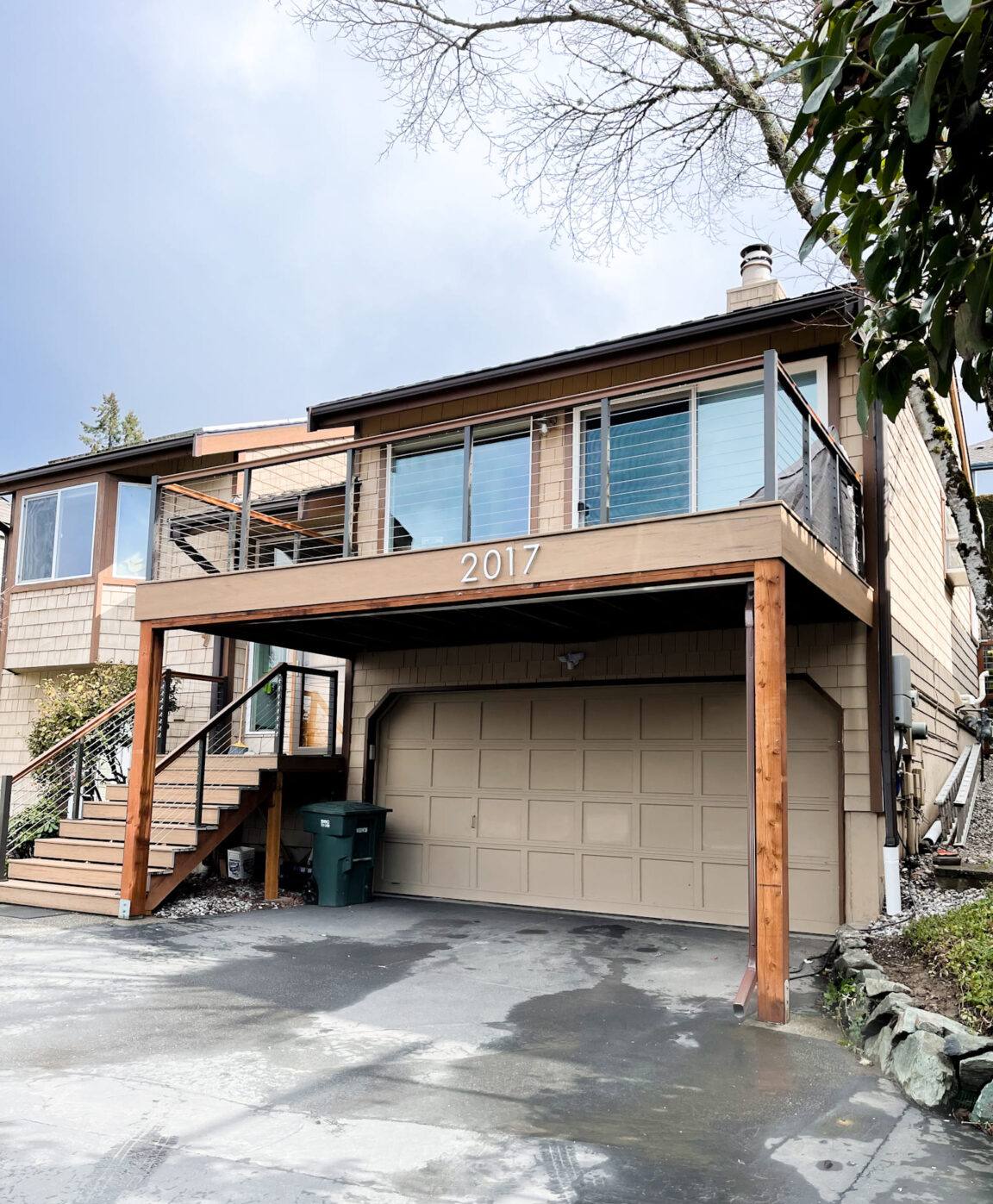
What Bartlett Park Homes Need From a Deck
Sun, Humidity, and Storm Exposure Add Up
A deck in this neighborhood isn't judged by how it looks the first summer — it's judged by how it holds up after five or ten summers of sun, sudden downpours, and the occasional tropical system. Boards that fade unevenly, warp at the edges, or trap moisture underneath will show it fast in St. Petersburg's climate. The structural framing underneath matters just as much as the decking surface on top; a beautiful composite board fastened to an undersized or poorly flashed substructure will still fail early.
Older Homes, Newer Expectations
Like many of St. Petersburg's older in-town neighborhoods, Bartlett Park has a mix of housing ages and styles. Ledger board connections on older homes need to be evaluated individually — older framing, siding, and sheathing don't always match what current code and manufacturer specs assume for a new ledger attachment. We don't treat every house the same way just because the deck design looks similar; the connection to your home is inspected and built to what your house actually is, not what a generic plan assumes.
Composite vs. Wood: Why We Steer Most Bartlett Park Clients Toward Composite
We still build with pressure-treated wood when a client prefers it or when a project calls for it, but for most Bartlett Park homeowners, composite makes more sense once you weigh the full ownership cost against this climate. Here's an honest comparison of the trade-offs, not a sales pitch:
| Factor | Composite Decking | Pressure-Treated Wood |
|---|---|---|
| Upfront material cost | Higher | Lower |
| Annual maintenance | Occasional cleaning | Sealing/staining every 1-2 years in this climate |
| UV fade resistance | Engineered cap resists fading | Grays and weathers without upkeep |
| Moisture/humidity behavior | Won't rot, minimal swelling | Prone to rot, cupping, splintering |
| Salt air exposure | No corrosion of the board itself | Wood is stable; fasteners still need corrosion-resistant hardware |
| Typical lifespan here | 25+ years with basic care | 10-15 years with regular maintenance |
| Long-term cost | Lower over deck's lifetime | Higher once repeated maintenance is factored in |
Wood isn't a bad product — it's a maintenance commitment. If you're the type of homeowner who will actually strip, sand, and reseal a deck every one to two years, wood can perform fine here. Most homeowners don't keep up with that schedule, and that's when wood decks in this climate start showing rot at the ledger, splitting boards, and popped fasteners well before their time.
What a Correctly Installed Composite Deck Involves
Substructure First
The framing underneath a composite deck carries the same structural requirements as any deck, regardless of what material sits on top. Joist spacing, beam sizing, and post footings all need to be sized for the actual span and load, not just "what the last deck had." In a coastal climate, we also pay close attention to using fasteners and structural connectors rated for corrosion resistance — standard hardware degrades faster here than it does inland.
Ledger Attachment and Flashing
Where the deck meets your house is the single most common failure point on any deck, composite or wood. Proper flashing keeps wind-driven rain from working its way behind the ledger board and into your home's rim joist or wall framing. This is a detail that's invisible once the deck is finished, which is exactly why it's the detail that gets skipped on rushed jobs — and the one that causes the most expensive repairs years later.
Fastening and Board Layout
Most quality composite systems use a hidden fastener clip system rather than face-screwing through the board, which gives a cleaner surface and reduces the number of penetration points where water could otherwise sit. Board layout also needs to account for thermal expansion — composite material expands and contracts with heat more than most homeowners expect, and gaps that are too tight will buckle in a Florida summer.
Drainage and Ventilation
Standing water and trapped humidity under a deck cause problems long before they're visible on the surface. Proper spacing between boards, correct slope away from the house, and adequate airflow underneath the structure all matter more here than in a drier climate, because Pinellas County humidity gives moisture far more time to do damage before it evaporates.
Our Process, Start to Finish
1. On-Site Estimate
We look at your existing structure (if there is one), the condition of your home's framing at the attachment point, your yard's drainage, and what you actually want to use the space for. You get a written estimate, not a verbal ballpark.
2. Design and Material Selection
We walk through composite board options, color and cap styles, railing choices, and layout — with straight talk about which choices hold up best under Florida sun and which are more about appearance.
3. Permitting
Decking work typically requires a permit through the City of St. Petersburg, and we handle that process rather than leaving it to you.
4. Construction
Demolition of any existing structure (if applicable), footings and framing, ledger flashing, decking installation, and railing — built in that order, with inspections at the required stages.
5. Final Walkthrough
We go over the finished deck with you, cover basic care, and make sure everything meets both code and what was in the original estimate before we consider the job done.
Caring for Composite Decking in Pinellas County's Climate
Composite decking is low-maintenance, not no-maintenance. A little routine care goes a long way toward hitting the full lifespan of the material in this climate:
- Sweep or rinse off debris, pollen, and salt residue regularly, especially after storms
- Wash the surface with mild soap and water a few times a year to prevent mildew buildup in humid months
- Keep planters, grills, and furniture feet from trapping moisture against the board surface
- Check railing connections and fasteners after major storms or high-wind events
- Clear leaves and debris from between boards and from underneath the deck to maintain airflow
- Avoid pressure-washing at high pressure directly into board seams, which can force water into the substructure
Permits and Codes in St. Petersburg
New decks and significant deck replacements in the City of St. Petersburg generally require a building permit and inspections, particularly where the structure attaches to the house or exceeds certain height thresholds. Requirements can vary based on your specific lot and the scope of work. We pull the necessary permits as part of the job and coordinate inspections so you're not left figuring out city requirements on your own.
Why Hire a Crew That Already Works Bartlett Park
A contractor who already works in and around this part of St. Petersburg has a working sense of what the housing stock in these older neighborhoods looks like underneath the surface, what the city's permitting process actually requires, and how this specific stretch of coastline treats an outdoor structure over time. That's different from a crew that installs decks broadly across the region without that local repetition. We're not asking you to take our word for how this climate behaves — we're describing the same wind, sun, humidity, and salt exposure that every deck we build in this area has to stand up to.
If you're weighing a new composite deck in Bartlett Park or need an honest opinion on what's underneath an existing one, we're happy to take a look. Reach out for a free, no-pressure estimate using the form below.