 St. Petersburg
 Siding Repair in Childs Park: What This Climate Does to a Home's Exterior
Childs Park is an established St. Petersburg neighborhood, and like the rest of Pinellas County, it sits in one of the most weather-stressed climates in the continental United States for exterior building materials. Hurricane-force wind events, near-constant UV exposure, wind-driven rain that gets pushed sideways into wall assemblies, and a steady dose of salt air off the surrounding water all work on a home's siding at the same time, year after year. None of these forces are dramatic on their own in any given week. The damage shows up slowly, as a soft spot near a window, a seam that's opened up, or a section of siding that's started to bow.
Siding repair done right in this environment isn't just about matching a patch to what's already on the wall. It's about understanding why that section failed in the first place, so the repair doesn't just fail again in two or three years. That's the standard we hold every repair to, whether it's a single damaged panel or a full wall section after a storm.
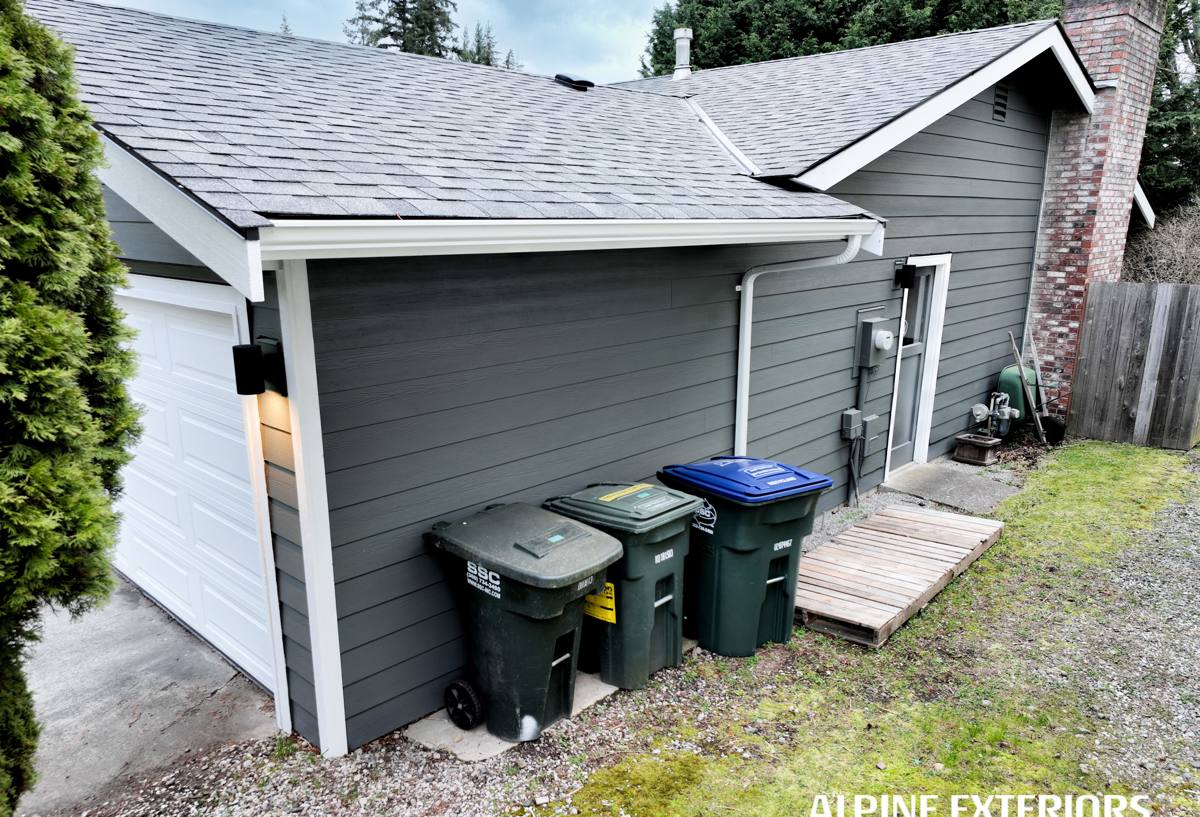
Signs a Childs Park Home Needs Siding Repair
Most siding problems in this area start small and get worse with each rainy season and each named storm that passes near the coast. Homeowners who catch the early signs save themselves a much bigger repair later.
- Soft, spongy, or crumbling areas when you press on the siding, especially near the bottom courses or under windows
- Visible cracking, splitting, or buckling, often where fasteners were driven too tight or panels weren't given room to move
- Gaps or separation at seams and corners that let wind-driven rain track behind the siding
- Peeling, chalking, or fading paint that suggests the factory or field finish has broken down early
- Staining or streaking below joints, which usually means water is getting behind the siding rather than shedding off it
- Visible impact damage from storm debris, ladders, lawn equipment, or falling branches
- Warping or rippling, which on some materials is a sign of moisture absorption into the substrate itself
Any one of these on its own might be a simple, contained repair. Several of them together, especially clustered on one elevation, usually points to a bigger moisture problem behind the siding that needs to be found before the new material goes up.
Why Damage Clusters on Certain Walls
In St. Petersburg, the wall that takes the worst beating is usually whichever elevation faces the prevailing wind and gets the most direct exposure during storms. That same wall also tends to get the most afternoon sun, which accelerates finish breakdown on top of the physical wear from wind and rain. A repair crew that's worked Pinellas County homes for a while can usually spot this pattern on sight, because it repeats across the neighborhood.
What a Correct Siding Repair Job Actually Involves
A siding repair that's done to hold up in this climate is not a quick swap of one damaged piece for a new one. It's a small construction project with the same fundamentals as a full install, just scaled to the affected area.
Diagnosing the Cause, Not Just the Symptom
Before any siding comes off, the damaged area gets inspected to understand why it failed. Was it a flashing detail that let water in above a window? A seam that wasn't caulked or was caulked with the wrong product? Trim that trapped moisture against the wall instead of directing it away? Skipping this step is the single most common reason a "repaired" section fails again within a couple of years — the new siding goes back up over the same unresolved problem.
Checking What's Behind the Siding
Once the damaged panels are removed, the underlying water-resistive barrier, sheathing, and framing get checked for hidden moisture damage. In a humid coastal climate, water that's been getting behind siding for a season or two can soften sheathing or start rot in framing members long before it's visible from outside. Repairs go back on top of solid, dry substrate — never over a compromised wall assembly.
Matching and Reinstalling
New material gets cut, flashed, and fastened to the same specifications as a full installation — correct fastener spacing, proper clearances at the bottom of the wall and around penetrations, and joints treated the way the manufacturer specifies, not just caulked over and painted. Color and profile are matched as closely as possible to the existing siding so the repair blends in rather than standing out as an obvious patch.
Repair vs. Replacement: How We Help You Decide
Not every damaged section needs a full re-side, but sometimes a repair is a temporary fix for a problem that's really wall-wide. Here's how we weigh it.
| Factor | What It Tells Us |
|---|---|
| Extent of damage | Isolated impact or a single failed seam usually repairs cleanly; damage spread across an elevation often points to a systemic moisture or install issue |
| Age and condition of remaining siding | Siding well past its practical service life may not be worth patching if the rest of the wall is close behind it |
| Evidence of trapped moisture | Soft sheathing or framing found during the repair changes the scope, since the wall assembly needs to be corrected, not just the surface |
| Color and material match | Older siding that's faded or been discontinued may not match a small patch well, which affects whether a partial repair looks acceptable |
| Accessibility | Height, roof lines, and obstructions around the damaged area affect scope and how the work is sequenced |
We walk through this with the homeowner directly, in plain terms, before any work starts — including telling you honestly when a repair is the right call and when it isn't.
Why We Repair With James Hardie Fiber Cement
We install and repair with James Hardie fiber cement exclusively. We don't install vinyl siding, LP SmartSide, Cemplank, Allura, or primed wood products like spruce or cedar, and that standard applies to repair work too. Vinyl expands, contracts, and can warp or crack under intense heat and impact, and it's difficult to color-match once it's faded. Wood-based and engineered wood products are more sensitive to sustained moisture exposure, which is a real liability in a climate with this much humidity and wind-driven rain. We'd rather explain that trade-off honestly than install something we don't think holds up here.
James Hardie's fiber cement is non-combustible, holds up to UV exposure without the chalking and fading that shortens the look of other sidings, and is engineered specifically for high-humidity, high-moisture climates through its HZ10 product line — built for exactly the coastal Gulf conditions Childs Park sits in. The factory-applied ColorPlus finish is baked on under controlled conditions, which gives it better long-term color retention than field-applied paint, and makes color-matching a repair patch to existing siding far more consistent.
Matching Existing Hardie Siding
If your home already has James Hardie siding, repairs are usually the most straightforward, since we're working within the same product system and can match profile and finish closely. If your home has a different material and you're dealing with recurring damage, a repair may be a good moment to talk about whether it's worth converting that wall, or the whole home, to Hardie over time rather than continuing to patch a product that keeps failing in this climate.
Our Repair Process, Start to Finish
- On-site inspection of the damaged area and a check of surrounding sections for related wear
- Diagnosis of the underlying cause — flashing, sealant failure, impact, or finish breakdown
- A clear, plain-language explanation of what's needed and what it involves before any work begins
- Removal of damaged siding and inspection of the water-resistive barrier and substrate underneath
- Repair or correction of any underlying issue found, not just the visible siding
- Installation of new, matched material to manufacturer specifications
- Final walkthrough so you can see the completed work and ask questions before we consider the job done
Why a Crew That Already Works Childs Park Matters
Siding repair isn't a one-size-fits-all job. A crew that regularly works St. Petersburg and the surrounding Pinellas County neighborhoods has already seen how homes of different ages and construction types in this area tend to fail, which shortens diagnosis time and reduces guesswork. That familiarity also means we're used to navigating local permitting requirements for exterior work, and we're not learning the region's climate demands on your home — we're applying what we already know works here.
There's also a practical side to hiring local: a crew based in and around St. Petersburg can respond faster after a storm event, follow up more easily if a question comes up after the job, and has a reputation in the community worth protecting. That's a different relationship than a contractor who drives in from out of the area for one job and doesn't come back.
Protecting Your Repair Going Forward
A correctly done repair should hold up for the long term, but a few simple habits help it — and the rest of your siding — last longer in this climate.
- Rinse siding periodically to clear salt residue, especially on walls exposed to prevailing coastal winds
- Keep an eye on caulking and sealant at trim, seams, and penetrations, since these are the first points of failure
- Trim back vegetation and irrigation spray that keeps siding wet longer than it should be
- Walk the exterior after major storms and look for new impact damage or lifted sections
- Address small issues promptly — a small repair now is almost always cheaper and simpler than what it becomes after another storm season
If you're seeing damage, staining, or wear on your Childs Park home's siding, we're happy to take a look and give you an honest read on what it needs. Reach out for a free, no-pressure estimate — there's a form right below to get started.