 St. Petersburg
 Board & Batten Siding in a Historic St. Petersburg Neighborhood
Historic Old Southeast is one of St. Petersburg's older residential districts, built up in the early-to-mid 20th century with bungalow, Craftsman, and Mediterranean Revival homes on tree-lined streets close to Tampa Bay. Board and batten siding shows up throughout the neighborhood — sometimes as the full exterior on a cottage or garage-conversion, more often as an accent on a gable end, dormer, or addition next to lap siding or stucco. It's a look that fits the neighborhood's architectural character, but it only holds up long-term if it's built with the right material and installed correctly for this climate.
We're a local crew that works this neighborhood regularly. We know the mix of original wood-sided homes, additions, and later remodels that make up Old Southeast, and we install one material for board and batten work: James Hardie fiber cement. This page covers what board and batten siding needs to survive here, how we approach the job, and why the neighborhood's age and location make product choice and installation quality matter more than they might elsewhere.
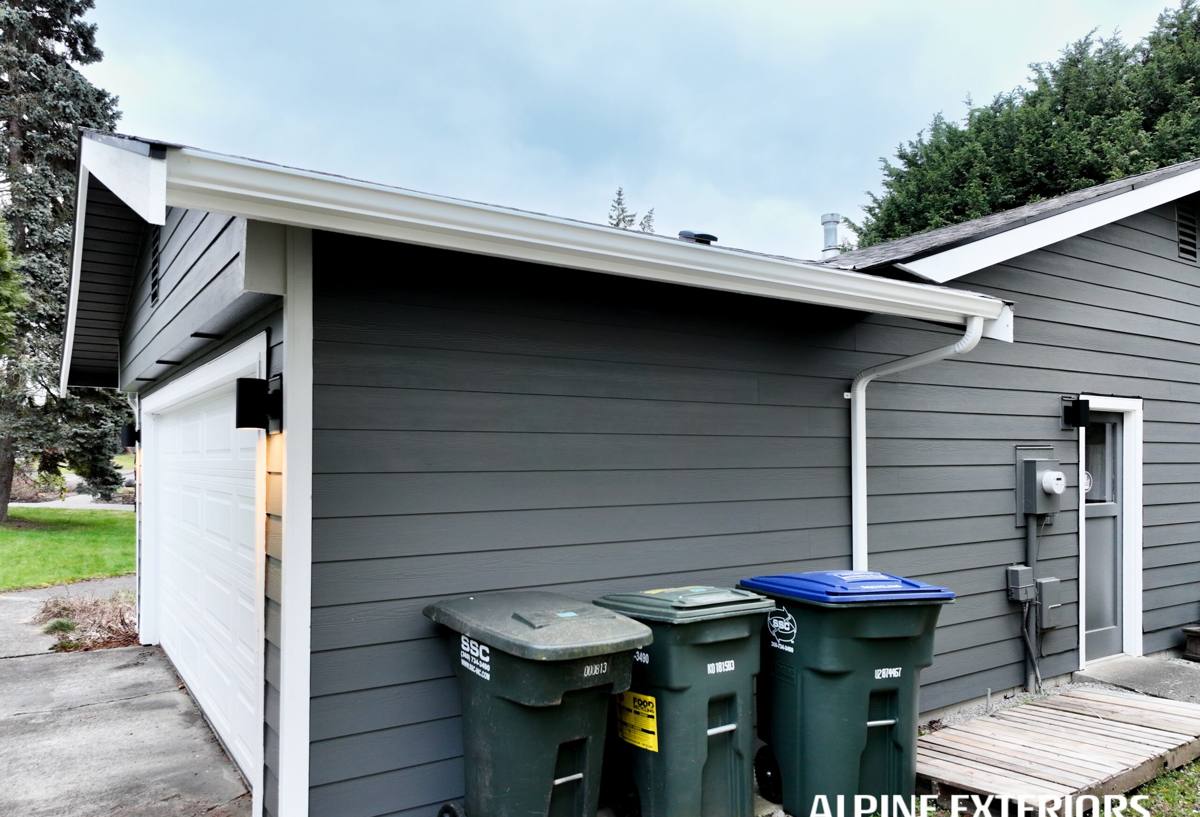
Why Old Southeast's Setting Is Hard on Vertical Siding
Board and batten siding has more seams than lap siding — every board edge and every batten strip is a potential water entry point if it isn't detailed correctly. That makes the assembly more sensitive to the conditions Pinellas County throws at it:
- Hurricane-force wind: Vertical boards and battens have to be fastened into structural framing with enough holding power to resist uplift and lateral wind loads, not just tacked to sheathing.
- Wind-driven rain: St. Petersburg storms don't just fall straight down — rain gets pushed sideways into every batten joint and board edge. Flashing and water-resistive barrier detailing behind the siding matter as much as the siding itself.
- Year-round UV: Intense Florida sun bakes painted wood and breaks down cheaper coatings, leading to fading, chalking, and cracked paint film on anything that isn't factory-finished for UV exposure.
- Salt air: Old Southeast sits close enough to Tampa Bay that salt-laden air is a constant factor, accelerating corrosion on fasteners and trim and degrading materials that aren't rated for coastal exposure.
Original wood board and batten on the neighborhood's older homes was built for a different era of paint technology and a different (often less developed) waterfront exposure. When that siding fails today — cupping, rot at board bottoms, paint that won't hold — it's usually the combination of these four factors working on a material that wasn't engineered to resist them.
What a Correct Board & Batten Installation Actually Involves
Fastening into framing, not just sheathing
Vertical board and batten siding needs to be fastened at proper stud or furring-strip locations with corrosion-resistant fasteners driven to manufacturer spacing. On a house with hurricane wind exposure, fastener pattern is a structural decision, not a cosmetic one.
Water management behind the boards
Every board and batten wall needs a drainage plane — a properly lapped water-resistive barrier, correctly integrated flashing at window and door openings, and a rainscreen gap where the product calls for one. This is the part of the job nobody sees once it's finished, and it's the part that determines whether the wall stays dry for 30 years or starts rotting from behind in five.
Batten spacing and board width matched to the product
Board and batten systems are engineered around specific board widths, batten widths, and gap tolerances. Installing outside those specs — batten spacing too wide, boards not seated against the substrate correctly — creates stress points that show up as cracking or separation once the boards go through a few seasons of humidity swings and temperature cycling.
Trim and joint detailing at transitions
Old Southeast homes often mix board and batten with lap siding, stucco, or brick on the same elevation. Getting the transitions right — proper trim, correct caulking that won't fail in three summers of UV, kickout flashing at roof-wall intersections — is where a lot of otherwise-decent siding jobs go wrong.
Why We Install Only James Hardie for This Application
Board and batten siding fails, when it fails, mostly at the seams — boards cupping, edges rotting, paint losing adhesion at joints exposed to sun and wind-driven rain. That's exactly the failure pattern this climate is built to cause, which is why we don't offer board and batten in wood, primed spruce, or vinyl. We install James Hardie fiber cement board and batten systems exclusively, for reasons specific to this application:
- Non-combustible material that doesn't rot, delaminate, or attract termites the way wood board and batten can.
- ColorPlus factory-applied finish baked on and UV-cured at the factory, holding color and film integrity far longer than field-applied paint on wood boards exposed to Florida sun.
- HZ5 climate-engineered formulation built for high-humidity, high-moisture-exposure regions like the Gulf Coast — this isn't a generic product pulled from a colder-climate lineup.
- Dimensional stability that resists the swelling, cupping, and joint movement wood board and batten is prone to as humidity and temperature swing through the year.
- A strong transferable warranty backed by a manufacturer with decades of Florida-specific performance data, not a shorter or more limited warranty structure typical of lower-cost alternatives.
We're honest that Hardie board and batten costs more up front than wood or vinyl alternatives. For a neighborhood like Old Southeast, where homes are often maintained with an eye toward preserving character rather than replacing it every decade, we think that cost is the right trade for a material that won't need repainting, patching, or premature replacement.
Board & Batten Material Comparison
| Factor | Wood Board & Batten | Vinyl Board & Batten | James Hardie Fiber Cement |
|---|---|---|---|
| UV/fade resistance | Poor without repainting every 4-7 years | Fades and can become brittle over time | ColorPlus finish holds color for years, factory UV-cured |
| Wind-driven rain/moisture | Prone to cupping, rot at joints and board bottoms | Doesn't rot but seams can allow water intrusion | Engineered for high-moisture climates (HZ5) |
| Hurricane wind performance | Depends heavily on fastening quality | Can crack or blow off in high wind if under-fastened | Rated for high-wind installation when installed to spec |
| Salt air exposure | Accelerated fastener and finish degradation | Generally stable but can discolor | Fiber cement resists corrosion-driven material breakdown |
| Long-term maintenance | Regular repainting, caulking, board replacement | Low but limited repair/color options | Minimal; no repainting cycle needed |
Our Process for Old Southeast Board & Batten Jobs
1. On-site assessment
We look at the existing siding or sheathing, check for water damage or rot at board bottoms and joints (common on older wood board and batten), and evaluate the substrate condition before quoting anything.
2. Scope and product selection
We talk through where full-wall board and batten makes sense versus an accent application, matched to the home's existing architectural style — this matters more in a historic neighborhood where a mismatched material or proportion stands out.
3. Tear-off and substrate repair
Any rotted sheathing or framing found during tear-off gets addressed before new siding goes on — covering damage instead of repairing it is how board and batten jobs fail early, regardless of which product goes over it.
4. Water-resistive barrier and flashing
Correct lapping, window/door flashing integration, and rainscreen detailing where called for by the manufacturer's installation instructions.
5. Installation to Hardie's fastening and spacing specs
Boards and battens fastened per manufacturer requirements for this wind exposure category, with attention to gap tolerances and joint treatment.
6. Final trim, caulking, and walkthrough
Proper sealant at penetrations and transitions, followed by a walkthrough so you know exactly what was done and why.
What to Check Before Hiring for Board & Batten Work
- Does the crew have documented experience installing board and batten specifically, not just lap siding?
- Will they show you the water-resistive barrier and flashing detailing before it's covered up?
- Are they installing to the manufacturer's published fastening schedule for this wind zone?
- Do they carry proper licensing and insurance for exterior work in Pinellas County?
- Will they address any rot or substrate damage found during tear-off, in writing, before continuing?
- Do they offer a manufacturer-backed warranty that transfers if you sell the home?
A Note on Historic Character
Board and batten in Old Southeast usually isn't a blank-slate decision — it's replacing or matching something that's already part of the house's look. We pay attention to board width, batten spacing, and reveal proportions so the finished result reads correctly next to the rest of the home and the surrounding streetscape, rather than looking like an obviously newer material bolted onto an older house.
If you're weighing board and batten siding for a home in Historic Old Southeast, we're glad to walk the property, look at what's there now, and give you a straightforward assessment — no pressure, no obligation. Reach out for a free estimate using the form below.